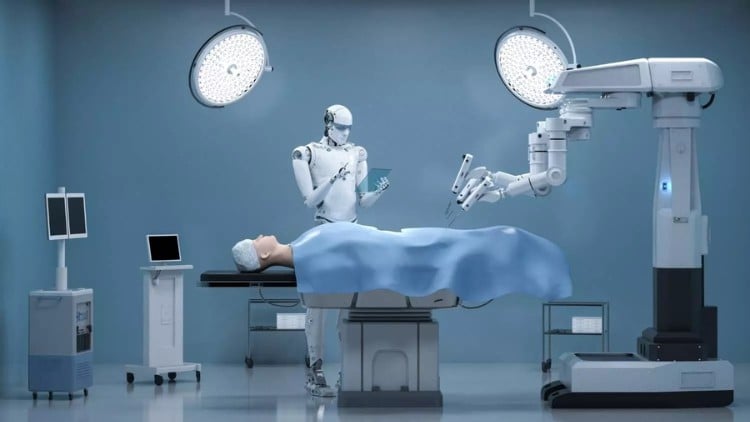
Unlock the Future of Healthcare with Advanced Skills and Expertise
⏱️ Length: 4.8 total hours
⭐ 4.06/5 rating
👥 10,252 students
🔄 September 2023 update
Add-On Information:
Note➛ Make sure your 𝐔𝐝𝐞𝐦𝐲 cart has only this course you're going to enroll it now, Remove all other courses from the 𝐔𝐝𝐞𝐦𝐲 cart before Enrolling!
- Course Overview:
- This essential introductory course unveils the transformative impact of medical robotics on modern healthcare. Explore how advanced robotic systems are seamlessly integrating into diverse clinical areas, from precise surgical interventions and patient rehabilitation to sophisticated diagnostics. The curriculum highlights the interdisciplinary synergy of engineering, AI, and clinical expertise, all aimed at enhancing patient safety and outcomes. Gain a foundational understanding of medical robotics’ pivotal role in shaping the future of medicine and improving global healthcare delivery.
- Delve into core concepts and current applications defining medical robotics, tracing its historical evolution and state-of-the-art developments. This module covers various robot categories, their operational principles, and crucial ethical considerations alongside societal implications of deploying intelligent machines in sensitive healthcare environments. It offers a critical perspective on how medical robotics drives continuous innovation, boosting diagnostic accuracy, therapeutic efficacy, and overall healthcare accessibility, preparing you for this dynamic frontier.
- Requirements / Prerequisites:
- Designed for broad accessibility, this course requires no prior advanced technical expertise in robotics, programming, or complex medical procedures. It is ideal for individuals with a genuine intellectual curiosity about the intersection of technology and healthcare. Whether you’re a student, healthcare professional, or engineer considering a medical pivot, a foundational interest in scientific principles and an eagerness to engage with interdisciplinary concepts are the primary prerequisites.
- Skills Covered / Tools Used:
- Acquire conceptual mastery of fundamental components in medical robotic systems: understanding sensor technologies, actuator mechanisms for precise movement, and control system architectures ensuring safe and effective operation. The focus is on theoretical comprehension of ‘what’ and ‘why’ these components function, establishing a robust framework for understanding diverse robotic applications without requiring hands-on design or complex programming.
- Develop comprehensive awareness of diverse medical robot typologies – surgical, rehabilitation, diagnostic, and assistive systems – understanding their specific applications and unique design considerations. Additionally, gain an introductory grasp of ethical frameworks and regulatory landscapes (e.g., FDA, CE marking) governing their deployment, emphasizing patient safety, data privacy, and responsible AI integration. This cultivates critical thinking for real-world clinical and ethical constraints.
- Benefits / Outcomes:
- Upon completion, you will possess a well-structured understanding of the contemporary medical robotics landscape, capable of critically evaluating new developments and their impact on healthcare delivery. This foundational knowledge empowers you to differentiate various robotic applications and articulate their potential, establishing a strong base for further specialized study or professional engagement within the rapidly evolving health technology field.
- This course serves as an invaluable compass for navigating potential career trajectories within the burgeoning health technology sector. By illuminating diverse roles – from R&D to clinical application and regulatory affairs – it helps identify your niche. You will gain clarity on sought-after skills, enabling strategic planning for advanced education or direct entry, while fostering interdisciplinary thinking crucial for bridging engineering and clinical needs.
- PROS:
- Exceptional Accessibility: Online format and 4.8-hour duration offer global learners a convenient entry point to medical robotics without significant time or geographical barriers.
- Highly Relevant Content: Provides an up-to-date overview of a rapidly growing healthcare technology sector, reflecting latest innovations and industry trends (September 2023 update).
- Foundational Career Insight: Offers a robust conceptual basis for exploring diverse career opportunities in health tech, R&D, clinical support, or entrepreneurial ventures.
- Exposure to Innovation: Introduces groundbreaking robotic applications and their transformative potential in patient care.
- CONS:
- Limited Practical Depth: Due to its concise 4.8-hour duration, the course primarily provides theoretical understanding, lacking extensive hands-on experience or deep technical proficiency required for advanced design, development, or operational roles.
Learning Tracks: English,Teaching & Academics,Other Teaching & Academics
Found It Free? Share It Fast!