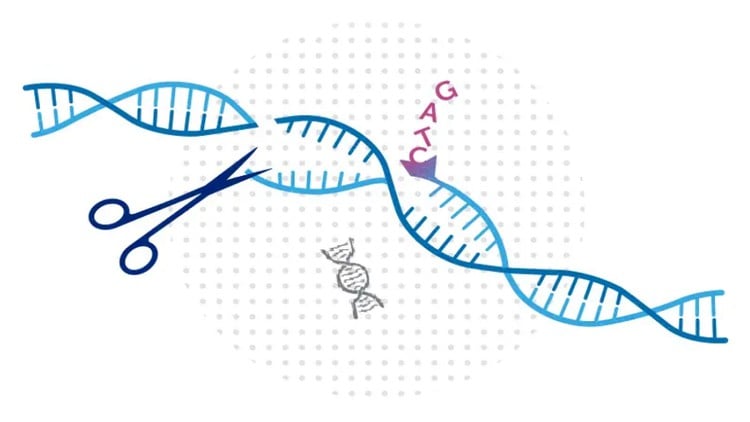
CRISPR Cas9 Technology
⏱️ Length: 38 total minutes
⭐ 4.13/5 rating
👥 5,210 students
🔄 September 2022 update
Add-On Information:
Note➛ Make sure your 𝐔𝐝𝐞𝐦𝐲 cart has only this course you're going to enroll it now, Remove all other courses from the 𝐔𝐝𝐞𝐦𝐲 cart before Enrolling!
-
Course Overview
- This course serves as a foundational exploration into the revolutionary CRISPR-Cas9 gene editing system, designed to demystify its complex molecular machinery for learners of all backgrounds. You will gain a clear understanding of its origins, tracing back to its discovery as an adaptive immune system in bacteria and archaea, and how this ancient defense mechanism was repurposed into one of the most powerful tools in modern molecular biology. The curriculum meticulously breaks down the core components, focusing on the programmable Cas9 enzyme and the crucial role of the guide RNA (gRNA) in directing it to specific genomic locations with unprecedented accuracy.
- Dive deep into the intricate process of target recognition, where the gRNA base-pairs with a complementary DNA sequence, followed by the Cas9 protein creating a precise double-strand break. The course thoroughly explains the cellular repair mechanisms that ensue, specifically elucidating the two primary pathways: Non-Homologous End Joining (NHEJ), which often leads to gene disruption, and Homology-Directed Repair (HDR), which enables the introduction of desired genetic changes using a repair template. This distinction is critical for understanding the different outcomes achievable with CRISPR-Cas9.
- Beyond the fundamental mechanics, this course also illuminates the transformative impact of CRISPR-Cas9 across the scientific landscape. It discusses its pivotal role in accelerating basic research, allowing scientists to rapidly create genetic knockouts and knock-ins to study gene function in various model organisms, thereby deepening our understanding of biological processes and disease pathology. You will learn about its potential to revolutionize fields far beyond human therapeutics, including significant applications in agriculture for crop improvement, biotechnology for synthetic biology endeavors, and even for developing new diagnostic tools.
- An integral part of the learning journey will be appreciating the rapid evolution of this technology. While focusing on the foundational CRISPR-Cas9 system, the course will also conceptually allude to the development of its derivatives and advanced variants, such as base editing and prime editing, which offer even greater precision and versatility without inducing double-strand breaks. This introductory module ensures that even with its concise nature, learners acquire a robust conceptual framework that prepares them to grasp ongoing advancements and engage critically with new research in the dynamic field of genetic engineering.
- By the end of this module, participants will not only understand “how” CRISPR-Cas9 works but also appreciate its immense potential as a scientific instrument for discovery, its ethical complexities, and its position as a cornerstone technology shaping the future of biology and medicine. It provides a holistic yet focused perspective on what makes CRISPR-Cas9 a truly paradigm-shifting innovation, empowering learners with a solid knowledge base to interpret its current applications and anticipate future breakthroughs.
-
Requirements / Prerequisites
- A foundational understanding of molecular biology is highly recommended to fully appreciate the intricacies of CRISPR-Cas9 technology. This includes familiarity with core concepts such as the structure and function of DNA, RNA, and proteins, as well as the fundamental principles of the central dogma of biology (replication, transcription, translation). While key concepts will be reiterated, prior exposure will enhance the learning experience.
- No prior hands-on laboratory experience with gene editing techniques or bioinformatics tools is required for this introductory course. The content is designed to be conceptually accessible, allowing learners to grasp the theoretical underpinnings without needing practical skills from the outset.
- Participants should have reliable access to a computer or mobile device with an stable internet connection to engage with the course materials, watch video lectures, and access supplementary resources. The online format necessitates a functional setup for optimal learning.
- A genuine enthusiasm for cutting-edge biotechnologies and a curiosity about the mechanisms driving genetic innovation are invaluable. An open mind and a willingness to engage with complex scientific concepts, as well as ethical discussions, will significantly contribute to a rewarding learning journey.
- While not strictly mandatory, a background in a life science discipline (e.g., biology, biochemistry, genetics, biotechnology) will provide a beneficial context. However, the course is structured to be approachable for science-literate individuals from diverse academic backgrounds who are keen to understand this transformative technology.
- No specific software installations or advanced computing skills are required, as the focus is on conceptual understanding rather than operational application of specific tools. All necessary learning resources are provided within the course platform.
- An ability to think critically and analytically about scientific evidence and its societal implications will be advantageous, particularly when exploring the broader impact and ethical considerations of gene editing.
-
Skills Covered / Tools Used
- Interpreting Molecular Mechanisms: Develop the ability to conceptually trace the steps of how Cas9 localizes to specific DNA sequences and induces a double-strand break, understanding the precise molecular interactions involved.
- Understanding Guide RNA Design Principles: Gain insights into the conceptual considerations for designing effective guide RNAs, including target site selection, protospacer adjacent motif (PAM) recognition, and strategies to minimize off-target activity.
- Differentiating DNA Repair Pathways: Learn to distinguish between the Non-Homologous End Joining (NHEJ) and Homology-Directed Repair (HDR) pathways, and understand how each pathway contributes to different gene editing outcomes (e.g., gene disruption vs. precise gene correction).
- Analyzing CRISPR System Variants: Although focused on Cas9, the course will conceptually introduce how different Cas nucleases (e.g., Cas12a) or engineered variants like catalytically dead Cas9 (dCas9) can be utilized for diverse applications beyond simple DNA cutting.
- Evaluating Delivery Methods: Explore the conceptual basis of various methods used to deliver CRISPR components (Cas9 and gRNA) into target cells, such as viral vectors, lipid nanoparticles, and electroporation, understanding their respective advantages and limitations.
- Conceptualizing Off-Target Effects: Understand what off-target effects are, why they occur, and the various conceptual strategies being developed to enhance the specificity of CRISPR-Cas9, such as high-fidelity Cas9 variants or optimized gRNA design.
- Engaging with Ethical Frameworks: Develop an awareness and critical thinking skills regarding the profound ethical, legal, and societal implications of germline editing, therapeutic applications, and genetic modification, fostering an informed and responsible perspective.
- Understanding Application Scope: Beyond human health, conceptualize how CRISPR-Cas9 is applied in agriculture (e.g., disease-resistant crops), basic research (e.g., creating disease models), and biotechnology, broadening your understanding of its widespread utility.
- Scientific Literacy in Gene Editing: Cultivate the ability to critically read and interpret news articles, scientific summaries, and introductory research papers related to gene editing, building a strong foundation for ongoing learning in this fast-evolving field.
- No specific software or lab tools are hands-on ‘used’ in this 38-minute course. Instead, the learning focuses on the *conceptual understanding* of the principles that underpin the use of various molecular biology techniques and bioinformatics tools in a CRISPR workflow. For instance, understanding the *logic* behind target prediction software, or the *principles* of molecular cloning for constructing CRISPR reagents.
-
Benefits / Outcomes
- Solid Conceptual Foundation: You will establish a robust and clear understanding of the fundamental scientific principles and molecular mechanisms that govern CRISPR-Cas9 gene editing, providing a strong base for further study or professional development.
- Informed Perspective on Modern Biotechnology: Develop a nuanced and well-rounded viewpoint on the capabilities, challenges, and future potential of gene editing, enabling you to participate in informed discussions about its role in society.
- Enhanced Scientific Literacy: Improve your ability to comprehend and critically evaluate scientific advancements and news related to genomics, genetic engineering, and personalized medicine, empowering you to navigate complex biotechnological information.
- Appreciation of Ethical Dimensions: Gain a deeper awareness of the significant ethical considerations, societal debates, and regulatory landscapes surrounding CRISPR technology, particularly concerning its applications in human health and germline editing.
- Insight into Diverse Applications: Understand how CRISPR-Cas9 extends beyond therapeutic uses, recognizing its wide-ranging impact across basic biological research, agricultural science, and industrial biotechnology.
- Catalyst for Further Learning: This course serves as an excellent springboard, providing the essential vocabulary and conceptual framework necessary to confidently explore more advanced courses, specialized workshops, or practical laboratory training in gene editing.
- Ability to Articulate Key Concepts: You will be able to clearly and concisely explain the core principles of CRISPR-Cas9 to non-specialists, fostering scientific communication skills and helping to demystify complex scientific topics.
- Inspiration for Career Exploration: The insights gained might inspire you to consider career paths in genomics, biotechnology, biomedical research, or science communication, as you develop an appreciation for cutting-edge scientific fields.
- Understanding of Current Limitations: Beyond the promise, you will also grasp the existing challenges and limitations of CRISPR-Cas9, such as off-target effects, delivery hurdles, and mosaicism, providing a realistic outlook on its current state.
- Connection to Real-World Impact: Relate the theoretical knowledge of CRISPR-Cas9 to its tangible real-world applications and potential to address some of humanity’s most pressing challenges, from genetic diseases to sustainable agriculture.
-
PROS
- Concise Introduction: Offers an exceptionally efficient and high-level overview, making it perfect for rapid learning or as an initial contact point for a complex subject.
- Fundamental Concepts: Successfully distills the intricate molecular biology and mechanisms of CRISPR-Cas9 into easily digestible, foundational knowledge.
- Broad Applicability Discussion: Explores the wide-ranging impact of the technology not just in medicine, but also across research, agriculture, and other biotechnological fields.
- Accessibility: The short duration (38 minutes) ensures high accessibility for busy individuals or as a low-commitment entry into the world of gene editing.
- Experienced Trainers: Leverages the knowledge of certified trainers to present complex information clearly and authoritatively.
- Ethical Awareness: Integrates crucial discussions on the ethical and societal implications, promoting a responsible and thoughtful engagement with the technology.
- Updated Content: The September 2022 update ensures that the information provided is current and relevant to the latest advancements in the field.
- High Student Engagement: A large number of enrolled students (5,210) indicates its popularity and perceived value within the learning community.
- Conceptual Clarity: Prioritizes a strong conceptual understanding, which is vital for building a solid knowledge base before delving into practical applications.
- Springboard for Further Learning: Serves as an excellent entry point that can motivate and prepare learners to explore more in-depth resources, advanced courses, or specialized practical training.
-
CONS
- Limited Practical Depth: Given its extremely short duration (38 minutes), the course is primarily a conceptual overview and cannot provide the detailed practical execution, hands-on tool usage, advanced troubleshooting, or in-depth experimental design knowledge necessary for actual laboratory application or professional-level deployment of CRISPR-Cas9 technology.
Learning Tracks: English,Teaching & Academics,Science
Found It Free? Share It Fast!