Study the fundamentals related to design and manufacturing of metallic products by Bulk and Sheet metal forming methods.
What you will learn
To become familiar with some of the basic metal forming processes like extrusion, rolling, forging, wire drawing and sheet metal working
Understand the fundamental concepts of different metal forming processes their engineering applications and limitations.
Apply their knowledge to select suitable process, variables, tooling and machines/equipment to make the products from various metal forming processes.
Determine the forces and power requirement in different metal forming processes.
Investigate defects appeared in the products manufactured by various metal forming processes and determine their causes and remedies.
Identification of metal forming parameters such as friction, temperature, the resistance of the material etc, necessary for defect free products.
Description
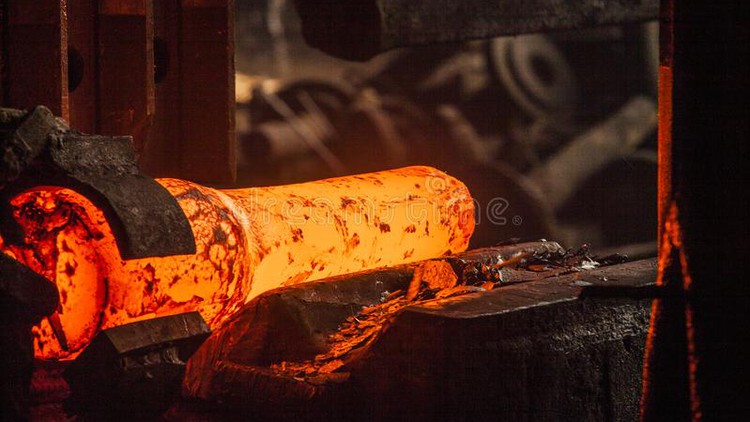
Forming Process also known as Metal Forming is a large set of manufacturing processes by which raw material is converted into a product. In this process, we apply stresses like tension, compression, shear, etc. to deformed the raw material. The example of forming processes are sheet metal manufacturing, forging, rolling, extrusion, wire drawing, and so on
Metal forming processes are an essential part of our society, and without them, our society would come to a grinding halt.
The products and components created by the different metal shaping techniques are used in creating everything from scaffolding and heavy machinery to designing and creating microprocessors and artificial intelligence.
When it comes to metal forming, there are several processes to choose from, with each offering its own list of benefits and detriments, each suited to certain applications, and each suited for different types of metal.
COURSE OUTLINE
Introduction to the Fundamentals of Metal Forming Processes
- Fundamentals of metal forming
- Types of deformation processes of metal
- Bulk deformation (Rolling, Forging, Extrusion, Wire Drawing)
- Sheet metal working
- Stress-Strain Curve
- Derivation of the relation between stress and strain
- Flow stress and Average flow stress
- The temperature in metal forming (Cold working and Hot-working)
- Recrystallization
- Iso thermal forming (recovery and Grain growth)
- Strain rate Sensitivity
Rolling Process
- Introduction of rolling
- Shapes used for rolling
- Types of rolling
- Working on the rolling process
- Analysis of the rolling
- Rolling mills
- No-Slip Point for rolling
- Flatness control and rolling defect
- Numerical Problems related to the rolling process
Forging Process
- Introduction to forging
- Classification of forging
- Types of forging
- Analysis of the forging
- Barreling effect in forging
- Open Die forging and its practices
- Impression Die forging and its practices
- Advantages and Limitations of Impression Die forging
- Fleshless forging
- Forging Press and Forging Hammers
- Numerical Problems related to the forging process
Extrusion Process
- Introduction to the extrusion process
- Classification of extrusion
- Direct and Indirect extrusion
- Hot and Cold extrusion
- Direct and Continuous extrusion
- Analysis of the extrusion process
- Effect of friction on extrusion
- Extrusion Dies and Orifice
- Extrusion press and other extrusion processes
- Numerical Problems related to the extrusion process
Drawing Process
- Introduction to Drawing
- Difference between drawing and wire drawing
- Bar Drawing
- Wire Drawing
- Features of Draw Die
- Preparation of the work
- Analysis of the drawing process
Sheet Metal Forming Processes
Sheet metal Cutting
- Introduction to sheet metal cutting process
- Characteristics of Edges
- Types of sheet metal cutting
- Shearing
- Blanking and Punching
- Clearance in Sheet metal cutting
- Analysis of sheet metal cutting processes
- Numerical Problems related to the sheet metal cutting process
Sheet Metal Bending
- Introduction of sheet metal bending process
- Types of sheet metal bending
- Analysis of the sheet metal bending process
- Numerical Problems related to the sheet metal bending process
- Spring Back
Sheet Metal Drawing
- Introduction to the drawing process
- Mechanics of drawing
- Stages of deformation
- Analysis of the drawing process
- Tests of Drawing Feasibility
- Blank force and blank size determination
- Numerical Problems related to the drawing process
Redrawing, Reverse Drawing and Drawing without Blank holder
- Other drawing processes (Redrawing, Reverse Drawing and Drawing without Blank holder)
- Defects in Drawing
- The operation performed with metal tooling
- Ironing
- Coining & Embossing
- Lancing & Twisting
- The operation performed with flexible Rubber tooling
- Guerin and Hydroforming process
- Numerical Problems related to the other drawing processes
Content
- Course Overview
- Delve into the foundational principles and advanced techniques of bulk and sheet metal forming processes, essential for the creation of robust and intricate metallic components.
- Explore the interdisciplinary nature of manufacturing engineering by integrating material science, mechanical design, and process optimization within the context of forming operations.
- Understand the transformation of raw materials into finished products through plastic deformation, emphasizing energy efficiency and material utilization.
- Gain insights into the selection of appropriate forming methods based on product complexity, material properties, production volume, and cost considerations.
- Analyze the influence of process parameters such as temperature, strain rate, tooling geometry, and lubrication on product quality, dimensional accuracy, and mechanical performance.
- Investigate the underlying physics of metal flow, fracture mechanics, and residual stress generation during various forming operations.
- Acquaint yourself with the design considerations for tooling, dies, and molds crucial for successful and repeatable manufacturing.
- Examine the integration of simulation tools and experimental validation for process design, troubleshooting, and performance prediction.
- Discuss the trends and future directions in bulk and sheet metal forming, including additive manufacturing integration and smart manufacturing technologies.
- Requirements / Prerequisites
- A solid understanding of fundamental engineering mechanics, including statics and dynamics.
- Familiarity with basic material science principles, such as stress-strain relationships and material behavior under load.
- Proficiency in introductory calculus and differential equations.
- Prior exposure to manufacturing processes or an equivalent introductory engineering course is recommended.
- Access to a computer with relevant engineering software capabilities is beneficial for simulation and analysis.
- Skills Covered / Tools Used
- Metal Forming Principles: Mastery of concepts like plasticity, yield criteria, strain hardening, and ductility.
- Process Analysis: Ability to analyze and predict outcomes of forging, extrusion, rolling, drawing, stamping, deep drawing, and bending operations.
- Tooling Design: Understanding of die and mold design principles, material selection for tooling, and wear mechanisms.
- Material Selection: Expertise in choosing appropriate metallic materials based on forming characteristics and end-use requirements.
- Simulation Software: Proficiency in using Finite Element Analysis (FEA) software (e.g., ANSYS, Abaqus, DEFORM) for process simulation and optimization.
- CAD/CAM Integration: Understanding how Computer-Aided Design and Computer-Aided Manufacturing principles apply to tooling and part design.
- Troubleshooting: Capability to identify and resolve common defects and issues encountered in forming processes.
- Data Analysis: Skills in interpreting simulation results and experimental data for process improvement.
- Benefits / Outcomes
- Develop the expertise to design, analyze, and optimize bulk and sheet metal forming processes for various manufacturing applications.
- Enhance your ability to select the most suitable forming method for specific product requirements and production constraints.
- Gain a competitive edge in the manufacturing engineering field with specialized knowledge in a critical area of production.
- Improve product quality, reduce material waste, and increase manufacturing efficiency through informed process design.
- Contribute to the development of innovative and cost-effective metallic components for industries such as automotive, aerospace, medical devices, and consumer goods.
- Be equipped to lead projects involving the implementation and improvement of forming operations.
- Foster a deeper appreciation for the transformation of materials and the engineering challenges involved in mass production.
- PROS
- Highly practical and directly applicable to industrial manufacturing challenges.
- Develops critical problem-solving skills for real-world production scenarios.
- Opens doors to diverse career opportunities in a wide range of industries.
- Provides a strong foundation for further specialization in advanced manufacturing.
- CONS
- Can require significant theoretical understanding alongside practical application.