Master subsea controls, MUX systems, SCMs, hydraulics, ESD, troubleshooting and commissioning
What You Will Learn:
- Understand subsea control system architecture and how topside equipment communicates with subsea production systems.
- Explain the operating principles of direct hydraulic, piloted hydraulic, sequenced hydraulic and multiplexed electro-hydraulic systems.
- Identify the functions of key components, including MCS, SCM, SEM, HPU, EPU, umbilicals and subsea distribution units.
- Understand hydraulic control circuits, accumulators, directional control valves and subsea valve actuation.
- Explain electrical power distribution, communication systems, sensors and feedback mechanisms in subsea control systems.
- Understand fail-safe philosophy, Emergency Shutdown (ESD), safety interlocks and HIPPS architecture.
- Show more
Overview
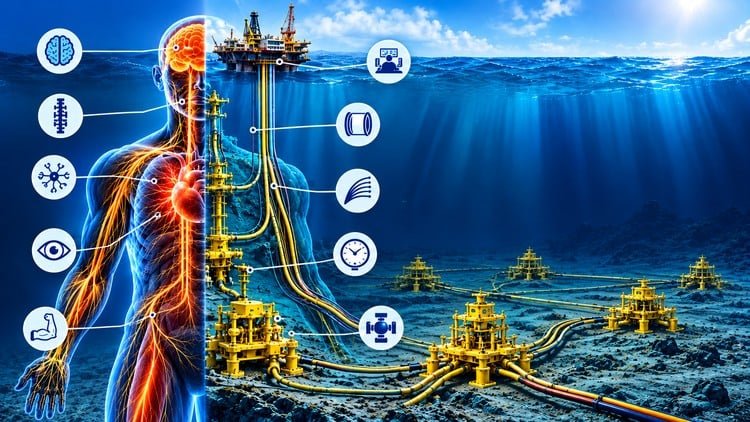
Alright, let’s talk about ‘Subsea Controls: A Complete Guide to Systems and Operations’. If you’ve been working in the energy sector, especially around offshore or deepwater operations, you know subsea controls aren’t just an add-on; they’re the central nervous system keeping multi-million dollar assets producing. This course doesn’t just skim the surface; it’s a genuine deep dive, designed to take you from a foundational understanding of what’s happening thousands of feet below the waves right up to a comfortable grasp of complex system architectures and operational nuances. It truly aims to be a comprehensive resource, bridging the gap between theoretical knowledge and the practicalities of deployment and maintenance. For anyone serious about understanding the intricacies of subsea production, from signal transmission to valve actuation, this course promises a rigorous, step-by-step journey, covering everything from the most basic hydraulic principles to advanced safety protocols. It feels like it’s crafted to equip you with the insights needed to navigate the challenges of modern subsea engineering, making it relevant for those looking for a ‘beginner to advanced‘ progression in the field.
Prerequisites
To truly get the most out of this course, you don’t need to be a subsea guru already, but a solid technical foundation is definitely going to make the material click faster. I’d recommend having a basic grasp of general engineering principles – think introductory hydraulics, fundamental electrical circuits, and perhaps some exposure to process control concepts. If you’ve got some experience in the broader oil and gas industry, even better, as that context will help tie the subsea specifics into the bigger picture of production operations. However, the course is structured to be fairly self-contained for its core subject matter. It’s not for someone who’s completely new to any form of engineering; a technical diploma or degree, or equivalent field experience, would be a very sensible starting point.
Skills & Tools
Upon completing this guide, you’ll walk away with a robust set of job-ready skills that are immediately applicable in the subsea domain. You’ll no longer just be familiar with acronyms; you’ll understand the intricate roles and operating principles of critical components like the Master Control Station (MCS), Subsea Control Modules (SCM), and Subsea Electronics Modules (SEM). You’ll grasp the distinctions between various hydraulic systems (direct, piloted, sequenced, and multiplexed electro-hydraulic) and be able to analyze their suitability for different applications. Furthermore, you’ll gain practical insights into electrical power distribution, communication protocols, and sophisticated sensor feedback loops. Crucially, the course focuses on operational aspects, honing your ability to understand complex system diagrams, contributing to effective troubleshooting, and comprehending commissioning procedures for subsea production systems. This includes a deep dive into the functionality of industry-standard tools such as HPUs, EPUs, umbilicals, and subsea distribution units.
Career Benefits & Job Roles
This course offers significant leverage for your career growth within the highly specialized subsea sector. For current professionals, it provides an invaluable opportunity to deepen your expertise, making you a more valuable asset in your existing role or preparing you for more senior positions. For those looking to transition into subsea, it provides a comprehensive foundation to enter roles such as a Subsea Controls Engineer, Field Engineer, or Operations Engineer focused on subsea production systems. It also serves as an excellent resource for project engineers overseeing subsea developments, marine engineers requiring a deeper understanding of seabed interfaces, or even advanced maintenance technicians looking to move into control systems. The practical, detailed knowledge gained here also makes it a strong contender for foundational certification prep for various industry qualifications related to subsea integrity or control system design. In essence, it equips you with the crucial understanding needed to contribute meaningfully to subsea projects, from initial design phases through to long-term operational maintenance.
Pros
- Comprehensive Coverage: This course genuinely lives up to its “complete guide” billing. It tackles the entire spectrum of subsea controls, from the fundamental physics of hydraulics and electricity to the complex architectures of modern multiplexed systems, including critical aspects like HIPPS architecture and fail-safe philosophy. You truly get a “beginner to advanced” journey.
- Practical Operational Focus: Unlike many theoretical courses, this one heavily emphasizes operational understanding. It moves beyond just explaining what components are, delving into how they function in unison, how they’re commissioned, and how issues are typically diagnosed. This focus provides highly job-ready skills for real-world scenarios.
- Strong Emphasis on Safety Systems: The dedication to explaining Emergency Shutdown (ESD), safety interlocks, and the fail-safe philosophy is commendable. In the subsea world, safety is non-negotiable, and the course’s detailed walkthrough of these critical elements demonstrates a thorough and responsible approach.
- Demystifying Complex Hydraulics: The clear, methodical explanation of direct hydraulic, piloted hydraulic, sequenced hydraulic, and multiplexed electro-hydraulic systems is a major strength. It breaks down what can be a confusing topic into easily digestible segments, making complex operating principles accessible.
Cons
- My one honest critique, and it’s a common one for online courses of this nature, is the inherent lack of true hands-on labs or direct interaction with physical subsea hardware. While the explanations and diagrams are incredibly thorough, there’s simply no substitute for getting your hands dirty with an actual SCM or running diagnostics on a control rig in a simulation environment. If the course could somehow incorporate more advanced virtual simulation exercises or detailed interactive troubleshooting scenarios, it would elevate an already excellent guide to an unparalleled level.