Prepare for the NABCEP PV Installer Specialist certification with 560 practice questions and detailed explanations.
What You Will Learn:
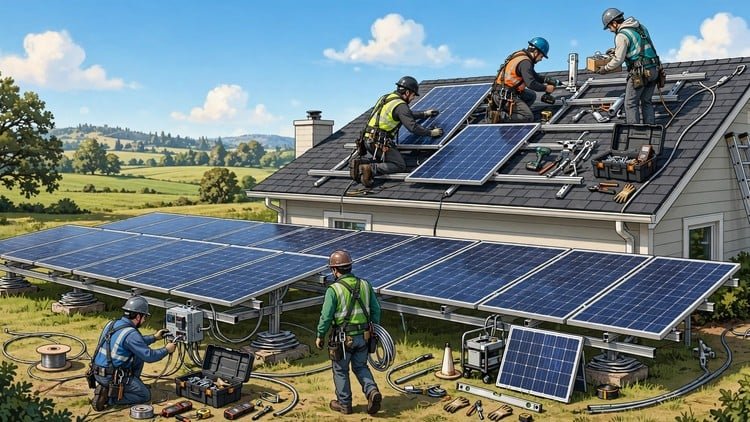
- Develop and apply a site-specific safety plan for PV installations, including fall and electrical safety.
- Select and install raceways and electrical equipment correctly for PV systems and job-site conditions.
- Install and terminate DC and AC PV conductors safely, with correct identification and circuit rules.
- Apply grounding, bonding, and utility interconnection requirements to complete PV systems compliantly.
- Prepare confidently for NABCEP PVIS certification with 560 practice questions and detailed explanations.
Alright folks, let’s talk about gearing up for the NABCEP PV Installer Specialist (PVIS) certification. I’ve been in the solar game long enough to know that a solid certification isn’t just a piece of paper; it’s a stepping stone, and sometimes, a downright necessity for real career growth. I recently dove into a set of NABCEP PVIS Practice Tests that promise to get you ready for the big one, and I’ve got some thoughts. This isn’t your typical fluff piece; this is an experienced tech’s honest assessment.
Overview
So, what are we looking at here? Essentially, it’s a beefy set of 560 practice questions designed to simulate the actual NABCEP PVIS exam. The idea is simple: if you can nail these, you’re likely in good shape for the real deal. What I appreciated is that they don’t just throw questions at you; they provide detailed explanations. This is crucial, especially for the nuances of PV installations. It’s not just about memorizing answers; it’s about understanding the ‘why’ behind them. Think of it as a guided review that helps solidify your knowledge from beginner to advanced concepts. It’s more than just certification prep; it’s about building those foundational, job-ready skills that hiring managers are actively looking for.
Prerequisites
Now, let’s be real. These practice tests aren’t for someone who’s never seen a solar panel before. While the course itself might not have formal prerequisites listed beyond a desire to pass the PVIS exam, I’d highly recommend you have some fundamental electrical knowledge under your belt. Ideally, you’ve got some experience with basic AC/DC theory, understand electrical schematics, and have at least a rudimentary understanding of PV system components. If you’re coming straight out of a beginner’s course or have limited hands-on labs experience, you might find yourself needing to brush up on core concepts *before* diving deep into these advanced practice questions. Think of it as needing to know your basic hand tools before tackling advanced CNC machining – you need the groundwork.
Skills & Tools
The topics covered are a solid reflection of what you’ll encounter on the job. You’re going to be tested on everything from developing and executing a site-specific safety plan – and yes, that includes the often-underestimated aspects of fall and electrical safety – to the nitty-gritty of selecting and installing raceways, terminations, grounding, and bonding. They touch upon utility interconnection requirements, which is a huge part of completing PV systems compliantly. While the practice tests themselves don’t provide the physical tools, they absolutely drive home the importance of using industry-standard tools correctly and understanding their application in real-world projects.
Career Benefits & Job Roles
Earning your NABCEP PVIS certification is a significant feather in your cap. It signals to employers that you’ve met a recognized industry standard for competency and professionalism. This opens doors to roles like PV Installer, Solar Technician, Lead Installer, and even supervisory positions. It’s often a requirement for more complex installations and can lead to higher pay rates and more responsibility. For career growth, this certification is a clear indicator that you’re invested in your profession and equipped with the practical, job-ready skills that employers value, moving you beyond entry-level roles.
Pros
- Comprehensive Coverage: The 560 questions offer a broad and deep dive into the PVIS exam’s scope, ensuring you’re exposed to a wide range of scenarios.
- Detailed Explanations: This is the killer feature. Understanding *why* an answer is correct is far more valuable than just getting it right. It reinforces learning and clarifies tricky concepts.
- Realistic Simulation: The practice questions are designed to mirror the exam’s difficulty and style, giving you a realistic feel for what to expect and helping to manage test anxiety.
- Confidence Builder: Successfully working through these questions and understanding the explanations genuinely boosts your confidence for the actual certification exam.
Cons
If I have one honest critique, it’s that this is purely theoretical preparation. While the explanations are excellent, they can’t replace actual hands-on experience. You still need to get your hands dirty on real-world projects, work with industry-standard tools, and experience the practical challenges of installations. This practice test resource is a powerful supplement, but it’s not a substitute for the practical application learned in the field or through dedicated hands-on labs.