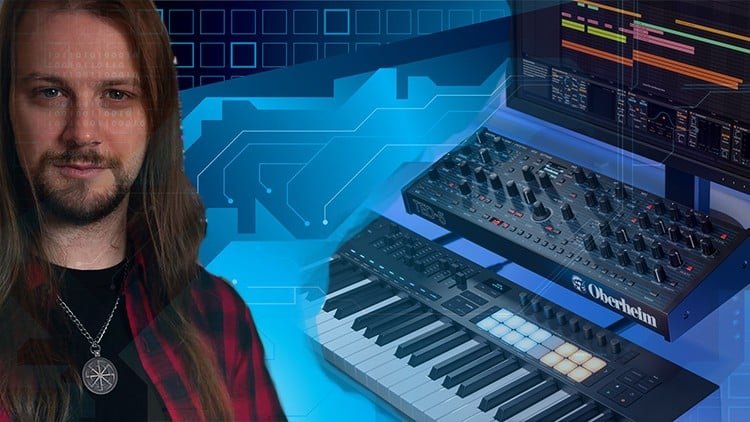
Learn how to work with synthesizers and how to create sounds from scratch.
What You Will Learn:
- Learn the principles of creating sounds on a synthesizer.
- Learn how to create various synth patches (Bass, Pad, Lead, ARPs, Percussion) from zero.
- Identify the components of a synth and what each one can do.
- By the end of the course you will be able to create any type of sound on any type of synth.
Alright, let’s talk about the ‘Synthesizers For Beginners’ course. As someone who’s spent a fair bit of time wrestling with everything from analog beasts to modern digital workstations, I was curious to see how this one stacked up for newcomers. The promise of learning to sculpt sound from the ground up, rather than just twiddling presets, is a powerful lure. So, I dove in, and honestly, it delivered more than I expected for an introductory program.
Overview
This isn’t just a surface-level gloss over synth knobs. The course genuinely takes you by the hand and walks you through the fundamental building blocks of sound synthesis. You’ll get a solid grasp on how oscillators, filters, and envelopes interact, which is crucial. They don’t shy away from the core principles, which is refreshing. What impressed me most was the practical application – you’re not just theorizing; you’re actively building a diverse range of synth patches, from the rumbling foundation of a bassline to shimmering pads, searing leads, intricate arpeggios, and even percussive elements. It’s a journey from pure signal to sonic texture, and the structured approach makes it surprisingly accessible.
Prerequisites
Honestly, the main prerequisite is a genuine curiosity about sound and a willingness to tinker. You don’t need any prior musical training or deep technical knowledge of electronics. If you can operate a computer and have a basic understanding of how audio works (like volume and pitch), you’re golden. They do assume you’ll be working with a DAW (Digital Audio Workstation) or a hardware synth, but the concepts are universal enough that even abstractly following along will be beneficial.
Skills & Tools
By the end of this course, you’ll have a foundational understanding of key synthesis concepts like:
- Oscillators: Sine, Sawtooth, Square, Triangle – and how they form the raw material.
- Filters: Low-pass, High-pass, Band-pass – for shaping timbre and character.
- Envelopes (ADSR): Attack, Decay, Sustain, Release – for controlling how a sound evolves over time.
- LFOs (Low-Frequency Oscillators): For adding movement and modulation.
You’ll be creating patches for Bass, Pads, Leads, Arpeggios, and Percussion. The course emphasizes using industry-standard tools, though the principles can be applied to almost any synthesizer, virtual or physical. Think of this as your initial dive into the world of sound design, laying the groundwork for more complex techniques down the line.
Career Benefits & Job Roles
For anyone looking to break into music production, sound design for games or film, or even electronic music performance, this course is a fantastic starting point. It equips you with job-ready skills that are highly valued. You’ll be able to contribute meaningfully to projects, whether it’s crafting unique sounds for a track or designing atmospheric textures. This can open doors to roles like Sound Designer, Music Producer, Synthesist, or even provide a significant edge when pursuing certification prep for more advanced audio engineering programs. It’s about building a tangible skill that enhances your career growth.
Pros
- From Zero to Sound: The step-by-step approach to creating patches from scratch is exceptionally well-executed. You really feel like you’re building something tangible.
- Fundamental Understanding: It focuses on the core principles that apply across the board, meaning the knowledge gained is transferable and builds a strong foundation for advanced learning.
- Diverse Patch Creation: Covering a good range of common synth patch types ensures you’re getting practical experience with different sonic applications.
Cons
My only real gripe, and it’s a minor one, is that while it prepares you for *any* type of synth, the actual hands-on labs might feel slightly abstract if you don’t have a specific synth (hardware or software) to immediately apply the lessons to. The concepts are solid, but a bit more guidance on mapping those concepts to a couple of popular entry-level DAWs or synths would have been the icing on the cake. That said, the course provides more than enough to get you started, and the drive to experiment with your chosen tools will naturally follow.
Overall, for beginners looking to demystify synthesizers and unlock their creative potential, this course is a solid investment. It’s clear, practical, and sets you on the right path.