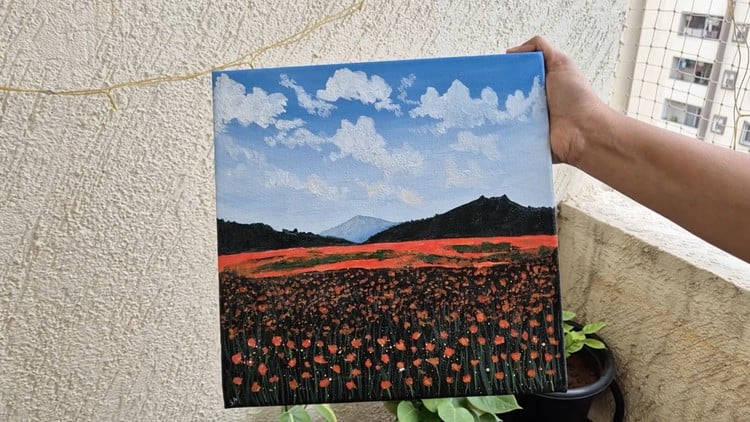
A step-by-step guide to painting a poppy field landscape in acrylics
What You Will Learn:
- Paint a realistic sky with soft, naturally blended clouds
- Layer and shade mountains to create a sense of depth and distance
- Mix and use color effectively for skies, foliage, and florals
- Build a vibrant, textured poppy field using simple, repeatable brush techniques
- Structure a landscape composition from background to foreground
- Add fine detail and texture to flowers and greenery for a realistic finish
- Confidently complete a full acrylic painting from a blank canvas to a finished piece
- Apply these landscape painting techniques to create their own original artwork
As someone who spends most of their waking hours debugging code and optimizing workflows, the idea of picking up a paintbrush felt like venturing into an entirely different dimension. Yet, the persistent hum of needing a creative outlet, one that wasn’t screen-bound, led me to ‘Acrylic Landscape Painting for Beginners: Poppy Field.’ And let me tell you, it’s been one of the most refreshing deviations from my typical routine. If you’re a fellow tech professional looking for a structured, yet deeply satisfying escape into art, keep reading.
Overview
This course isn’t just a series of follow-along painting steps; it’s a meticulously engineered curriculum for creative confidence. From the moment the instructor introduces the concept, you realize this isn’t about perfectly replicating a picture, but about understanding the *principles* that make a landscape breathe. The pacing is expertly calibrated, breaking down seemingly complex visual tasks – like rendering the ethereal quality of a distant sky or suggesting the rustle of a poppy field – into digestible, actionable modules. It felt akin to tackling a new, unfamiliar API; intimidating at first, but with clear documentation and examples, it quickly becomes manageable. The instructor has a knack for demystifying color theory and brushwork, transforming what could be abstract artistic concepts into practical, repeatable techniques. By the time I completed my piece, the satisfaction wasn’t just in the finished painting, but in the profound understanding of the ‘why’ behind each stroke, a level of insight I rarely get from casual tutorials. It’s a complete system for visual storytelling on canvas, designed to build your foundational understanding from the ground up.
Prerequisites
Here’s the beauty of it: practically none. The course title says ‘Beginners,’ and it means it. You don’t need any prior artistic experience, no hidden artistic talent waiting to be discovered, nor a background in art history. The only true prerequisites are a willingness to engage in hands-on labs (aka painting) and a basic set of supplies. You won’t need to worry about any prior certification prep or advanced artistic degrees. Just bring your enthusiasm and an open mind. If you can follow instructions and have a desire to create, you’re good to go. The instructor assumes you’re starting from zero, which is perfect for anyone feeling intimidated by a blank canvas.
Skills & Tools
This course is a comprehensive bootcamp for nascent acrylic artists. You’ll gain a solid grasp of fundamental color theory, learning how to mix and blend pigments to achieve specific moods and effects for everything from a serene sky to vibrant foliage. Brush control is another significant takeaway; the course methodically guides you through various strokes to create texture, depth, and detail. More broadly, you’ll develop crucial compositional skills, understanding how to structure a scene to guide the viewer’s eye and create a sense of realism and atmosphere. For tools, you’ll be working with what quickly become industry-standard tools for acrylics: a basic set of acrylic paints, various brush shapes (flats, rounds, liners), a canvas (or several practice sheets), and a palette. These aren’t just one-off tricks; they’re foundational, job-ready skills if you ever decide to pursue art beyond a hobby, providing a robust toolkit for tackling future painting projects.
Career Benefits & Job Roles
While ‘Acrylic Landscape Painter’ might not immediately appear on your tech resume, the benefits of this course for a tech professional are surprisingly profound and contribute significantly to overall career growth. The process of breaking down a complex visual into manageable layers and components directly parallels agile development or project management. You’re learning to plan, execute, iterate, and troubleshoot – invaluable skills in any professional setting. Completing a real-world project like this from start to finish instills a powerful sense of accomplishment and reinforces the discipline of seeing tasks through. It sharpens your attention to detail, enhances creative problem-solving, and offers a much-needed mental break, leading to improved focus and reduced burnout in your primary role. It’s a fantastic way to cultivate mindfulness and switch off the analytical part of your brain, fostering innovation in unexpected ways. For those considering side hustles or simply enriching their personal brand, the ability to create visually appealing art can feed into anything from personal gifts to unique digital assets, or even inspire a new direction in fields like UI/UX design or content creation, where aesthetic judgment and visual communication are paramount. It’s not certification prep for a new tech stack, but it’s invaluable prep for a more balanced, creative, and resilient professional.
Pros
- Exceptional Instructor & Pacing: The instructor is clear, encouraging, and breaks down complex steps into simple, actionable instructions. The pacing is perfect for beginners, allowing ample time to follow along without feeling rushed or overwhelmed.
- Achievable & Rewarding Results: Even as a complete novice, I ended up with a piece I was genuinely proud of. The course structure guarantees that you’ll complete a full painting, providing a massive confidence boost for future artistic endeavors.
- Emphasis on Understanding: Beyond just showing you *how* to paint, the course delves into *why* certain techniques work. This foundational knowledge is crucial for transitioning from following instructions to creating your own original artwork confidently.
- Practical, Repeatable Techniques: You learn simple, repeatable brush techniques for texture, blending, and detail that are easily transferable to other landscapes and subjects, setting you up to move from beginner to advanced without feeling lost.
Cons
- Limited Reference Images: While the primary poppy field project is excellent, I found myself wishing for a few more diverse reference images or variations within the course to immediately apply the newly learned techniques to slightly different compositions or lighting conditions without having to source them externally. This would have provided additional hands-on labs for immediate skill reinforcement.
In summary, ‘Acrylic Landscape Painting for Beginners: Poppy Field’ is a remarkably well-structured and engaging course. It’s an excellent investment for anyone, especially a tech professional seeking a tangible creative outlet that yields beautiful results and builds genuine artistic confidence. Highly recommended!