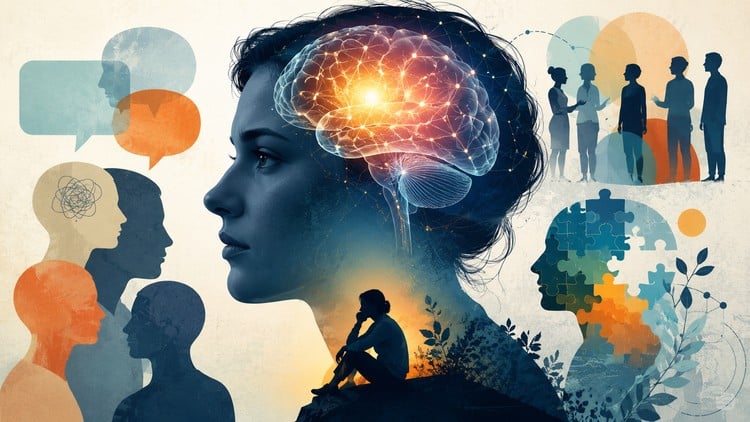
Learn psychology, human behavior, emotions, personality, and communication.
What You Will Learn:
- Understand the foundations of psychology and human behavior.
- Explore emotions, motivation, personality, and communication.
- Learn how people think, feel, react, and make decisions.
- Recognize psychological factors behind social and interpersonal behavior.
- Apply basic psychology concepts to daily and professional life.
- Improve self-awareness, empathy, and understanding of others.
- Understand how personality differences affect relationships and communication.
- Develop a practical foundation for future psychology learning.
The Human Operating System: My Take on the Psychology and Human Behavior Certificate Course
Let’s be honest for a second. In my decade-plus of working in tech, I’ve realized that I can debug a complex microservices architecture in my sleep, but I still struggle to understand why a stakeholder gets defensive during a routine sprint review. We spend so much time mastering industry-standard tools like Kubernetes or AWS, yet we completely ignore the most complex “operating system” on the planet: the human mind. That’s exactly why I decided to dive into this Psychology and Human Behavior Certificate Course. I wanted to see if I could bridge the gap between technical logic and the often messy, unpredictable nature of human interaction.
This isn’t your typical academic slog filled with dry theory and dusty textbooks. Instead, it feels like a beginner to advanced deep dive into what actually makes people tick. The course moves beyond just definitions and gets into the “why” behind our reactions. As someone who values job-ready skills, I was pleasantly surprised that this wasn’t just about clinical observations; it was about understanding the psychological factors that drive social and interpersonal behavior in the real world. Whether you are leading a team of developers or trying to negotiate a better salary, the insights here regarding how people feel, react, and make decisions are invaluable for career growth.
Prerequisites
You don’t need a PhD or even a background in social sciences to get started here. The beauty of this course is that it is built for anyone with a curious mind. However, I’d argue that the real prerequisite is a willingness to engage in some serious self-reflection. You need to be ready to look at your own biases and communication quirks. If you’ve spent any time in a professional environment, you already have the “field experience” necessary to appreciate the concepts taught here.
Skills and Tools You’ll Master
While we aren’t using IDEs or command-line interfaces, the “tools” provided here are just as functional. You’ll walk away with a toolkit for behavioral analysis and emotional intelligence (EQ).
- Behavioral Frameworks: Learning to categorize and understand different personality types using industry-standard tools like the Big Five or various cognitive models.
- Communication Strategies: Mastering the art of empathy and active listening to navigate high-stakes professional conversations.
- Conflict Resolution: Applying real-world projects and scenarios to de-escalate tension within teams.
- Decision-Making Analysis: Understanding the heuristics and biases that lead to “irrational” choices in the workplace.
- Self-Awareness Mapping: Using hands-on labs (in the form of self-assessments) to identify your own psychological triggers.
Career Benefits & Job Roles
Is this a certification prep for a clinical psychologist? No. But is it a massive boost for your resume if you’re aiming for leadership? Absolutely. In today’s market, everyone has technical skills. The differentiator for career growth is how well you manage people.
Understanding human behavior is a core component of roles like Product Manager, Engineering Manager, HR Specialist, and UX Researcher. For PMs, it helps you understand user pain points on a deeper level. For managers, it’s the secret sauce for building high-performing teams that don’t burn out. This course provides the job-ready skills needed to move from a “contributor” role into a “leader” role where people management is 90% of the job.
Pros
- Practical Application: Unlike a university lecture, this course focuses on how to apply basic psychology concepts to your daily and professional life immediately. It feels very “hands-on.”
- Comprehensive Curriculum: It manages to cover a wide ground—from personality differences to social behavior—without feeling like it’s skimming the surface. It’s a solid beginner to advanced journey.
- Improved Empathy: This is the “soft skill” everyone talks about but no one knows how to teach. This course actually breaks down how to build empathy through psychological understanding, which is a game-changer for interpersonal behavior.
- Flexibility: The modular nature of the topics allows you to focus on what you need most, whether that’s motivation for your team or communication for your personal relationships.
Cons
The only real gripe I have is that for those coming from a heavy data-science background, the lack of “hard data” or statistical modeling might feel a bit jarring at first. Psychology is as much an art as it is a science, and if you’re looking for a course that is 100% focused on neurobiology or data-heavy hands-on labs involving brain scans, this isn’t it. It’s focused on behavior and interaction, which can sometimes feel “soft” to those of us used to binary logic. Still, once you see the real-world projects and their outcomes, the value becomes undeniable.