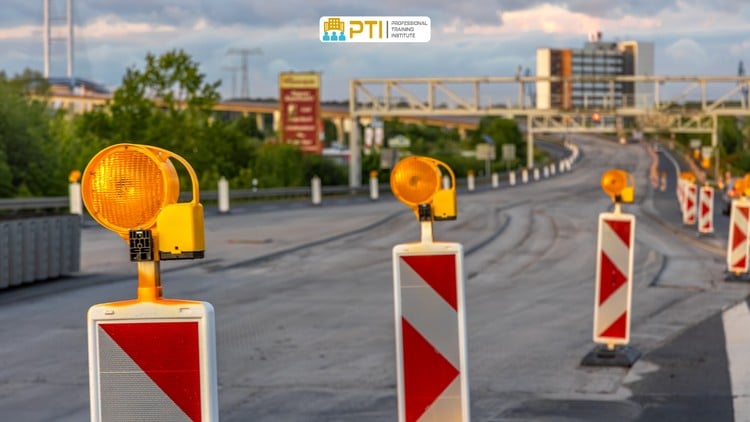
Master work zone safety, traffic control, TMPs, risk assessment, and infrastructure project safety.
What You Will Learn:
- Apply work zone safety principles to protect workers and road users.
- Conduct practical risk assessments and hazard management activities.
- Implement temporary traffic control devices and safe traffic flow.
- Manage specialized roadwork operations using industry best practices.
- Utilize modern technologies to improve traffic and work zone safety.
My Raw Take on the Roadwork & Traffic Management Safety Masterclass
Let’s be real for a second: most safety training feels like a chore. You sit in a room, watch a grainy video from the 90s, and check a box. But if you’re actually on the ground—whether you’re an engineer, a site supervisor, or a tech lead looking at smart city infrastructure—you know that work zone safety is the difference between a successful project and a total catastrophe. I recently dove into the Roadwork & Traffic Management Safety Masterclass, and I have some thoughts. It’s not just a “safety course”; it’s more of a deep-dive blueprint into how we move people and vehicles through high-risk zones without losing our minds (or worse).
What caught my eye was the shift from “just put some cones out” to a data-driven, strategic approach. We’re seeing a massive influx of modern technologies in this space—think IoT sensors and automated flagging—and this course actually acknowledges that reality. It bridges the gap between old-school boots-on-the-ground grit and the industry-standard tools required for modern infrastructure project safety. It isn’t just about reading a manual; it’s about understanding the psychology of a driver hitting a 50mph zone and how your temporary traffic control setup can prevent a disaster before it happens.
Who Needs to Be Here? (Prerequisites)
The beauty of this masterclass is that it spans the spectrum from beginner to advanced learners. You don’t need a degree in civil engineering to get started, but you do need a functional understanding of how a construction site operates. If you’ve spent any time around roadwork or logistics, you’ll have a leg up. It’s perfect for those looking for certification prep or professionals transitioning into safety auditing. If you’re coming from a tech background like I did, you might find the regulatory framework a bit dense at first, but it’s essential context for the hands-on labs that follow.
The Toolkit: Skills & Tools You’ll Actually Use
This isn’t just theory; it’s about walking away with job-ready skills. You’ll be diving into the creation and auditing of Traffic Management Plans (TMPs), which are the lifeblood of any major road project. We’re talking about:
- Developing real-world projects involving complex lane closures and detours.
- Learning the nuances of the Manual on Uniform Traffic Control Devices (MUTCD) or equivalent regional standards.
- Using risk assessment software to predict “near-miss” scenarios.
- Mastering the deployment of temporary traffic control devices—it’s more than just signs; it’s about placement, spacing, and sightlines.
- Exploring specialized roadwork operations like night work and high-speed corridor management.
Career Benefits & Job Roles
If you’re looking for career growth, this is a solid niche. The infrastructure bill and the global push for smarter cities have created a massive demand for people who actually know how to manage a safe work zone. This isn’t just a resume filler; it’s a pathway to high-stakes roles. After finishing this, you’re looking at positions like:
- Traffic Control Supervisor: The person calling the shots on-site.
- Work Zone Safety Auditor: Checking the math and the layout for compliance.
- Project Manager (Civil Infrastructure): Managing the risk assessment and budget for major builds.
- Health & Safety (HSE) Specialist: Focusing specifically on the transportation sector.
The job-ready skills you gain here are highly portable. A well-designed TMP looks the same in a tech hub as it does on a rural highway—safe is safe.
The Pros: What They Got Right
- Practical Application: I loved that it wasn’t just “read the slide.” The focus on hands-on labs and real-world projects means you’re actually building plans, not just memorizing definitions.
- Modern Edge: It’s one of the few courses that actually talks about how modern technologies like GPS tracking and smart barriers are changing the game.
- Comprehensive Scope: It covers everything from beginner to advanced levels, making it a “one-stop-shop” for anyone serious about this career path.
The Cons: My Honest Take
If I have one gripe, it’s the pacing in the middle. The section on regulatory compliance and legal risk assessment frameworks can feel like a bit of a slog. It’s absolutely necessary—if you get the legal side wrong, you’re in big trouble—but it lacks the high-energy excitement of the tactical traffic management sections. You’ll need some extra coffee to power through the legislative deep dives.
Overall, if you’re looking to level up your infrastructure project safety game or need serious certification prep, this masterclass is a no-brainer. It’s an investment in your ability to keep people alive, and in this industry, there’s no skill more valuable than that.