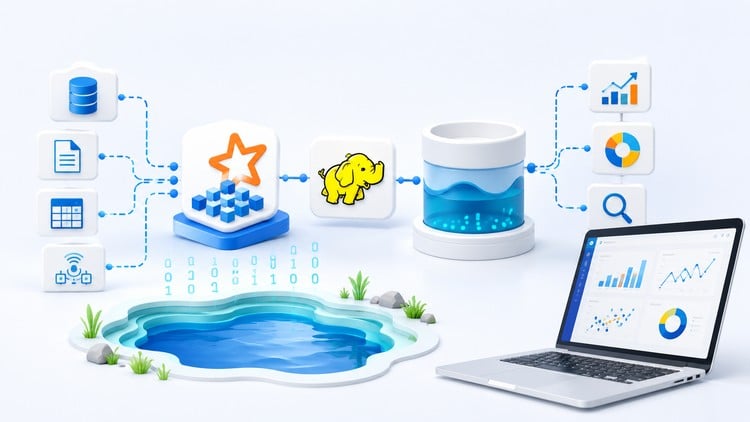
Validate your Data Engineering skills with 200 rigorous practice questions on Apache Spark, Delta Lake, and distributed
What You Will Learn:
- Optimize distributed data processing pipelines using Apache Spark, including managing shuffles, partitions, and broadcast joins.
- Architect scalable and reliable Data Lakes using Delta Lake, implementing ACID transactions and schema evolution.
- Resolve common Big Data performance bottlenecks, such as data skew (using salting techniques) and inefficient memory caching.
- Design high-throughput streaming and batch ingestion frameworks for IoT, financial, and enterprise audit data.
Alright folks, if you’re looking to just dip your toes into Big Data, this ain’t it. But if you’re serious about taking your data engineering chops from competent to *masterful*, then let’s talk about ‘Big Data Engineering Mastery: Spark, Hadoop & Data Lakes’. I just wrapped up this beast, and I’ve got some thoughts – honest, unfiltered thoughts from someone who’s been in the trenches.
Overview
This course isn’t about teaching you what Spark is; it’s about teaching you how to make Spark sing – a high-performance, cost-efficient symphony capable of handling petabytes of data. It dives deep into the “how” and “why” behind optimizing distributed data processing pipelines, moving far beyond basic transformations. What I particularly valued was the emphasis on real-world scenarios and common pitfalls. They tackle everything from baffling data skew issues (hello, salting techniques!) to crafting robust, scalable Data Lakes with Delta Lake’s ACID properties. This isn’t theoretical fluff; it’s practical, hands-on expertise designed to build the kind of bulletproof data infrastructure that modern enterprises demand. If you’re currently wrestling with slow jobs or unreliable data pipelines, this course offers the insights and tools to resolve those headaches permanently.
Prerequisites
Let’s be blunt: this isn’t a “beginner to advanced” course if you’re starting from zero. To genuinely benefit, you’ll need a solid foundation:
- Proficiency in at least one primary data language like Python or Scala. If you’re still Googling basic syntax, hold off.
- A fundamental understanding of SQL – you’ll be working with data, after all.
- Familiarity with basic Apache Spark concepts. You should know what a DataFrame is and have run a few simple Spark jobs.
- Comfort with the Linux command line.
- Some exposure to cloud platforms (AWS, Azure, GCP) is highly beneficial, as these tools thrive in cloud environments.
Think of it this way: the course assumes you know how to drive; it’s here to teach you how to win races.
Skills & Tools
Upon completion, you won’t just know *about* these technologies; you’ll know how to wield them effectively. This course focuses on building true job-ready skills.
- Distributed Data Processing Optimization: Mastering Spark shuffles, partitions, broadcast joins, and various memory management techniques.
- Data Lake Architecture: Designing robust, performant, and reliable Data Lakes using Delta Lake, including schema evolution and time travel.
- Big Data Performance Tuning: Identifying and resolving bottlenecks like data skew, garbage collection issues, and inefficient caching strategies.
- High-Throughput Ingestion Frameworks: Crafting scalable batch and streaming pipelines for diverse data sources (IoT, financial logs, audit trails).
- Industry-Standard Tools: Deep expertise in Apache Spark and Delta Lake, with a practical understanding of how they integrate into a broader Hadoop ecosystem context.
Career Benefits & Job Roles
This course offers a significant boost to your career growth. The emphasis on problem-solving and optimization equips you with skills highly sought after in today’s data landscape. It’s excellent for certification prep – particularly for Databricks or vendor-neutral Spark certifications – because it forces you to think like a professional Big Data Engineer. The practical labs simulate real-world projects, giving you tangible experience to discuss in interviews.
Potential roles you’ll be well-prepared for include:
- Senior Data Engineer / Lead Data Engineer
- Big Data Architect / Cloud Data Architect
- Spark Performance Engineer
- ML Platform Engineer (especially for managing large-scale data for ML models)
- Data Platform Engineer
Pros
- Unparalleled Depth & Rigor: This isn’t a superficial walkthrough. The course dives deep into the internals of Spark and Delta Lake, dissecting complex topics like shuffle management and predicate pushdown. The 200 rigorous practice questions aren’t just quizzes; they’re genuine challenges that force you to apply what you’ve learned, building critical thinking and problem-solving muscle. It’s fantastic for hands-on labs that truly test your understanding.
- Focus on Performance Bottlenecks: A huge win here is the dedicated attention to performance tuning. Learning how to identify and resolve issues like data skew (with practical salting techniques!) and memory inefficiencies is invaluable. This goes beyond mere syntax, teaching you to debug and optimize complex distributed systems – a genuine mark of an experienced professional.
- Robust Data Lake Architecture with Delta Lake: The section on architecting Data Lakes with Delta Lake is superb. It covers crucial concepts like ACID transactions, schema evolution, and time travel, which are non-negotiable for building reliable and auditable data platforms. This mastery of industry-standard tools ensures you’re building future-proof solutions.
- Real-World Ingestion Strategies: The practical approach to designing high-throughput streaming and batch ingestion frameworks for various data types (IoT, financial, audit) directly translates to real-world projects. It teaches you to think about data flow, resilience, and scalability from the ground up, making you a versatile asset.
Cons
- Steep Learning Curve for the Unprepared: While marketed as “Mastery,” the course implicitly assumes a certain level of existing familiarity with distributed computing and basic Spark. If you come in as an absolute novice, you might find yourself overwhelmed by the pace and depth. It’s challenging, and it demands significant time and dedication. This isn’t a course to passively consume; you need to actively engage with every lab and question to fully benefit.
In conclusion, if you’re an aspiring or current Data Engineer looking to solidify your expertise and tackle the most challenging aspects of Big Data, this course is a powerhouse. It will push you, but it will also equip you with the advanced job-ready skills necessary for significant career growth in the data engineering space.