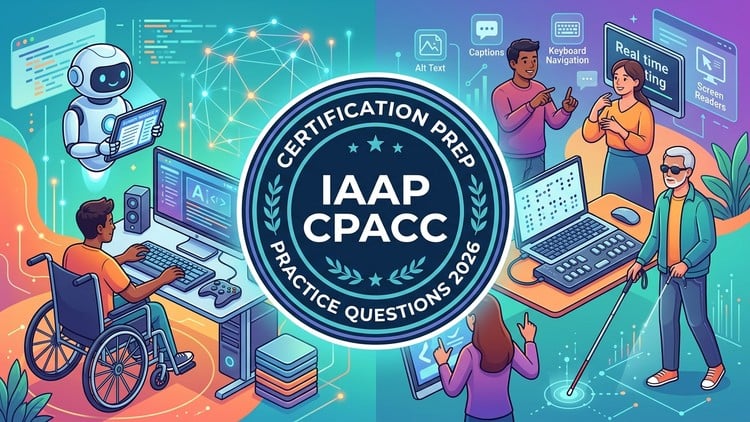
Practice Tests with Answer Explanations | Updated for 2026 | Study Smart and Pass with Confidence
What You Will Learn:
- Identify the main disability models, including medical, social, and biopsychosocial frameworks.
- Recognize disability categories and the assistive technology used to support each one.
- Apply WCAG 2.1 guidelines to make websites and digital content more accessible.
- Explain universal design, UDL, and usability concepts for better user experience.
- Understand global accessibility laws and standards that guide workplace compliance.
Alright folks, let’s talk about tackling the IAAP Accessibility Certification. It’s a big one in our field, and for good reason. If you’re aiming to truly embed accessibility into your tech stack, this cert is a solid gold ticket. I recently dove into the ‘CPACC Practice Tests: Pass the IAAP Accessibility Exam’ course, and I’ve got some thoughts. As a seasoned tech pro, I’m not one for fluff, so consider this my unfiltered take.
Overview
Look, the core of this course is exactly what the title promises: practice tests. But don’t let the simplicity fool you. This isn’t just a collection of random questions. What struck me immediately was the depth of the answer explanations. They don’t just tell you why an answer is right; they often contextualize it within the broader accessibility landscape, referencing specific standards or best practices. It’s clear a lot of thought went into constructing these scenarios, mimicking the kind of critical thinking the actual CPACC exam demands. For anyone coming from a development or UX background, you’ll find that it bridges the gap between theoretical knowledge and practical application – the kind of skills you need to move from, say, understanding basic ARIA roles to designing truly inclusive user journeys. It’s definitely geared towards certification prep, but the underlying material builds a strong foundation that’s valuable for career growth irrespective of immediate exam goals.
Prerequisites
Honestly, you don’t need a formal degree in accessibility. However, a foundational understanding of web technologies (HTML, CSS, JavaScript) and a general awareness of user experience principles will serve you incredibly well. If you’re already working in a tech role, you probably have this covered. The course assumes you’re familiar with the concept of user interfaces and the digital world, but it’s not going to hold your hand through basic programming concepts. Think of it as a specialized training module for an existing skill set.
Skills & Tools
This practice test course is primarily focused on solidifying your understanding of the CPACC exam topics. You’ll be honing your ability to interpret complex scenarios related to disability models, assistive technologies, and legal frameworks. While it doesn’t directly teach you how to use specific industry-standard tools like screen readers or accessibility checkers (that’s more for the hands-on labs you might find elsewhere), it equips you with the *knowledge* of what to look for and how to evaluate their effectiveness. The emphasis is on cognitive skills: analysis, application, and synthesis of accessibility principles. It’s the mental toolkit you need before you start wielding the actual technical tools.
Career Benefits & Job Roles
Passing the CPACC opens doors. Seriously. It signals to employers that you understand the nuances of accessibility beyond just meeting basic compliance. This can lead to roles like Accessibility Specialist, UX Engineer (with an accessibility focus), Digital Inclusion Manager, or even enhancing your current position as a Web Developer or QA Tester. It’s about becoming a more valuable, job-ready asset in a market that’s increasingly prioritizing digital equity. This certification is a stepping stone to demonstrating your commitment to building accessible experiences, which is becoming a non-negotiable for many organizations.
Pros
- Comprehensive Coverage: The practice questions are well-aligned with the likely scope of the CPACC exam, covering a good range of topics from disability models to legal standards.
- Insightful Explanations: The detailed answer breakdowns are the real gem here, providing context and reinforcing learning beyond simple right/wrong answers.
- Confidence Booster: Working through realistic practice scenarios is an excellent way to build confidence and identify knowledge gaps before the actual exam.
- Updated Content: The ‘Updated for 2026’ aspect is crucial. Accessibility standards and legal interpretations evolve, so having current material is a significant advantage.
Cons
My main critique is that while it’s excellent for exam preparation, it’s not a *standalone* learning resource for someone completely new to accessibility. You’ll get the most out of this if you’ve already engaged with introductory accessibility concepts. It’s more of a rigorous sparring partner for your existing knowledge than a complete beginner’s guide. You might need to supplement it with broader accessibility learning materials if you’re starting from scratch.