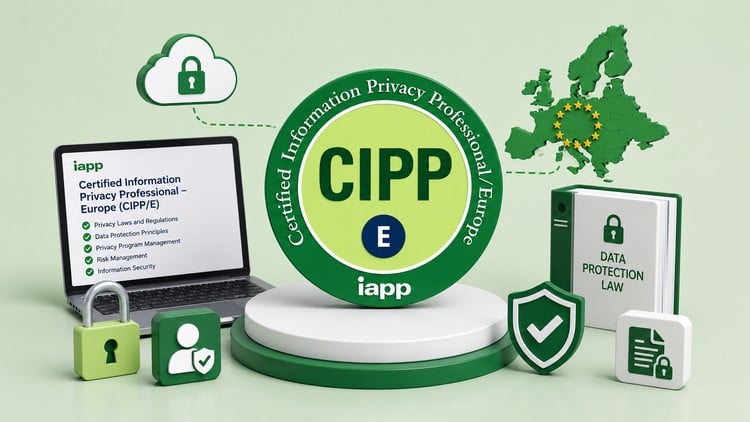
Pass the IAPP CIPP/E Exam | GDPR, Data Subject Rights, International Transfers, DPO Roles & Practice Tests
What You Will Learn:
- Master CIPP/E certification objectives and European privacy law concepts
- Practice with realistic certification-style mock exams and quizzes
- Understand GDPR principles, lawful processing, and data subject rights
- Learn privacy governance, compliance frameworks, and risk management strategies
- Improve legal interpretation and privacy-related problem-solving skills
- Strengthen understanding of cross-border data transfers and breach notification requirements
- Gain confidence to pass the CIPP/E certification exam
- Learn privacy and data protection best practices used in modern organizations
Alright, let’s talk about the ‘CIPP/E Certification: IAPP GDPR & Data Privacy Prep 2026’ course. I’ve been in the tech game for a while now, and data privacy, especially with GDPR looming larger than ever, is becoming less of a nice-to-have and more of a “you better know this or else” situation. So, I decided to dive into this prep course to see if it could genuinely set me up for success with the IAPP’s CIPP/E certification. My goal was to cut through the fluff and find out if this is the real deal for upskilling in a critical area.
Overview
This course positions itself as a comprehensive roadmap to the CIPP/E exam, and from what I experienced, it largely delivers on that promise. It’s not just about memorizing regulations; it’s about building a foundational understanding of European data privacy law and how it translates into practical application. What really stood out was the emphasis on translating the often-dense legal text of GDPR and other EU privacy frameworks into actionable insights. They’ve clearly put thought into structuring the material to move from core principles to more complex scenarios, like cross-border data transfers, which can be a real headache in practice. The inclusion of practice tests and quizzes is crucial, as it gives you a realistic gauge of where you stand and where you need to focus your study efforts. It aims to get you from a beginner understanding of privacy concepts to a more advanced, job-ready skillset.
Prerequisites
The course is designed to be accessible, but I’d say a foundational understanding of data handling, IT concepts, and a general awareness of legal or compliance principles will make the journey much smoother. You don’t need to be a lawyer, but if you’re coming in with absolutely zero context for how data flows through systems or what concepts like “personal data” mean, you might find yourself playing catch-up. It’s beneficial if you’ve been exposed to basic IT governance or compliance frameworks in your career. For those completely new to the field, I’d suggest supplementing with some introductory materials on general data protection concepts before diving in.
Skills & Tools
The primary skill you’ll hone here is a deep understanding of European data privacy legislation, particularly GDPR. This includes mastering concepts like lawful bases for processing, data subject rights, privacy by design and by default, and the intricacies of international data transfers. Beyond that, you’ll develop your legal interpretation skills specifically within the privacy domain, which is invaluable. You’ll learn to identify compliance gaps and strategize risk management approaches. While the course itself doesn’t involve hands-on labs in the traditional sense (it’s more theoretical and knowledge-based), the practice tests act as a form of simulated assessment, akin to preparing for real-world project scenarios where you need to apply these principles. The “tools” are primarily your enhanced knowledge base and your ability to critically analyze privacy-related challenges.
Career Benefits & Job Roles
This certification prep is a significant investment in your career growth. A CIPP/E certification is highly sought after in today’s market. It opens doors to a variety of roles such as: Data Protection Officer (DPO), Privacy Manager, Compliance Officer, Privacy Counsel, Information Security Analyst with a privacy focus, and even roles in LegalTech or RegTech. Employers are actively looking for professionals who can navigate the complex GDPR landscape and ensure their organizations remain compliant, mitigating substantial legal and reputational risks. This course directly equips you with the knowledge to fill those critical positions.
Pros
- Comprehensive Curriculum: The course covers all the essential CIPP/E exam objectives and provides a robust understanding of European data privacy law, going beyond mere memorization.
- Practical Application Focus: It effectively bridges the gap between legal theory and real-world application, preparing you to tackle privacy challenges in an organizational context.
- Realistic Practice Assessments: The inclusion of certification-style mock exams and quizzes is a major plus, allowing for effective self-assessment and targeted study.
- Clear Pathways for Career Advancement: The skills and knowledge gained directly translate into valuable credentials that can significantly boost your career prospects in the data privacy field.
Cons
The one honest point I’d make is that while the course is excellent for preparing you for the CIPP/E exam and building foundational knowledge, it’s fundamentally a knowledge-acquisition course. It doesn’t offer hands-on labs or simulations that mimic day-to-day operational tasks. So, while you’ll be job-ready in terms of understanding, you might still need some on-the-ground experience to fully implement these best practices without additional guidance. The practical application is more in the problem-solving and strategic thinking rather than the direct execution of technical privacy controls.