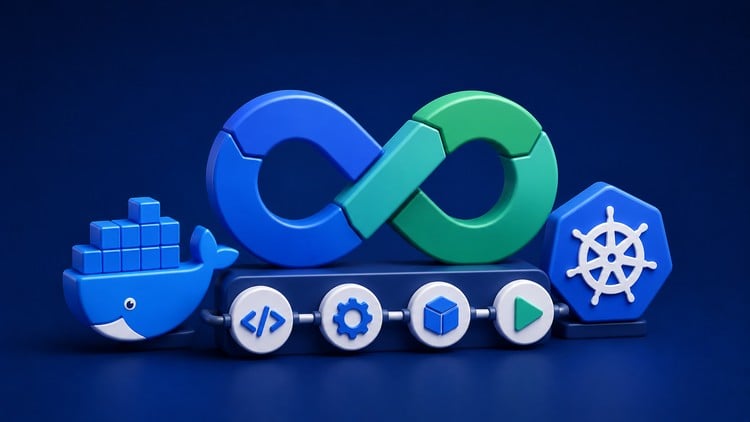
Ace your DevOps interviews with 200 realistic questions on Containerization, Pods, Terraform, and Blue-Green Deployments
What You Will Learn:
- Master containerization concepts by differentiating between Docker images and containers, and writing optimized Dockerfiles (CMD vs. ENTRYPOINT).
- Architect highly resilient microservices using Kubernetes, managing Pods, ReplicaSets, Deployments, and LoadBalancer Services.
- Automate the software delivery lifecycle by designing robust CI/CD pipelines and executing advanced zero-downtime deployment strategies (Blue-Green, Canary).
- Provision infrastructure safely using Infrastructure as Code (Terraform) and configure observability metrics using tools like Prometheus.
An Honest Look at Mastering the DevOps Ecosystem
If you have spent any time in the current tech landscape, you know that “DevOps” is no longer just a trendy buzzword—it is the literal backbone of modern software development. I have seen plenty of engineers stumble through interviews because they could explain what a container was in theory but couldn’t write a clean Dockerfile to save their lives. That is where DevOps Engineering: Docker, Kubernetes & CI/CD Exams steps in. This isn’t your typical “sit back and watch” tutorial series; it is a high-octane deep dive designed to turn beginner to advanced practitioners into battle-hardened professionals.
What I appreciate most about this course is its focus on the “why” behind the “how.” In the real world, it is not enough to just spin up a cluster; you need to understand the networking implications of LoadBalancer Services and how to handle zero-downtime deployment strategies like Canary or Blue-Green. This course treats you like a peer, pushing you to understand the nuances of the industry-standard tools that actually matter in a production environment. It bridges the gap between theoretical knowledge and job-ready skills, which is something many bootcamps fail to do.
Who Should Sign Up? (Prerequisites)
While the course covers a lot of ground, it is not for someone who has never seen a command line before. To really get the most out of these hands-on labs, you should have a foundational understanding of the following:
- Basic Linux Administration: You should be comfortable navigating the filesystem and using basic shell commands.
- Fundamental Networking: Understanding IP addresses, ports, and basic HTTP protocols will make the Kubernetes networking sections much easier to digest.
- YAML Syntax: Since almost everything in the Infrastructure as Code (IaC) world is written in YAML, being comfortable with indentation is a must.
- General SDLC Knowledge: A basic grasp of how code moves from a developer’s laptop to a server helps put the CI/CD pipeline concepts into context.
The Toolkit: Skills & Tools You Will Master
The curriculum is packed with real-world projects that mirror what you will encounter in a high-growth tech company. You aren’t just learning tools; you are learning an ecosystem. Here is a breakdown of the heavy hitters:
- Docker & Containerization: Moving beyond basic commands to master optimized Dockerfiles, volume mapping, and the critical distinction between CMD and ENTRYPOINT.
- Kubernetes Orchestration: Managing the lifecycle of Pods, ReplicaSets, and Deployments. You will learn how to make microservices truly resilient.
- CI/CD Automation: Building robust pipelines that automate testing and deployment, ensuring that “it works on my machine” is a phrase of the past.
- Infrastructure as Code (Terraform): Provisioning cloud resources safely and repeatably using Terraform.
- Observability: Implementing Prometheus to monitor health metrics, because you can’t manage what you can’t measure.
Career Benefits & Job Roles
The ROI on this course is potentially massive for your career growth. We are currently in a market where companies are desperate for talent that can navigate the “Cloud Native” world. Completing this curriculum and the associated 200 realistic questions provides excellent certification prep for exams like the CKA (Certified Kubernetes Administrator) or the DCA (Docker Certified Associate).
Once you have these job-ready skills under your belt, you are looking at roles such as:
- DevOps Engineer: Average salaries for these roles often hit six figures early on.
- Site Reliability Engineer (SRE): Focus on the stability and observability of massive systems.
- Cloud Architect: Designing the high-level infrastructure that powers global applications.
- Release Manager: Orchestrating the software delivery lifecycle for complex enterprise products.
Why This Course Hits the Mark (The Pros)
- Realistic Question Bank: The 200 questions provided aren’t just fluff. They mimic the pressure of technical interviews and certification prep, focusing on troubleshooting and logic rather than rote memorization.
- Deep Dive into Deployment Strategies: Most courses mention Blue-Green and Canary deployments, but few actually show you how to execute them using Kubernetes Services and ingress controllers. This is gold for anyone wanting to work in high-stakes environments.
- Emphasis on Best Practices: The focus on optimized Dockerfiles and Infrastructure as Code ensures you aren’t just building things, but building them the “right” way—securely and efficiently.
The Reality Check (The Cons)
- Steep Learning Curve: The transition from Docker basics to complex Kubernetes networking can feel like drinking from a firehose. If you are a total novice, you might find yourself needing to pause and supplement with outside documentation to fully grasp the Terraform state management or Prometheus query language (PromQL). It’s an intensive experience that requires genuine dedication.
Overall, if you are serious about moving into the upper tiers of the tech industry, this course is a solid investment. It cuts through the noise and gives you the exact industry-standard tools and confidence needed to ace your next DevOps interview.