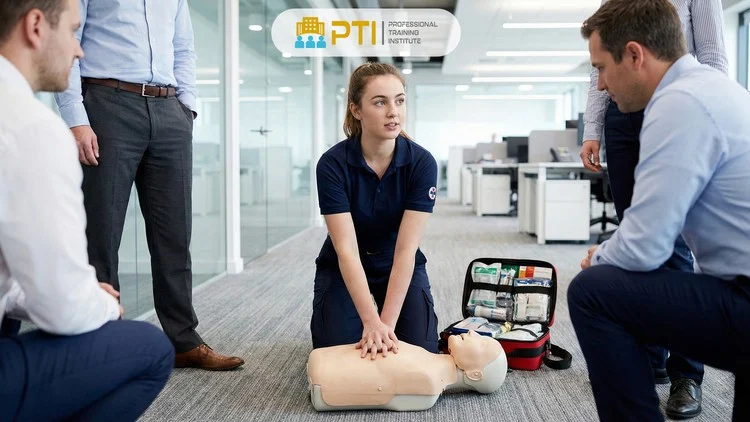
Comprehensive CPR, AED, trauma response, and workplace emergency management training for confident life-saving action
⏱️ Length: 3.3 total hours
👥 8 students
Add-On Information:
Note➛ Make sure your 𝐔𝐝𝐞𝐦𝐲 cart has only this course you're going to enroll it now, Remove all other courses from the 𝐔𝐝𝐞𝐦𝐲 cart before Enrolling!
- Course Overview
- This program is specifically engineered to bridge the gap between theoretical knowledge and the high-pressure reality of an industrial or corporate crisis, ensuring that every second of the 3.3-hour duration is utilized for maximum skill retention.
- The curriculum prioritizes the development of a ‘First Responder Mindset,’ focusing on the psychological transition from a passive bystander to an active life-saver within a professional organizational structure.
- With a strictly capped enrollment of only 8 students, the course architecture ensures an unprecedented level of instructor-to-student interaction, allowing for real-time correction of physical techniques and nuanced feedback on decision-making processes.
- The course integrates the specific logistical challenges of a modern workplace, such as navigating high-rise office layouts, managing crowds in common areas, and coordinating with existing on-site security personnel during an unfolding medical event.
- Participants will engage in high-stress simulation drills that mimic the chaotic environment of a workplace emergency, moving beyond static classroom learning to prepare for the sensory overload of real-world incidents.
- There is a significant emphasis on the ‘Chain of Survival,’ illustrating how early intervention and professional-grade communication can drastically improve the chances of recovery before professional paramedics arrive on the scene.
- The instructional methodology utilizes a ‘see-one, do-one’ approach, which is proven to cement technical skills into long-term muscle memory, essential for tasks that must be performed under extreme cognitive load.
- Requirements / Prerequisites
- Participants must possess the physical stamina and mobility required to perform repeated chest compressions and move between standing and kneeling positions on the floor without significant difficulty.
- There are no formal medical prerequisites required; however, a proactive attitude and a willingness to engage in intense, hands-on physical simulations are essential for successful completion of the certification.
- Students are expected to wear comfortable, professional-casual attire that allows for a full range of motion, as many of the life-saving drills involve maneuvering in tight spaces or on various floor surfaces.
- A basic proficiency in the primary language of instruction is necessary to comprehend complex legal definitions and to communicate effectively with emergency dispatchers during simulated 911 calls.
- All attendees should arrive with a commitment to maintaining a sanitary training environment, which includes following all hygiene protocols when using shared training equipment and medical manikins.
- Skills Covered / Tools Used
- Instruction covers the sophisticated calibration and maintenance of on-site medical hardware, ensuring that students can identify when equipment is operational or requires immediate servicing.
- Students will master the use of advanced personal protective equipment (PPE), learning how to create a biological barrier between themselves and a casualty to prevent cross-contamination in a public setting.
- The course utilizes high-fidelity training manikins equipped with electronic monitoring systems that provide instant biometric feedback on the depth and rate of rescue interventions.
- Training includes the use of specialized evacuation equipment and techniques for safely moving an incapacitated person away from immediate environmental threats like fire, chemical leaks, or structural instability.
- Participants will be trained in the administrative side of first aid, including the accurate documentation of incidents using standardized workplace injury forms to ensure legal and medical clarity.
- The curriculum introduces the use of barrier masks and ventilation shields, focusing on maintaining oxygenation while minimizing the risk of exposure to airborne or bloodborne pathogens.
- Instructional tools include realistic trauma simulation kits that use synthetic fluids and textures to prepare students for the visual and tactile reality of treating severe physical injuries.
- Benefits / Outcomes
- Completion of the course fosters a culture of safety and mutual care within the organization, significantly boosting employee morale by demonstrating a tangible investment in staff well-being.
- Graduates will experience a profound increase in personal confidence, replacing the fear of ‘doing the wrong thing’ with a structured, evidence-based protocol for any medical contingency.
- Organizations benefit from a significant reduction in potential liability, as trained staff members are better equipped to follow statutory safety guidelines and provide competent care that meets professional standards.
- The training serves as a powerful professional development milestone, adding a universally recognized and highly valued life-saving credential to a participant’s career portfolio.
- Successful students will develop a heightened sense of situational awareness, enabling them to identify and mitigate potential workplace hazards before they escalate into life-threatening emergencies.
- The course produces leaders who can take command of a chaotic scene, effectively delegating tasks to others and serving as a calm, stabilizing influence during high-stress organizational interruptions.
- Participants will leave with a comprehensive understanding of Post-Traumatic Growth, learning how to debrief after an incident to support their own mental health and the psychological recovery of their colleagues.
- PROS
- The exceptionally small class size ensures that no student is left behind, offering a bespoke learning experience tailored to individual learning speeds and physical capabilities.
- The 3.3-hour format is optimized for the busy professional, delivering a high density of life-saving information without requiring a multi-day absence from workplace responsibilities.
- Instruction is led by seasoned emergency professionals who bring real-world anecdotes and practical ‘hacks’ that are not found in standard first aid manuals or online videos.
- The focus on workplace-specific scenarios makes the training directly applicable to the office, factory, or retail environment, rather than relying on generic medical examples.
- CONS
- The condensed timeframe of the course requires intense concentration and a rapid pace of learning, which may be challenging for individuals who prefer a slower, more theoretical approach to medical training.
Learning Tracks: English,Health & Fitness,Safety & First Aid
Found It Free? Share It Fast!