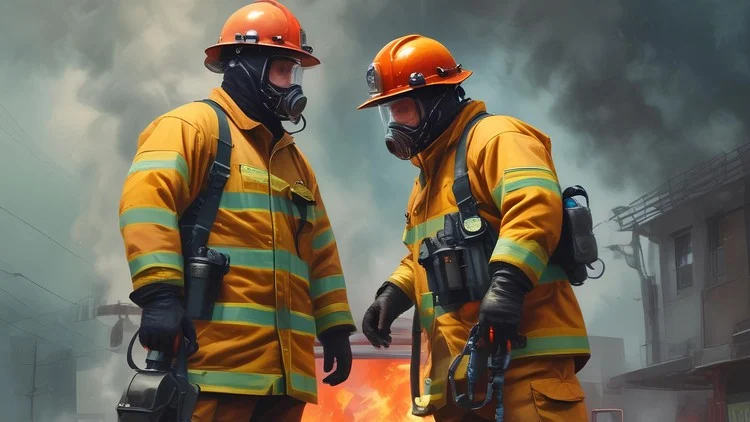
Master Fire Prevention, Fire Risk Assessment, Safety Regulations, Emergency Planning and Fire Protection Strategies
⏱️ Length: 1.2 total hours
👥 21 students
Add-On Information:
Note➛ Make sure your 𝐔𝐝𝐞𝐦𝐲 cart has only this course you're going to enroll it now, Remove all other courses from the 𝐔𝐝𝐞𝐦𝐲 cart before Enrolling!
- Advanced Strategic Fire Safety Frameworks: This curriculum moves beyond basic firefighting techniques to focus on the high-level strategic planning required for large-scale industrial, commercial, and residential complexes, ensuring a holistic approach to life safety.
- Architectural Integrity and Passive Fire Protection: Students will examine the critical role of building materials, fire-rated assemblies, and structural compartmentation in containing fire spread and maintaining structural stability during an emergency event.
- Comprehensive Legislative Compliance Mastery: The course provides an in-depth exploration of international fire codes, national regulations, and local ordinances, enabling professionals to navigate complex legal landscapes and avoid heavy litigation risks.
- Human Behavior and Evacuation Modeling: A core component of the syllabus involves analyzing how people react during fire emergencies, focusing on crowd dynamics, psychological stressors, and the design of efficient egress routes that account for human panic.
- Integration of Smart Fire Technology: Learn how to leverage cutting-edge Internet of Things (IoT) sensors, automated suppression systems, and AI-driven smoke detection technology to create a responsive and intelligent fire safety infrastructure.
- Industrial Hazard and Hazardous Material Management: Special emphasis is placed on high-risk environments involving chemical processing, combustible dust, and flammable liquids, providing specialized protocols for unique industrial threats.
- Business Continuity and Post-Fire Recovery: Beyond immediate safety, this course teaches how to develop robust recovery plans that minimize operational downtime and protect organizational assets following a significant fire incident.
- Fire Safety Auditing and Documentation: Develop the rigorous skills needed to perform internal and external fire safety audits, including the creation of detailed reports that satisfy insurance requirements and government safety inspectors.
- Professional Foundation in Occupational Health: It is highly recommended that candidates possess a baseline understanding of workplace health and safety or have previously completed a general safety certification to grasp the advanced concepts presented.
- Academic Background in Engineering or Architecture: While not strictly mandatory, a fundamental grasp of building design, physics, or mechanical engineering will significantly enhance the learner’s ability to understand structural fire dynamics.
- Analytical and Mathematical Proficiency: Prospective students should be comfortable with basic data analysis and probability, as these are essential for calculating fire load densities and conducting quantitative risk assessments.
- Access to Fire Safety Equipment Manuals: For practical context, having access to standard fire alarm control panel documentation or sprinkler system specifications will allow students to better apply the theoretical models discussed.
- Commitment to Continuous Professional Development: As fire safety standards evolve rapidly, candidates must demonstrate a willingness to engage with updated research and peer-reviewed journals throughout the duration of the diploma.
- Quantitative Risk Assessment (QRA) Methodology: Master the use of risk matrices and probabilistic models to determine the likelihood and impact of fire hazards, allowing for data-driven safety investments.
- Fire Dynamics Simulator (FDS) Concepts: Gain theoretical knowledge of computational fluid dynamics tools used to predict smoke movement and temperature gradients in various building geometries.
- Active Suppression System Specification: Learn the technical parameters for designing and maintaining wet-pipe, dry-pipe, and pre-action sprinkler systems, as well as specialized clean-agent suppression for data centers.
- Emergency Communication Protocols: Develop the ability to design high-intelligibility voice evacuation systems and multi-channel emergency notification frameworks for large-occupancy buildings.
- Root Cause Analysis (RCA) Tools: Acquire the forensic skills necessary to investigate fire incidents, utilizing techniques like the “5 Whys” or “Fishbone Diagrams” to identify systemic failures and prevent recurrence.
- Hydraulic Calculation Fundamentals: Understand the fluid mechanics required to ensure adequate water pressure and flow rates for fire hydrants and standpipe systems in high-rise environments.
- Safety Management Systems (SMS) Integration: Learn to incorporate fire safety into broader corporate management systems like ISO 45001 to ensure safety is a fundamental part of the organizational culture.
- Performance-Based Design (PBD) Approaches: Explore alternatives to prescriptive codes by learning how to use engineering principles to meet safety goals through customized, site-specific solutions.
- Enhanced Executive Leadership Credibility: Completing this postgraduate-level diploma signals to employers that you possess the specialized expertise required to lead safety departments and advise corporate boards.
- Substantial Reduction in Insurance Premiums: Organizations with staff trained in these advanced risk management techniques often qualify for significantly lower commercial insurance rates due to their proven risk-mitigation capabilities.
- Global Career Mobility: The principles of fire science and risk management taught in this course are universally applicable, opening doors to high-paying consultancy roles in various international markets.
- Development of Life-Saving Expertise: The most profound benefit is the direct impact on human life safety, as graduates are empowered to design environments that prevent tragedies before they occur.
- Expertise in Modern Regulatory Negotiation: Gain the confidence and vocabulary needed to negotiate with fire marshals and building officials, potentially saving your organization time and money during construction projects.
- Strategic Asset Protection: Beyond life safety, you will learn how to protect high-value equipment, sensitive data, and irreplaceable physical assets from smoke and thermal damage.
- Network Growth with Safety Professionals: Engaging with this specialized content connects you to a community of like-minded experts, fostering collaboration on complex fire safety challenges.
- Preparation for Advanced Certification Exams: This course serves as an excellent technical foundation for those seeking professional designations like the CFPS (Certified Fire Protection Specialist).
- PROS: High-Density Knowledge Transfer: The course distills complex post-graduate level fire science into a highly efficient format, maximizing the value of every minute of study time for busy professionals.
- PROS: Interdisciplinary Application: The curriculum is designed to be relevant across multiple sectors, including oil and gas, healthcare, aviation, and urban planning.
- PROS: Focus on Preventative Engineering: Unlike basic training that focuses on response, this course emphasizes the proactive engineering of safety into the very fabric of a building.
- PROS: Advanced Risk Modeling Techniques: Learners move beyond checklists to adopt sophisticated modeling techniques used by the world’s leading fire safety consultancies.
- CONS: Intensive Information Pace: Due to the condensed nature of the total hours relative to the “Postgraduate Diploma” title, students must maintain extreme focus and may require significant independent research to fully master the deep technical nuances of each module.
Learning Tracks: English,Business,Operations
Found It Free? Share It Fast!