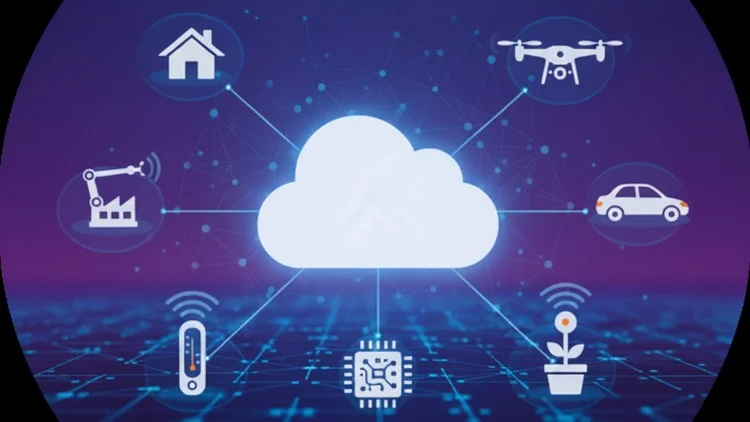
Hands-on AWS IoT Core using ESP32 and Android with MQTT, device shadows, certificates, and live debugging
⏱️ Length: 1.9 total hours
⭐ 3.00/5 rating
👥 54 students
🔄 February 2026 update
Add-On Information:
Note➛ Make sure your 𝐔𝐝𝐞𝐦𝐲 cart has only this course you're going to enroll it now, Remove all other courses from the 𝐔𝐝𝐞𝐦𝐲 cart before Enrolling!
- Course Overview
- Comprehensive IoT Ecosystem Integration: This course provides a deep dive into the end-to-end process of connecting physical hardware to a mobile interface via the cloud. You will explore the entire lifecycle of a data packet as it travels from an ESP32 microcontroller, through the AWS IoT Core backbone, and finally populates a user-friendly Android application interface.
- Project-Based Learning Framework: Rather than focusing on abstract theories, the curriculum is structured around the creation of a functional, real-world application. This hands-on approach ensures that learners understand the practical application of MQTT protocols and cloud triggers in a scenario that mimics professional industrial or consumer IoT product development.
- AWS Cloud Infrastructure Deep Dive: Students will gain a functional understanding of the AWS IoT Core console, learning how to navigate the complex suite of tools provided by Amazon Web Services. The course breaks down the setup of “Things,” the creation of “Policies,” and the management of “Certificates” into manageable, step-by-step instructions.
- Firmware to App Synchronization: A significant portion of the course is dedicated to the synergy between C++ based firmware for the ESP32 and Java/Kotlin based logic for Android. You will learn how to write code that ensures your hardware and your smartphone app are always in perfect sync, regardless of geographic distance or network fluctuations.
- Condensed High-Impact Curriculum: With a total length of 1.9 hours, the course is designed for efficiency. It cuts through the fluff to deliver high-density information, making it ideal for busy developers, engineering students, or hobbyists who want to achieve a working prototype in a single weekend without sitting through dozens of hours of repetitive lectures.
- Requirements / Prerequisites
- Hardware Kit Essentials: To successfully follow the tutorials, students should possess an ESP32 development board (such as the DevKit V1), a standard micro-USB or USB-C data cable, and a stable internet connection. Access to basic electronic components like LEDs or sensors is recommended to test the physical output of the cloud commands.
- Software Development Environment: You will need a computer capable of running the Arduino IDE (for firmware development) and Android Studio (for mobile app construction). It is expected that learners have these environments pre-installed and are familiar with basic operations like flashing code to a board and running an app on an emulator or physical phone.
- Active AWS Account: A valid Amazon Web Services account is required to access the IoT Core services. The course focuses on staying within the Free Tier limits, but students must be comfortable navigating the AWS billing and account management dashboard to set up their initial cloud environment.
- Fundamental Programming Literacy: While the course is guided, a foundational understanding of C or C++ (for the ESP32 logic) and basic Object-Oriented Programming concepts (for the Android application) will significantly enhance the learning experience and allow for easier troubleshooting during the debugging phases.
- Skills Covered / Tools Used
- MQTT Protocol Mastery: You will master the Message Queuing Telemetry Transport (MQTT) protocol, learning how to implement the Publish/Subscribe model. This includes understanding topics, payloads, and Quality of Service (QoS) levels that are critical for reliable low-bandwidth communication between devices and the cloud.
- Device Shadow Implementation: The course covers the use of AWS Device Shadows to store and retrieve state information for your ESP32. You will learn how to maintain a persistent virtual version of your hardware in the cloud, allowing your Android app to interact with the device even if the hardware is momentarily offline.
- X.509 Certificate-Based Security: Security is a primary focus, and you will learn how to generate and attach X.509 certificates to your ESP32. This ensures that only authorized devices can communicate with your AWS endpoint, providing a professional-grade layer of encryption and identity management to your project.
- JSON Data Parsing: Learners will gain skills in structuring and deconstructing JSON (JavaScript Object Notation) payloads. You will learn how to package sensor data into JSON format on the ESP32 and how to parse that data within the Android environment to update UI elements like text views or toggle switches.
- Live Cloud Debugging: You will utilize the AWS IoT MQTT Test Client and Serial Monitor tools to perform live debugging. This skill is vital for identifying bottlenecks or connection errors in real-time, allowing you to trace a message from the hardware serial port all the way to the cloud logs.
- Benefits / Outcomes
- Creation of a Custom Android Controller: By the end of the course, you will have built a bespoke Android application that acts as a remote control and monitor for your ESP32. This provides a tangible asset that can be showcased in a professional portfolio or used as a foundation for a smart home system.
- Industrial IoT Skill Validation: Completing this project validates your ability to work with the most popular cloud provider (AWS) and the most versatile IoT hardware (ESP32). These are highly sought-after skills in the current job market, particularly in sectors like automation, smart agriculture, and remote health monitoring.
- Scalability and Architecture Knowledge: You will move beyond “local-only” projects. The outcome is a globally accessible system, meaning you will understand the architecture required to control a device in another country, providing a massive upgrade to your technical capabilities as a maker or developer.
- Rapid Prototyping Confidence: The course instills the confidence to rapidly prototype complex ideas. Once you understand the connection logic between ESP32 and AWS, you can apply this template to virtually any sensor or actuator, significantly reducing the time it takes to bring an IoT concept to life.
- PROS
- Streamlined Learning Path: The course skips unnecessary filler, focusing strictly on the technical steps required to achieve a working “Hardware-Cloud-App” loop in under two hours.
- Up-to-Date Documentation: With a February 2026 update, the course ensures that the libraries and AWS UI screenshots remain relevant to the current software versions, reducing student frustration with deprecated code.
- Bridge Between Disciplines: It successfully bridges the gap between embedded C programming and mobile Java/Kotlin development, a rare combination in many singular-focus tutorials.
- CONS
- Fast-Paced Nature: Due to the short duration relative to the complexity of the topics, absolute beginners may find themselves needing to pause and research certain AWS concepts or Android UI layouts independently to fully grasp the underlying logic.
Learning Tracks: English,Teaching & Academics,Engineering
Found It Free? Share It Fast!