Test Your Understanding of Core Networking Concepts and Protocols
⭐ 3.50/5 rating
👥 1,133 students
🔄 July 2025 update
Add-On Information:
Note➛ Make sure your 𝐔𝐝𝐞𝐦𝐲 cart has only this course you're going to enroll it now, Remove all other courses from the 𝐔𝐝𝐞𝐦𝐲 cart before Enrolling!
- Course Overview
- Foundational Diagnostic Environment: This practice test suite acts as a critical diagnostic bridge for aspiring technicians, offering a comprehensive environment to validate theoretical knowledge against rigorous, simulated networking scenarios.
- Updated July 2025 Content: The curriculum is meticulously updated to reflect the most current industry standards, ensuring that learners are not studying obsolete protocols but are instead focused on the technologies currently powering modern enterprise infrastructures.
- Bridge to Professional Certification: Designed specifically for beginners, this course serves as a low-stakes high-reward testing ground for those planning to pursue prestigious certifications like the CompTIA Network+ or Cisco CCNA in the near future.
- Iterative Learning Methodology: By utilizing a question-and-answer format, the course encourages an iterative learning process where mistakes become the primary vehicle for deep conceptual understanding and long-term retention.
- Scalable Difficulty Levels: The practice tests are structured to guide you from basic connectivity concepts toward more complex architectural puzzles, allowing for a steady and measurable growth in technical confidence.
- Global Networking Standards Focus: The content is aligned with international networking standards, ensuring that the skills validated here are applicable in any geographical market or corporate environment across the globe.
- Comprehensive Explanation Modules: Beyond simple correct or incorrect marks, the course provides detailed rationales for every answer, helping students understand the “why” behind the “how” of network operations.
- Requirements / Prerequisites
- Fundamental Technical Curiosity: A strong desire to understand the underlying mechanics of how data travels across the internet is the only primary psychological requirement for success in this course.
- Standard Computing Proficiency: Candidates should be comfortable navigating a standard operating system and have a basic grasp of how to access web-based learning platforms and digital documentation.
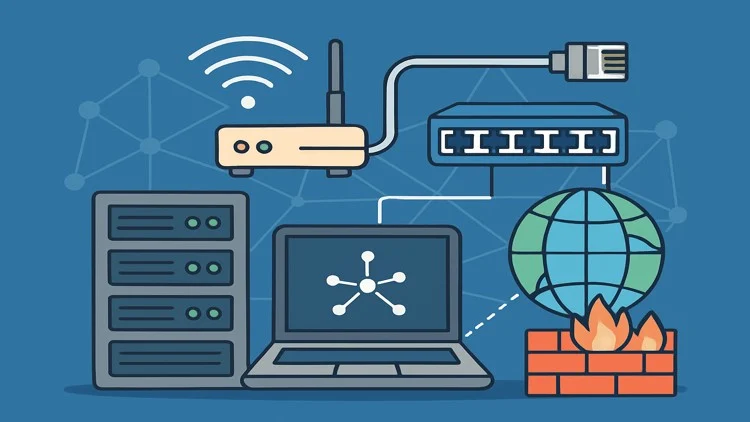
- General Hardware Awareness: While no physical equipment is required, a rudimentary awareness of what routers, switches, and Ethernet cables look like will provide a helpful visual context for the exam questions.
- No Prior Engineering Experience Needed: This course is specifically engineered for the absolute novice; therefore, no previous background in computer science or professional IT experience is expected or necessary.
- Commitment to Analytical Thinking: Success in these practice tests requires a willingness to slow down and analyze word problems carefully, as network engineering often hinges on subtle details and precise configurations.
- Skills Covered / Tools Used
- OSI Model Layer Analysis: Gain a profound understanding of the seven-layer Open Systems Interconnection model, learning to categorize different hardware and software functions into their appropriate logical tiers.
- IP Addressing and Subnetting: Master the critical art of IPv4 and IPv6 addressing, including the ability to calculate subnets, determine host ranges, and understand the logic of CIDR notation for efficient network design.
- Switching and Routing Fundamentals: Explore the core mechanics of how data packets are moved across local area networks and wide area networks using intelligent hardware like Layer 2 switches and Layer 3 routers.
- Protocol Suite Mastery: Deep dive into the functions of essential protocols such as TCP/IP, DNS, DHCP, HTTP/S, and FTP, understanding how they interact to provide seamless user experiences.
- Network Topology Logic: Develop the ability to distinguish between different network layouts, including Star, Mesh, and Hybrid topologies, and understand the redundancy benefits of each configuration.
- Wireless Technology Basics: Understand the fundamentals of 802.11 standards, including frequency bands, security protocols like WPA3, and the challenges of signal interference in corporate environments.
- Virtualization and Cloud Concepts: Get introduced to the basics of how virtualized networking components and cloud-based infrastructures differ from traditional, on-premise physical hardware setups.
- Command Line Interface (CLI) Familiarity: While the course is a practice test, the questions simulate the logic used within CLIs, familiarizing you with the syntax and commands common in Cisco and Juniper environments.
- Troubleshooting Methodology: Learn the standardized approach to identifying, isolating, and resolving network connectivity issues using a systematic, logical process of elimination.
- Benefits / Outcomes
- Identification of Knowledge Gaps: One of the most significant outcomes is the immediate clarity you gain regarding which specific areas of networking you have mastered and which require further deep-study focus.
- Reduced Exam Anxiety: By familiarizing yourself with the pressure and format of technical testing, you build the mental stamina required to remain calm during official, high-stakes certification examinations.
- Vocabulary and Technical Literacy: Upon completion, you will possess a professional-grade vocabulary, allowing you to participate in technical discussions and understand documentation that previously seemed impenetrable.
- Career Path Visualization: This course helps you determine if a career in network engineering or cybersecurity is the right fit for your skills and interests before you invest heavily in long-term bootcamps.
- Immediate Professional Credibility: Being able to pass these practice tests signifies to employers that you have a solid grasp of the core concepts necessary for entry-level helpdesk or junior technician roles.
- Optimized Study Efficiency: Instead of reading massive textbooks from cover to cover, you can use these tests to target your study time effectively, focusing only on the concepts that truly challenge you.
- Enhanced Logic and Reasoning: The problem-solving skills developed here are transferable to many other IT domains, including software development, systems administration, and cloud architecture.
- PROS
- Accessible Entry Point: Provides a non-intimidating way for people from non-technical backgrounds to enter the field of network engineering without feeling overwhelmed by dense academic material.
- Versatile Question Bank: Features a wide variety of question types that test different cognitive levels, from simple recall to complex situational analysis and network troubleshooting.
- Focus on Practical Logic: Prioritizes understanding the logic of networking over simply memorizing facts, which is essential for surviving in a real-world server room or data center.
- Instant Feedback Loop: The digital nature of the practice tests allows for immediate grading, which is scientifically proven to accelerate the learning process and correct misconceptions quickly.
- CONS
- Limited Physical Interaction: As a practice test course, it focuses primarily on conceptual validation and lacks a hands-on lab environment where students can physically configure hardware or cables in real-time.
Learning Tracks: English,IT & Software,IT Certifications
Found It Free? Share It Fast!