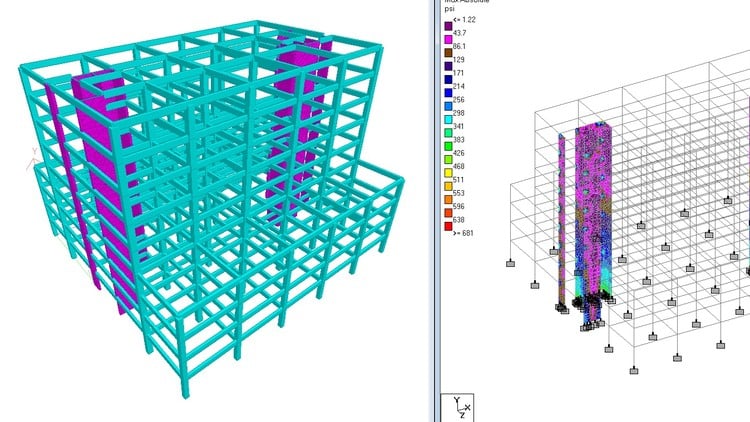
Learn Staad Pro by Following Step by Step instructions
⏱️ Length: 12.8 total hours
⭐ 4.47/5 rating
👥 4,843 students
🔄 January 2025 update
Add-On Information:
Note➛ Make sure your 𝐔𝐝𝐞𝐦𝐲 cart has only this course you're going to enroll it now, Remove all other courses from the 𝐔𝐝𝐞𝐦𝐲 cart before Enrolling!
- Course Overview
- This comprehensive course is meticulously crafted to transform aspiring and practicing civil engineers into proficient STAAD Pro users, guiding them from fundamental concepts to advanced design applications. Delivered entirely in Hindi, it ensures a comfortable and accessible learning experience for a wide audience. With a focus on practical, step-by-step instruction, learners will master the intricacies of structural modeling, analysis, and design using one of the industry’s most powerful software tools. The curriculum is regularly updated, with the latest refresh in January 2025, ensuring you learn the most current methodologies and software features. Perfect for those seeking to build a strong foundation or enhance their existing skills, this program bridges the gap between theoretical knowledge and real-world structural engineering challenges, preparing you to tackle diverse projects with confidence and precision. The “Zero to Hero” methodology emphasizes hands-on learning, practical examples, and a clear understanding of the ‘why’ behind each step, making complex topics digestible and engaging.
- Requirements / Prerequisites
- Basic Computer Proficiency: Comfortably navigate software interfaces, manage files, and perform basic computer operations. Familiarity with general Windows environment is beneficial.
- Fundamental Civil/Structural Engineering Concepts: A foundational understanding of mechanics of solids, structural analysis principles (e.g., types of supports, beams, columns, forces, moments, stress, strain), and basic material properties (concrete, steel) is highly beneficial for grasping the context of software applications.
- Access to STAAD Pro Software: While the course provides thorough instruction, learners are expected to have access to the STAAD Pro software (student version, trial version, or licensed copy) installed on their computer to actively follow along with practical exercises and assignments.
- Stable Internet Connection: A reliable and stable internet connection is required to access all course materials, video lectures, participate in any potential Q&A sessions, and potentially download software updates or supplementary resources.
- Dedication and Willingness to Learn: An enthusiastic and proactive approach to mastering structural design software and applying learned concepts to real-world problems is key to success.
- No Prior STAAD Pro Experience Required: The course is specifically designed for absolute beginners, meticulously taking you through every step from scratch, assuming no prior exposure to the software.
- Skills Covered / Tools Used
- Advanced Structural Modeling Techniques: Master the creation of complex 2D and 3D structural geometries, defining various member properties (beams, columns), plate elements, material specifications (concrete grades, steel sections), and accurately assigning support conditions (fixed, pinned, roller) with precision.
- Comprehensive Load Application and Combination: Skillfully apply various types of static and dynamic loads including gravity loads (dead, live), environmental loads (wind, seismic as per codes), and custom loads, and competently generate load combinations as per relevant national and international design codes.
- Post-Analysis Interpretation and Verification: Learn to thoroughly interpret analysis results, including node displacements, beam forces (axial, shear, bending moments), plate stresses, and understand their implications for overall structural behavior and safety. This includes graphical and tabular result interpretation.
- Code-Compliant Design Principles Application: Apply national and international structural design codes for both reinforced concrete (RCC) and steel structures directly within the STAAD Pro environment, ensuring that designs meet all safety, serviceability, and durability criteria.
- Effective Output Report Generation and Customization: Generate comprehensive and customizable reports detailing analysis results, design calculations, material take-offs, and structural drawings for effective documentation, client presentations, and regulatory submissions.
- Troubleshooting and Validation of Models: Develop the critical ability to identify common modeling and analysis errors, effectively troubleshoot issues within STAAD Pro, and rigorously validate results through comparison with manual calculations or sound engineering judgment.
- Parametric Design and Optimization Basics: Gain an introductory understanding of how to modify various parameters within STAAD Pro to explore design alternatives and optimize structural elements for efficiency and economy.
- Tools Utilized: The primary and most significant tool covered is STAAD Pro for end-to-end comprehensive structural analysis and design. Microsoft Excel is actively utilized for manual verification of analysis results, reinforcing fundamental understanding and building confidence in software outputs.
- Benefits / Outcomes
- Enhanced Employability and Career Progression: Significantly boost your resume and open doors to diverse career opportunities in structural engineering firms, construction companies, consulting agencies, and government sectors by becoming proficient in an industry-standard software.
- Unwavering Confidence in Structural Design: Develop the self-assurance and technical capability to independently model, analyze, and design a wide variety of structures, from simple frames to complex industrial towers, knowing your results are reliable, accurate, and code-compliant.
- Seamless Practical Application of Theory: Effectively bridge the gap between abstract theoretical structural engineering concepts learned in academia and their practical, real-world application in professional projects using advanced computational software.
- Optimized and Efficient Project Execution: Learn to streamline the entire structural design workflow, significantly reducing design time, minimizing errors, and improving overall accuracy, leading to more productive and successful project outcomes.
- Sharpened Problem-Solving Acumen: Cultivate a strong analytical mindset and develop critical problem-solving skills, enabling you to identify potential structural issues early in the design process and implement effective, practical engineering solutions.
- Global Competency in Structural Engineering: Gain highly valued skills that are recognized and sought after globally, thereby expanding your professional horizons and opening doors to international career opportunities in structural design and analysis.
- Robust Foundation for Advanced Learning: Establish a solid and comprehensive foundation in structural analysis and design software that will serve as an excellent springboard for exploring more specialized or highly advanced structural engineering topics and sophisticated software applications in the future.
- PROS
- Step-by-Step Guidance: Follow clear, methodical instructions suitable for absolute beginners, ensuring no learner is left behind.
- Practical, Real-World Examples: Learn through hands-on application with relevant structural scenarios, directly applicable to industry projects.
- Hindi Language Instruction: Ensures a comfortable and highly effective learning experience for native Hindi speakers, removing language barriers.
- High Student Satisfaction: Evidenced by a strong 4.47/5 rating from 4,843 students, indicating quality and effectiveness.
- Up-to-Date Content: Course updated in January 2025, reflecting current practices, software features, and industry standards.
- Comprehensive Coverage: Transitions learners from basic software introduction to complex design projects for both steel and RCC structures.
- Manual Verification Emphasis: Builds a deeper conceptual understanding by comparing software results with manual calculations, enhancing trust in software outputs.
- CONS
- Limited Scope for Hyper-Specialized Topics: While comprehensive for its “Zero to Hero” claim, the course may not delve into highly niche or extremely advanced structural engineering analyses (e.g., advanced seismic analysis, blast analysis, bridge design, specialized connection design) beyond its core foundational and intermediate curriculum.
Learning Tracks: Hindi,Design,Other Design
Found It Free? Share It Fast!