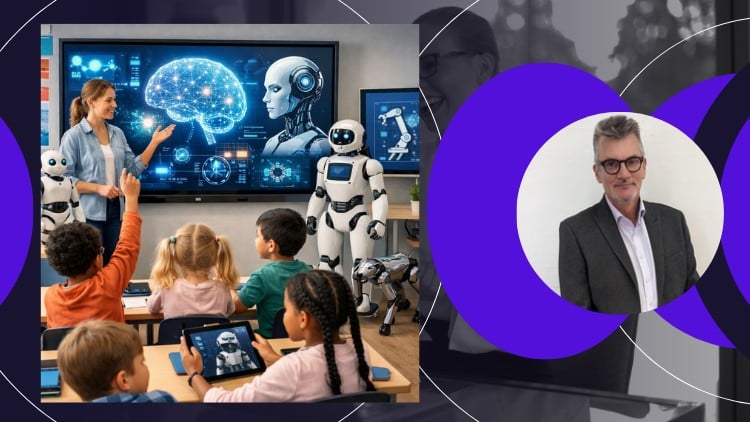
Master prompt engineering, AI content creation, and automated workflows to build better learning experience in half time
⏱️ Length: 3.6 total hours
👥 32 students
🔄 January 2026 update
Add-On Information:
Note➛ Make sure your 𝐔𝐝𝐞𝐦𝐲 cart has only this course you're going to enroll it now, Remove all other courses from the 𝐔𝐝𝐞𝐦𝐲 cart before Enrolling!
- Course Overview
- This immersive 3.6-hour learning experience is meticulously crafted for learning designers seeking to revolutionize their design process through the strategic integration of Artificial Intelligence.
- Participants will embark on a journey from understanding fundamental AI concepts to practically applying advanced AI tools and techniques for accelerated learning content creation.
- The course emphasizes hands-on application, equipping learners with the immediate capability to enhance their existing workflows and explore novel approaches to instructional design.
- It addresses the evolving landscape of learning design, highlighting how AI can serve as a powerful co-pilot, augmenting human creativity and efficiency rather than replacing it.
- With a focus on practical, actionable insights, this course promises to demystify AI and make its powerful capabilities accessible to all learning designers, regardless of their technical background.
- The curriculum has been updated in January 2026, ensuring relevance with the latest advancements and best practices in AI for education and training.
- Designed for a cohort of 32 students, this provides an intimate learning environment conducive to focused engagement and peer-to-peer interaction.
- Key Focus Areas & Skills
- AI Fundamentals for Learning Design:
- Understanding the core principles of Artificial Intelligence and Machine Learning as they relate to content creation and instructional strategy.
- Grasping the foundational concepts behind Large Language Models (LLMs) and their impact on generating human-like text and creative outputs.
- Exploring the ethical considerations and potential biases inherent in AI-generated content within an educational context.
- Identifying opportunities for AI to automate repetitive tasks in the learning design lifecycle.
- Mastering Prompt Engineering:
- Developing sophisticated prompt writing techniques to elicit precise and high-quality outputs from AI models.
- Learning to craft context-rich prompts that guide AI towards desired learning objectives, tone, and complexity.
- Exploring advanced prompt strategies for generating diverse content formats, including scenarios, dialogues, and assessment questions.
- Understanding how to iterate and refine prompts for optimal content generation and alignment with learning goals.
- AI-Powered Content Creation:
- Leveraging AI tools to generate initial drafts of learning materials, saving significant time in content development.
- Utilizing AI for brainstorming and ideation, exploring a wider range of pedagogical approaches and content angles.
- Applying AI to adapt existing content for different audiences, learning styles, or delivery modalities.
- Exploring AI’s role in creating engaging multimedia elements and interactive learning experiences.
- Automated Workflows & Efficiency:
- Identifying opportunities to integrate AI into existing learning design workflows for enhanced productivity.
- Learning to set up automated processes for tasks such as content summarization, keyword extraction, and basic content review.
- Exploring how AI can assist in personalized learning path recommendations and adaptive learning content generation.
- Implementing AI-driven tools to streamline project management and feedback loops in learning design projects.
- AI Fundamentals for Learning Design:
- Tools & Technologies Explored (Illustrative Examples)
- Generative AI Platforms: Familiarization with leading platforms for text, image, and potentially code generation.
- Prompt Management Tools: Techniques for organizing and managing effective prompts for consistent results.
- AI-Assisted Writing Assistants: Tools that offer suggestions, grammar checks, and content expansion capabilities.
- Potential Future AI Integrations: Discussion on emerging AI technologies relevant to learning design.
- Benefits & Outcomes
- Accelerated Design Cycles: Significantly reduce the time required for content creation and iteration, enabling faster deployment of learning solutions.
- Enhanced Content Quality: Produce more polished, engaging, and diverse learning materials through AI assistance.
- Increased Creativity & Innovation: Free up cognitive resources for higher-level strategic thinking and novel pedagogical approaches.
- Greater Efficiency: Automate routine tasks, allowing learning designers to focus on impactful and complex design challenges.
- Future-Proofing Skills: Equip yourself with in-demand AI competencies essential for the evolving learning design profession.
- Cost-Effectiveness: Optimize resource allocation by leveraging AI for content generation and workflow automation.
- Empowered Learning Designers: Gain confidence and mastery in utilizing AI as a powerful tool to achieve superior learning outcomes.
- Requirements / Prerequisites
- Foundational Learning Design Principles: A solid understanding of core instructional design models and best practices is beneficial.
- Basic Computer Literacy: Familiarity with using web-based applications and digital tools.
- Openness to New Technologies: A willingness to explore and adopt AI-driven methodologies.
- No prior AI programming or technical expertise is required.
- PROS
- Highly practical and actionable content directly applicable to current learning design challenges.
- Focus on “half time” efficiency addresses a significant pain point for busy professionals.
- Up-to-date curriculum reflecting the latest advancements in AI for learning.
- Smaller class size fosters personalized attention and deeper engagement.
- CONS
- The rapid evolution of AI means specific tools mentioned may change quickly, requiring ongoing adaptation by the learner post-course.
Learning Tracks: English,Business,Business Analytics & Intelligence
Found It Free? Share It Fast!