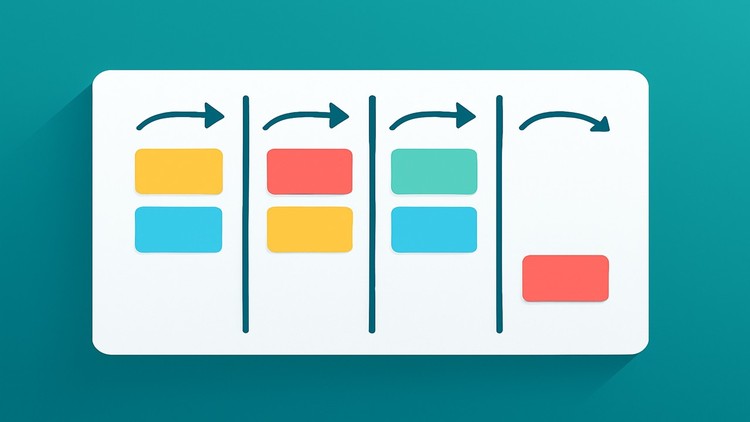
Learn practical Kanban methods to visualize work, manage flow, and deliver faster in real software development projects
⏱️ Length: 2.4 total hours
⭐ 4.25/5 rating
👥 2,098 students
🔄 January 2026 update
Add-On Information:
Note➛ Make sure your 𝐔𝐝𝐞𝐦𝐲 cart has only this course you're going to enroll it now, Remove all other courses from the 𝐔𝐝𝐞𝐦𝐲 cart before Enrolling!
- Course Overview
- This course, “Kanban for Software Teams: From Flow to Delivery,” is meticulously crafted for software development professionals seeking to transform their team’s efficiency and output. It moves beyond theoretical concepts to provide actionable strategies for implementing Kanban in dynamic software environments.
- The curriculum is designed to guide participants through the entire Kanban lifecycle, starting with the foundational principles of visualizing work and progressing to the sophisticated management of workflow for predictable and accelerated delivery.
- You will explore how Kanban enables teams to identify and address bottlenecks, fostering a culture of continuous improvement and sustainable pace within software projects.
- The course emphasizes practical application, equipping you with the knowledge to tailor Kanban practices to your specific team’s needs and project complexities.
- Gain a comprehensive understanding of how to transition from an ad-hoc or traditional project management approach to a flow-based system that enhances transparency and predictability.
- Discover methods for managing work-in-progress (WIP) effectively, a cornerstone of Kanban that prevents overload and improves focus.
- The January 2026 update ensures the content is current with contemporary software development challenges and best practices.
- Requirements / Prerequisites
- A foundational understanding of software development processes and team dynamics is beneficial.
- Familiarity with Agile principles, while not strictly mandatory, will enhance the learning experience.
- Willingness to actively participate and apply learned concepts to real-world or simulated software development scenarios.
- Access to a computer and stable internet connection for course material consumption.
- An open mind and a commitment to fostering a more effective and efficient team workflow.
- Skills Covered / Tools Used
- Kanban Board Design and Implementation: Learn to create and customize visual Kanban boards that accurately reflect your team’s workflow, including defining columns, swimlanes, and card types.
- Workflow Visualization: Master techniques to make all stages of your software development process transparent and understandable to the entire team.
- Work-in-Progress (WIP) Limiting Strategies: Develop the skills to set and manage effective WIP limits to prevent multitasking and improve focus, leading to faster cycle times.
- Flow Management and Optimization: Acquire the ability to monitor, measure, and improve the flow of work through the system, identifying and eliminating impediments.
- Bottleneck Identification and Resolution: Learn systematic approaches to detect where work gets stuck and implement targeted solutions to unblock the flow.
- Service Level Expectations (SLEs): Understand how to define and manage expectations around delivery times and predictability.
- Kanban Metrics and Reporting: Become proficient in using key Kanban metrics such as cycle time, lead time, and throughput to assess team performance and identify areas for improvement.
- Continuous Improvement Culture: Foster an environment where the team regularly inspects and adapts its processes for ongoing enhancement.
- Team Collaboration and Communication Enhancement: Leverage Kanban’s visual nature to improve communication and alignment within software teams.
- Tailoring Kanban: Understand how to adapt Kanban principles and practices to suit different types of software projects, team sizes, and organizational contexts.
- Potential Tools (Conceptual Understanding): While the course focuses on principles, it will cover the application of these principles in commonly used digital Kanban tools (e.g., Jira, Trello, Asana – specific tools may be discussed conceptually rather than in deep dive).
- Benefits / Outcomes
- Accelerated Delivery Cycles: Significantly reduce the time it takes for software features to move from inception to production.
- Improved Predictability: Achieve more reliable estimates and consistent delivery schedules for your software projects.
- Enhanced Transparency: Gain complete visibility into the team’s work, progress, and potential roadblocks.
- Reduced Stress and Overload: Prevent team burnout by managing workload effectively and avoiding context switching.
- Increased Team Efficiency: Streamline processes and eliminate waste to maximize productive output.
- Better Problem Solving: Empower teams to proactively identify and resolve issues that hinder progress.
- Higher Quality Software: By focusing on flow and reducing interruptions, teams can dedicate more attention to quality assurance.
- Adaptability to Change: Develop a more flexible and responsive development process that can easily accommodate evolving requirements.
- Data-Driven Decision Making: Utilize concrete metrics to guide process improvements and strategic planning.
- Empowered Teams: Foster a self-organizing and continuously improving team environment.
- PROS
- Highly Practical and Actionable: Focuses on real-world application, moving beyond theory to immediate implementation.
- Experienced Instructor Insight: Leverages the course rating of 4.25/5 and 2,098 students to suggest a well-received and practical approach.
- Concise and Efficient Learning: At 2.4 total hours, it’s designed for busy professionals to gain significant value without a lengthy time commitment.
- Updated Content: The January 2026 update ensures relevance in the fast-paced software industry.
- Broad Applicability: Suitable for various software development roles and team structures.
- CONS
- Limited Deep Dive into Specific Tools: While principles are covered, extensive hands-on training with particular Kanban software might not be the primary focus.
Learning Tracks: English,IT & Software,Other IT & Software
Found It Free? Share It Fast!