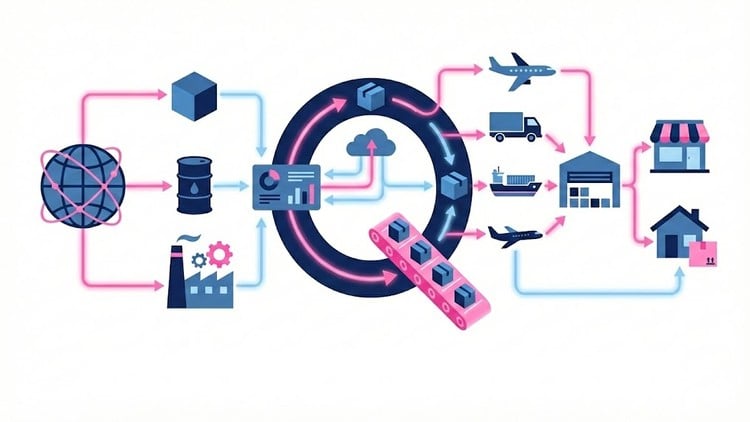
Learn the fundamentals of SCM, covering planning, sourcing, manufacturing, and delivery.
⏱️ Length: 41 total minutes
⭐ 4.00/5 rating
👥 136 students
🔄 August 2025 update
Add-On Information:
Note➛ Make sure your 𝐔𝐝𝐞𝐦𝐲 cart has only this course you're going to enroll it now, Remove all other courses from the 𝐔𝐝𝐞𝐦𝐲 cart before Enrolling!
Course Overview
- This foundational course, “Introduction To Supply Chain Management,” serves as an indispensable starting point for anyone seeking to understand the intricate network that underpins global commerce. It meticulously unpacks the entire journey of a product or service, from its rawest form to its ultimate consumption, providing a clear roadmap through the complexities of modern business operations. Learners will grasp the essential principles that govern the efficient movement of goods and information across diverse stages, enabling them to appreciate the strategic significance of a well-orchestrated supply chain in today’s competitive landscape. The curriculum is expertly designed to demystify key terminology and concepts, making a traditionally complex subject accessible and engaging for absolute beginners.
- Delving into the critical domain of planning, the course illuminates how demand forecasting, resource allocation, and strategic goal alignment are meticulously coordinated to ensure optimal operational flow. It explores the initial stages where market needs are anticipated, and the necessary steps are laid out to meet those demands effectively, emphasizing the importance of foresight in minimizing disruptions and maximizing efficiency.
- Moving to sourcing, participants will discover the crucial process of identifying, evaluating, and engaging with suppliers. This section covers the fundamental considerations for securing raw materials, components, and services, focusing on factors like cost-effectiveness, quality assurance, ethical procurement, and building robust, mutually beneficial supplier relationships that are vital for uninterrupted production.
- The module on manufacturing provides insights into the transformation stage, examining how raw materials are converted into finished products. It touches upon various production methodologies, quality control measures, process optimization techniques, and the pursuit of operational excellence that drives efficiency and reduces waste, ensuring products meet specified standards and market expectations.
- Finally, the course elaborates on delivery, which encompasses the entire logistical process from the factory floor to the end customer. This includes aspects of warehousing, inventory management, transportation modes, distribution channels, and the critical “last mile” challenges, all aimed at ensuring products reach their destination promptly, safely, and cost-effectively, culminating in customer satisfaction and loyalty.
- Despite its concise length of just 41 total minutes, this course has earned a commendable 4.00/5 rating from 136 students, reflecting its highly effective and impactful delivery of core concepts. The content is also regularly maintained, with a recent August 2025 update ensuring its relevance and alignment with contemporary industry practices and emerging trends, providing learners with current and valuable insights.
Requirements / Prerequisites
- No prior knowledge or specific academic background in business, logistics, or operations management is required. This course is meticulously crafted for absolute beginners and curious minds.
- A fundamental curiosity about how products and services are brought to market, from their origin to the final consumer, will greatly enhance the learning experience.
- Basic literacy and a willingness to engage with new conceptual frameworks and industry terminology are beneficial.
- Access to a reliable internet connection and a device capable of streaming video content (computer, tablet, or smartphone) is the only technical prerequisite.
- An open mind to understand the interconnectedness of various business functions and the global economic ecosystem will contribute positively to comprehension.
Skills Covered / Tools Used
- Conceptual Understanding of the Supply Chain: Develop a holistic perspective on the flow of goods, services, information, and finances across the entire supply chain network, enabling learners to contextualize individual processes within a broader framework.
- Foundational Analytical Thinking: Gain the initial ability to break down complex operational processes into manageable stages, fostering an analytical mindset for identifying potential bottlenecks, efficiencies, or areas for improvement within a simplified SCM context.
- Basic Process Mapping Awareness: Acquire an introductory understanding of how to visualize the steps and interdependencies within various supply chain functions, which is crucial for communication and problem-solving.
- Inventory Management Fundamentals: Grasp the core principles behind managing stock levels, including understanding different types of inventory (raw materials, work-in-progress, finished goods) and their strategic importance in balancing demand and supply.
- Supplier Relationship Basics: Learn the essential concepts involved in building and maintaining effective relationships with suppliers, recognizing their critical role in ensuring quality, cost-effectiveness, and reliability of inputs.
- Logistics and Distribution Insights: Obtain a foundational perspective on the movement, storage, and distribution of goods, including an awareness of different transportation modes, warehousing functions, and their impact on efficiency and customer satisfaction.
- Value Chain Appreciation: Develop an understanding of how each stage within the supply chain adds value to the end product or service, emphasizing the importance of collaboration and coordination across all functions.
- No Specific Software Tools: As this is an introductory and conceptual course, it focuses on foundational principles rather than specific industry software or advanced analytical tools. The emphasis is on building a robust conceptual understanding.
Benefits / Outcomes
- Establishes a Solid Career Foundation: Provides an excellent entry point for individuals contemplating careers in logistics, procurement, operations, manufacturing management, or broader business administration, equipping them with essential industry language and frameworks.
- Enhances Business Acumen: Cultivates a more comprehensive understanding of how organizations strategize, organize, and execute the delivery of products and services, offering insights into operational excellence and competitive advantage.
- Improves Contextual Decision-Making: Equips learners with a broader perspective on how choices made in one part of the business can cascade and impact other functional areas within the supply chain, leading to more informed and holistic decision-making.
- Fosters Cross-Functional Appreciation: Develops an understanding of the critical interdependence among various departments, from sales and marketing to finance and IT, highlighting how seamless collaboration across these functions is vital for SCM success.
- Prepares for Advanced Learning: Serves as an ideal conceptual springboard for further, more specialized studies in supply chain management, offering a robust base upon which to build advanced knowledge and practical skills.
- Increases Everyday Consumer Awareness: Offers new insights into the often-invisible complexities behind the products and services we consume daily, demystifying their journey to market and fostering a deeper appreciation for global supply networks.
PROS
- Highly Concise and Efficient: Delivers critical SCM fundamentals in an incredibly focused 41-minute timeframe, making it ideal for rapid learning, busy schedules, or as an efficient knowledge refresher.
- Strong Student Satisfaction: A robust 4.00/5 rating from 136 students signifies high content quality, effective instruction, and a positive overall learning experience, building confidence in the course’s value.
- Up-to-Date Content: The August 2025 update ensures the material remains current and relevant, reflecting contemporary practices, challenges, and innovations within the dynamic field of supply chain management.
- Accessible Entry Point: Specifically designed for absolute beginners, it breaks down complex concepts into easily digestible information without requiring any prior industry experience or specialized knowledge.
- Broad Foundational Knowledge: Comprehensively covers the four core pillars of SCM – planning, sourcing, manufacturing, and delivery – providing a well-rounded and holistic understanding of the entire process.
CONS
- Limited Depth for Advanced Topics: Due to its intentionally brief duration and introductory scope, the course provides a high-level overview and does not delve into specialized analytical tools, complex optimization strategies, industry-specific case studies, or hands-on practical applications that might be required for advanced roles.
Learning Tracks: English,Business,Operations
Found It Free? Share It Fast!