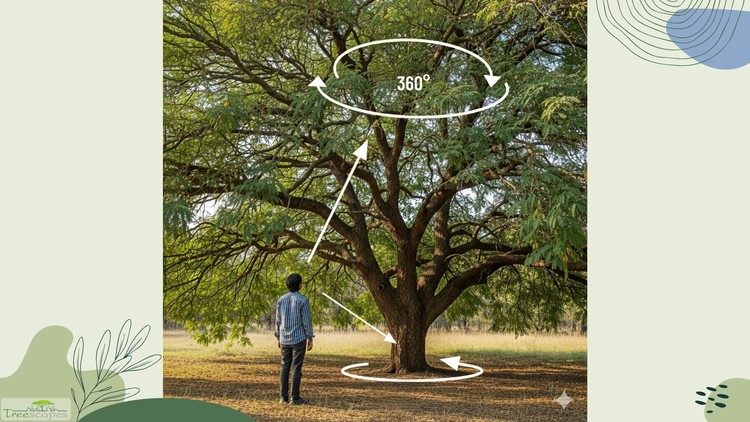
Learn the basics of inspecting trees to assess their general condition and identify obvious risk features
⏱️ Length: 1.4 total hours
⭐ 4.88/5 rating
👥 16 students
🔄 November 2025 update
Add-On Information:
Note➛ Make sure your 𝐔𝐝𝐞𝐦𝐲 cart has only this course you're going to enroll it now, Remove all other courses from the 𝐔𝐝𝐞𝐦𝐲 cart before Enrolling!
- Course Overview
- Embark on a foundational journey into the critical field of tree risk assessment.
- This concise yet comprehensive program equips you with the essential knowledge to conduct preliminary inspections of trees, focusing on their overall well-being and the identification of immediate safety concerns.
- Gain practical insights into the fundamental principles that underpin responsible tree care and public safety.
- Understand the importance of proactive tree management in mitigating potential hazards.
- Develop a keen eye for detail, enabling you to observe and interpret common tree characteristics that may indicate underlying issues.
- Learn to approach tree inspection with a structured and systematic methodology.
- This course serves as an excellent stepping stone for individuals interested in arboriculture, property management, or anyone who wants to better understand the trees in their environment.
- The 1.4-hour duration is optimized for busy schedules, offering maximum learning impact in a minimal timeframe.
- Join a growing community of informed individuals who are dedicated to enhancing tree health and public safety.
- The recent November 2025 update ensures the content reflects current best practices and considerations.
- Requirements / Prerequisites
- No prior formal arboricultural education is necessary.
- A genuine interest in trees and their role in our environment is highly encouraged.
- Basic observational skills and the ability to follow instructions are beneficial.
- Access to a device capable of online video playback is required.
- A willingness to engage with visual learning materials is essential.
- No specialized equipment is needed for this introductory course.
- Skills Covered / Tools Used
- Develop the ability to perform visual surveys of trees from the ground.
- Learn to differentiate between signs of good health and early indicators of distress in trees.
- Acquire the foundational knowledge to spot common structural defects that can compromise a tree’s stability.
- Understand the basic principles of decay identification in trees.
- Become familiar with common insect and disease symptoms that can affect tree health.
- Gain an appreciation for the role of environmental factors in tree stress and risk.
- Familiarize yourself with the concept of “obvious risk features” – easily identifiable signs of potential danger.
- The primary “tool” used is your own trained observation and critical thinking.
- Learn to ask pertinent questions about a tree’s condition and its surroundings.
- Understand the importance of documenting observations for future reference.
- Benefits / Outcomes
- Empower yourself with the confidence to conduct basic tree health and safety checks on your property or in public spaces.
- Contribute to the safety and well-being of your community by identifying potentially hazardous trees before they cause harm.
- Make more informed decisions regarding tree maintenance and when to seek professional arboricultural advice.
- Enhance your understanding of the natural world and the vital role trees play.
- Gain a valuable skill set that can be applied in various personal and professional contexts.
- Develop a greater appreciation for the complex biology and structural integrity of trees.
- Reduce the likelihood of unexpected tree failures due to negligence or lack of awareness.
- The ability to articulate your observations and concerns about trees to others.
- Foster a proactive approach to property management and landscape care.
- PROS
- Highly Accessible: Ideal for beginners with no prior experience.
- Time-Efficient: Short duration fits easily into busy schedules.
- Practical Focus: Teaches immediately applicable skills.
- Safety-Oriented: Prioritizes public well-being.
- Cost-Effective: Provides foundational knowledge at a low barrier to entry.
- High Rating: Demonstrates learner satisfaction and value.
- Up-to-Date Content: Reflects current practices (November 2025 update).
- CONS
- Introductory Level: Does not qualify for professional risk assessment certification.
Learning Tracks: English,Teaching & Academics,Science
Found It Free? Share It Fast!