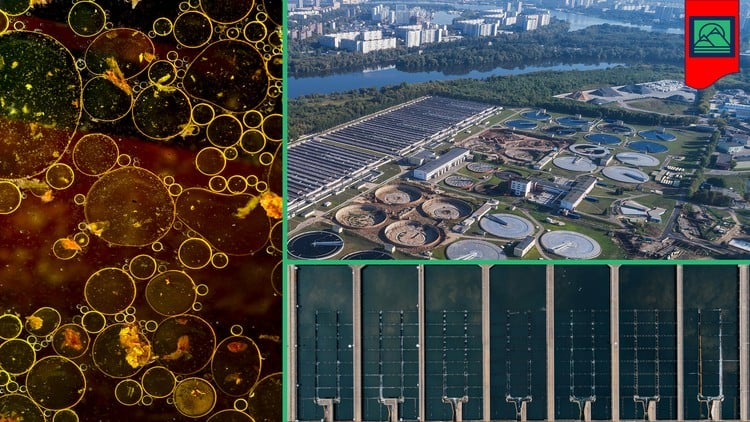
Wastewater and Sanitation Explained for Beginners
⏱️ Length: 1.0 total hours
⭐ 4.27/5 rating
👥 17,893 students
🔄 June 2024 update
Add-On Information:
Note➛ Make sure your 𝐔𝐝𝐞𝐦𝐲 cart has only this course you're going to enroll it now, Remove all other courses from the 𝐔𝐝𝐞𝐦𝐲 cart before Enrolling!
- Course Overview
- Embark on a foundational journey into the critical field of wastewater management and treatment, understanding its paramount importance for public health and environmental sustainability.
- This concise, beginner-friendly course demystifies the complex world of wastewater, providing a clear and accessible introduction for those new to the subject.
- Discover the interconnectedness of human activities and water systems, and how responsible management prevents pollution and protects vital ecosystems.
- Gain an appreciation for the scientific principles and engineering approaches that underpin effective wastewater treatment, transforming a societal challenge into a resource.
- Explore the evolution of sanitation practices and their profound impact on civilization throughout history.
- Understand the global context of wastewater challenges, recognizing disparities in access to safe sanitation and the ongoing efforts to address them.
- The course is designed for rapid comprehension, making it ideal for busy individuals seeking to quickly grasp essential concepts.
- Benefit from a recent update, ensuring the information presented reflects current trends and best practices in the field.
- Engage with a high-rated course, evidenced by a strong student rating and a substantial number of learners who have found value in its content.
- Course Objectives (Beyond “What You Will Learn”)
- Cultivate an awareness of the environmental footprint associated with daily water usage and waste generation.
- Develop a fundamental understanding of the different types of pollutants found in wastewater and their potential impacts.
- Appreciate the role of infrastructure in collecting and transporting wastewater from source to treatment facilities.
- Grasp the basic principles of biological, chemical, and physical processes used in treating wastewater to meet regulatory standards.
- Recognize the importance of sludge management as a byproduct of the treatment process.
- Understand the concept of water reclamation and reuse, and its significance in water-scarce regions.
- Identify the regulatory frameworks and policies that govern wastewater discharge and treatment.
- Familiarize yourself with common terminology and acronyms used in the wastewater industry.
- Foster an informed perspective on the value of investing in and maintaining wastewater infrastructure.
- Requirements / Prerequisites
- No prior technical or scientific background is necessary; the course is tailored for complete beginners.
- A curious mind and a willingness to learn about a vital aspect of modern society.
- Access to a device capable of streaming online video content.
- A stable internet connection for seamless course access.
- Skills Covered / Tools Used
- Conceptual understanding of water treatment principles.
- Ability to articulate the importance of sanitation for community well-being.
- Recognition of common wastewater treatment stages (e.g., preliminary, primary, secondary).
- Awareness of the factors influencing wastewater management strategies.
- Familiarity with key terms such as influent, effluent, BOD, and COD.
- No specialized software or equipment is required for participation.
- Benefits / Outcomes
- Gain a solid foundation for further study in environmental science, engineering, or public health.
- Become a more informed and engaged citizen regarding local and global environmental issues.
- Enhance your understanding of the essential services that underpin modern urban living.
- Develop a newfound appreciation for the invisible infrastructure that protects our water resources.
- Empower yourself with knowledge to contribute to discussions about sustainable development and public health initiatives.
- Potentially open doors to entry-level roles or internships in environmental fields.
- Acquire knowledge that can be applied to understanding water quality in your own community.
- PROS
- Highly Accessible: Designed specifically for beginners with no assumed prior knowledge.
- Concise Format: Delivers essential information efficiently within a short timeframe.
- Practical Relevance: Covers a topic with direct impact on daily life and public health.
- Strong Student Endorsement: High rating and a large student base indicate proven effectiveness.
- Current Information: Regularly updated to reflect contemporary practices and challenges.
- CONS
- Introductory Depth: Due to its beginner-focused and short format, it will not cover advanced technical details or in-depth engineering principles.
Learning Tracks: English,Teaching & Academics,Engineering
Found It Free? Share It Fast!