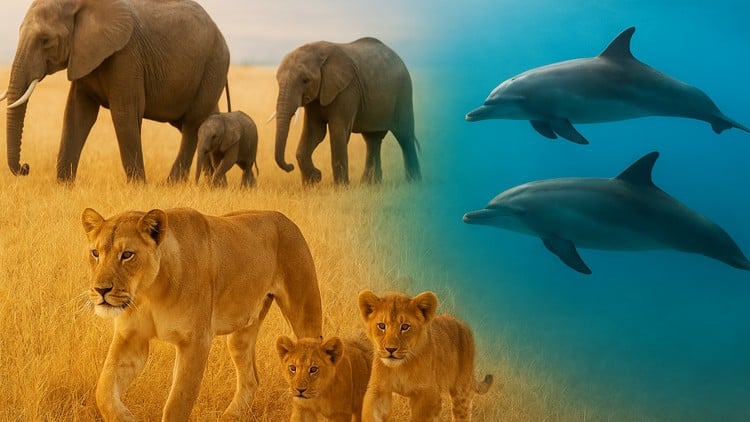
The Science of Ethology: Animal Behavior, Communication, Learning & Survival Skills
⏱️ Length: 1.7 total hours
⭐ 4.50/5 rating
👥 301 students
🔄 November 2025 update
Add-On Information:
Note➛ Make sure your 𝐔𝐝𝐞𝐦𝐲 cart has only this course you're going to enroll it now, Remove all other courses from the 𝐔𝐝𝐞𝐦𝐲 cart before Enrolling!
- Course Overview
- Embark on an immersive journey into the fascinating world of animal behavior through the lens of ethology, the scientific study of animal actions and their evolutionary significance.
- This course goes beyond theoretical concepts, demonstrating how ethological principles are applied in real-world scenarios to understand the intricate strategies animals employ for survival in diverse and challenging environments.
- Delve into the fundamental questions of “why” and “how” animals behave, exploring the adaptive value of their actions, from foraging and predator avoidance to social interactions and reproduction.
- Discover the methodologies and observational techniques that ethologists utilize to gather data and interpret complex behavioral patterns, bridging the gap between observation and scientific understanding.
- Gain insights into the evolutionary pressures that have shaped the behavioral repertoire of species, highlighting the role of natural selection in developing specialized survival skills.
- Explore the diversity of animal communication systems, examining the various modalities and signals animals use to interact with their conspecifics and their environment, including vocalizations, visual displays, and chemical cues.
- Understand the principles of animal learning and how experiences influence an animal’s behavior, allowing for adaptation and improved survival prospects throughout its life.
- Witness how ethological knowledge is translated into practical applications, such as conservation efforts, wildlife management, and improving animal welfare in captive settings.
- The course emphasizes a dynamic and engaging approach, utilizing compelling examples and case studies from the wild to illustrate core ethological concepts in action.
- By the end of this concise yet comprehensive program, you will possess a heightened appreciation for the intelligence and adaptability of the animal kingdom.
- Requirements / Prerequisites
- A genuine curiosity and passion for the natural world and its inhabitants.
- No prior formal training in biology or animal science is required, making it accessible to a broad audience.
- Access to a reliable internet connection for streaming course content.
- Basic computer literacy for navigating the learning platform.
- An open mind ready to embrace new perspectives on animal intelligence and survival strategies.
- Skills Covered / Tools Used
- Observational Skills: Develop a keener eye for detail in observing animal behavior, learning to identify subtle cues and patterns.
- Behavioral Interpretation: Acquire the ability to interpret the meaning and adaptive significance of various animal actions.
- Data Collection Techniques (Conceptual): Gain an understanding of the types of data ethologists collect and how it informs their conclusions.
- Ethological Frameworks: Become familiar with key ethological concepts such as fixed action patterns, innate releasing mechanisms, and learned behaviors.
- Comparative Analysis: Learn to compare and contrast behavioral strategies across different species to understand evolutionary adaptations.
- Communication Analysis: Develop an appreciation for the complexity of animal communication signals and their functions.
- Problem-Solving Applications: Understand how ethological principles can be applied to solve real-world challenges related to animal behavior.
- Visual Learning Tools: The course will leverage a rich array of video footage, high-quality imagery, and expert narration to illustrate concepts.
- Case Study Analysis: Engage with in-depth case studies showcasing ethological research in action.
- Benefits / Outcomes
- Enhanced Appreciation for Nature: Cultivate a deeper understanding and respect for the complexities of animal lives and their ecological roles.
- Improved Critical Thinking: Sharpen your analytical and critical thinking skills by examining scientific evidence and interpreting behavioral data.
- New Perspective on Intelligence: Broaden your definition of intelligence by exploring the diverse cognitive abilities and problem-solving skills of animals.
- Foundation for Further Study: Provides a solid introductory foundation for anyone considering further academic pursuits in zoology, conservation, or animal behavior.
- Informed Wildlife Observation: Transform casual wildlife encounters into more insightful and educational experiences.
- Understanding Conservation Challenges: Gain a better grasp of the behavioral factors that influence the success of conservation initiatives.
- Personal Enrichment: Satisfy your intellectual curiosity about the animal kingdom and gain fascinating insights to share.
- Develop a “Zoologist’s Eye”: Learn to observe and interpret animal actions with a scientific perspective, even in everyday settings.
- Become a More Knowledgeable Advocate: Equip yourself with the knowledge to better understand and advocate for animal welfare and conservation.
- PROS
- Action-Oriented Learning: Focuses on practical application of ethological principles, making the science tangible.
- Concise and Engaging: Delivers core concepts efficiently within a short duration, ideal for busy learners.
- High Student Satisfaction: A 4.50/5 rating suggests a well-received and effective learning experience.
- Expertly Curated Content: The November 2025 update indicates recent and relevant information.
- CONS
- Limited Depth on Specific Topics: Due to its short length, it may not offer exhaustive detail on highly specialized areas of ethology.
Learning Tracks: English,Teaching & Academics,Science
Found It Free? Share It Fast!