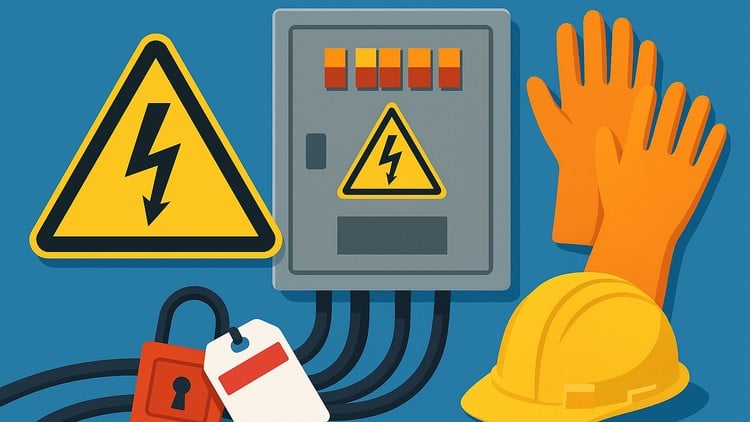
Learn essential electrical safety skills for beginners
⏱️ Length: 1.6 total hours
⭐ 5.00/5 rating
👥 46 students
🔄 August 2025 update
Add-On Information:
Note➛ Make sure your 𝐔𝐝𝐞𝐦𝐲 cart has only this course you're going to enroll it now, Remove all other courses from the 𝐔𝐝𝐞𝐦𝐲 cart before Enrolling!
- Course Overview
- This concise training module is meticulously crafted to instill a robust foundation in electrical safety practices. It serves as a vital first step for individuals embarking on careers or seeking to enhance their understanding within environments where electricity is a constant presence.
- The curriculum delves into establishing a proactive safety mindset, emphasizing prevention over reaction in all electrical interactions. Participants will gain appreciation for the invisible yet powerful forces they work with daily, learning to respect electrical systems through informed practice rather than fear.
- The course highlights the critical importance of adhering to industry standards and fostering a culture of collective responsibility, ensuring every individual contributes to a safer operational landscape. It’s designed to demystify complex safety regulations, making them accessible and actionable for every participant, irrespective of their prior exposure to electrical work.
- This training equips technicians not just with knowledge, but with the conviction to implement safety measures diligently, protecting themselves and their colleagues. It aims to transform basic awareness into an intuitive, second-nature approach to electrical work.
- Requirements / Prerequisites
- No prior electrical experience or advanced technical certifications are required, making this course ideal for true beginners in the technical field.
- A fundamental grasp of basic English literacy is recommended to fully engage with course materials and instructions.
- An active desire to learn and commit to implementing stringent safety protocols in a professional setting.
- Access to a stable internet connection and a compatible device (computer, tablet, or smartphone) for an optimal learning experience.
- A willingness to critically evaluate existing work habits and adopt best-in-class safety methodologies.
- The foresight to understand that safety training is an ongoing journey, not a one-time event, and a commitment to continuous improvement.
- Skills Covered / Tools Used
- Hazard Recognition Nuances: Developing an acute sense for identifying less obvious electrical risks, beyond the visible, such as compromised insulation indicators, improper cable routing, or subtle signs of circuit overload.
- Safety Documentation Interpretation: Skillfully reading and understanding critical safety labels, warning signs, schematic diagrams (for safety information), and manufacturer guidelines for electrical equipment and installations.
- Pre-Work Safety Assessment: Implementing systematic pre-job hazard analysis and risk assessment protocols, including peer review and environmental checks, before commencing any electrical task.
- Emergency Communication Protocols: Mastering clear, concise, and effective communication during electrical incidents, ensuring rapid and accurate coordination with emergency services, supervisors, and team members.
- Safety Tool Functionality & Maintenance: Gaining proficiency in the proper handling, routine inspection, calibration checks, and upkeep of essential safety tools, including voltage testers, non-contact detectors, specialized insulating equipment, and personal grounding devices.
- Energy Control Verification: Understanding and applying advanced verification methods for establishing zero electrical potential after Lockout/Tagout procedures, not just applying LOTO, but confirming its absolute effectiveness through multiple checks.
- Situational Awareness in Electrical Environments: Cultivating a heightened sense of surroundings to anticipate potential hazards, identify changing conditions near live or potentially live circuits, and react instinctively to prevent incidents.
- First Responder Support Principles: Beyond basic first aid, understanding the critical role of a support person during an electrical injury, including scene safety management, patient comfort, effective handover to professional medical personnel, and post-incident reporting.
- Benefits / Outcomes
- Elevated Personal Safety Acumen: Participants will leave with a heightened personal awareness and an ingrained habit of prioritizing safety in all electrical contexts, significantly reducing personal risk exposure and fostering a preventative mindset.
- Enhanced Employability & Professional Credibility: Certification from this course adds a valuable credential to any resume, demonstrating a proactive commitment to safety that is highly sought after by employers across various industrial and technical sectors.
- Contribution to a Stronger Safety Culture: Graduates will become active proponents and role models for safety within their organizations, influencing peers, reinforcing best practices, and fostering an environment of collective responsibility and accountability.
- Minimized Equipment Damage & Downtime: By understanding and applying correct safety procedures, technicians will inadvertently contribute to the longevity and reliability of electrical equipment, preventing costly operational interruptions and repairs caused by unsafe practices.
- Reduced Organizational Liability: A workforce thoroughly trained in contemporary electrical safety practices helps significantly mitigate legal, financial, and reputational risks associated with workplace accidents, regulatory non-compliance, and associated penalties.
- Increased Confidence & Competence: Operating with a clear and comprehensive understanding of safety protocols empowers technicians to approach electrical tasks with greater assurance, professional competence, and a reduced fear of the unknown.
- Long-Term Career Sustainability: Prioritizing safety through continuous learning and adherence to best practices is a hallmark of a responsible and valuable professional, ensuring a safer, more stable, and more sustainable career trajectory in technical fields.
- PROS
- Concise & Targeted Learning: Delivers maximum impact within a focused timeframe, concentrating purely on essential electrical safety aspects crucial for beginners.
- Expert-Led Content: Benefits from curriculum designed and presented by experienced electrical safety professionals, ensuring accuracy and practical relevance.
- Foundation for Compliance: Provides a strong initial understanding of regulatory requirements and adherence to best industry practices from the outset.
- Accessible Anytime, Anywhere: The online format allows flexible learning to fit individual schedules and locations, ideal for busy professionals.
- CONS
- Limited Hands-On Practicality: While theoretical concepts are covered thoroughly, direct practical application in a live electrical environment is not feasible within this online course format.
Learning Tracks: English,Teaching & Academics,Engineering
Found It Free? Share It Fast!