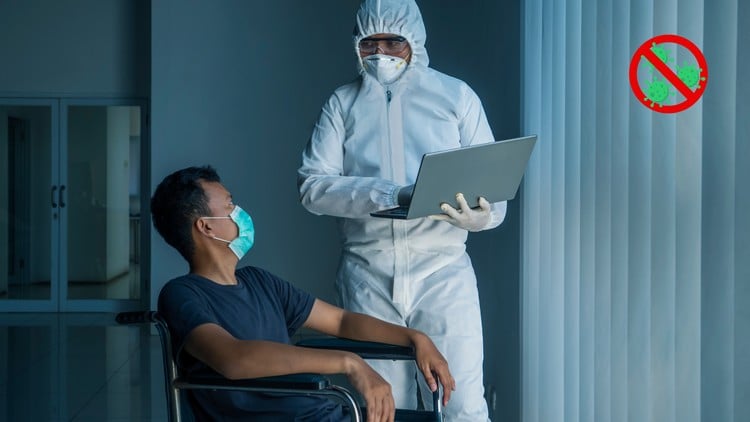
Understand Infection Prevention and Infection Control Protocol in Caregiving, Home Health and Nursing
⏱️ Length: 2.8 total hours
👥 13 students
Add-On Information:
Note➛ Make sure your 𝐔𝐝𝐞𝐦𝐲 cart has only this course you're going to enroll it now, Remove all other courses from the 𝐔𝐝𝐞𝐦𝐲 cart before Enrolling!
- Course Overview
- This comprehensive Diploma in Infection Prevention and Control in Care Settings is meticulously designed to equip healthcare professionals, caregivers, and support staff with the essential knowledge and practical skills to safeguard individuals and communities from the pervasive threat of infections within diverse care environments.
- In an era where healthcare-associated infections (HCAIs) pose a significant and ongoing challenge, this program provides a robust understanding of the principles and advanced strategies required to foster a culture of safety and excellence in infection control.
- Through a focused curriculum delivered over 2.8 total hours and designed for 13 students, participants will delve into the intricate mechanisms of microbial transmission, the identification of high-risk scenarios, and the implementation of evidence-based interventions.
- The course emphasizes the critical importance of proactive measures, robust protocols, and a vigilant approach to minimize infection risks, thereby enhancing patient outcomes, protecting staff well-being, and ensuring regulatory compliance.
- It goes beyond theoretical knowledge to foster a practical, hands-on understanding of how to implement effective infection prevention and control (IPC) practices in real-world care settings, including home health, nursing homes, and other domiciliary care environments.
- Participants will gain insights into the interconnectedness of various IPC elements, from environmental hygiene to personal protective measures, and understand their synergistic role in creating a resilient defense against pathogens.
- The program also highlights the legal and ethical responsibilities associated with infection control, empowering individuals to act as responsible custodians of health and safety within their professional capacity.
- By understanding the nuances of microbial behavior and transmission pathways, attendees will be empowered to make informed decisions and implement targeted strategies to disrupt the spread of infections.
- This diploma serves as a foundational yet advanced stepping stone for those aspiring to excel in roles that demand a high degree of infection control expertise.
- The learning experience is structured to be engaging and accessible, ensuring that complex concepts are presented in a clear and actionable manner.
- It caters to a diverse audience, recognizing that infection prevention is a shared responsibility across all levels of care provision.
- The program’s succinct nature allows for efficient skill acquisition without compromising on the depth of understanding required for effective practice.
- Emphasis is placed on fostering critical thinking skills to adapt IPC strategies to evolving challenges and specific care contexts.
- The course aims to instill a deep-seated commitment to best practices in infection prevention and control as an integral part of quality care delivery.
- Requirements / Prerequisites
- A foundational understanding of basic healthcare terminology and practices is beneficial.
- An interest in patient safety and public health is essential.
- Candidates are expected to have a willingness to engage with practical application of learned principles.
- Previous experience in a caregiving or healthcare role is not mandatory but can enhance learning engagement.
- Basic literacy and comprehension skills are required to process course materials.
- Access to a stable internet connection and a device capable of streaming video content is necessary for online delivery.
- Openness to learning about various types of microorganisms and their impact on health.
- A commitment to continuous professional development in the healthcare sector.
- Familiarity with general workplace safety protocols is advantageous.
- The ability to absorb and apply instructional content effectively.
- Skills Covered / Tools Used
- Hazard Identification and Risk Assessment: Developing the capacity to pinpoint potential sources of infection and evaluate associated risks within various care environments.
- Personal Protective Equipment (PPE) Mastery: Proficient selection, donning, doffing, and disposal of appropriate PPE to create barriers against pathogens.
- Environmental Hygiene Protocols: Implementing rigorous cleaning, disinfection, and sterilization techniques for surfaces, equipment, and shared spaces.
- Waste Management Strategies: Adhering to safe and compliant procedures for the segregation, handling, and disposal of clinical and general waste.
- Antimicrobial Stewardship Awareness: Understanding the judicious use of antimicrobial agents to prevent resistance and optimize patient outcomes.
- Hand Hygiene Excellence: Mastering the correct techniques and adherence to protocols for effective handwashing and antiseptic use.
- Safe Handling of Sharps and Linens: Implementing protocols to prevent needlestick injuries and manage contaminated linens safely.
- Understanding of Pathogen Biology: Acquiring knowledge about the characteristics and behaviors of common infectious agents relevant to care settings.
- Communication and Reporting: Effectively communicating infection control concerns and reporting incidents to relevant authorities.
- Policy and Procedure Adherence: Applying institutional and regulatory guidelines for infection prevention and control.
- Patient Education and Empowerment: Communicating infection prevention strategies to patients and their families to promote self-care.
- Surveillance and Monitoring Basics: Understanding the principles of monitoring for and identifying infection trends.
- Benefits / Outcomes
- Enhanced Patient Safety: Significantly reduce the incidence of infections and improve the overall well-being and recovery of individuals under care.
- Professional Credibility: Gain a recognized qualification that demonstrates expertise in a critical area of healthcare delivery, boosting career prospects.
- Risk Mitigation: Equip yourself with the knowledge to minimize the risk of outbreaks and protect both patients and staff from infectious diseases.
- Compliance Assurance: Ensure adherence to national and international infection control standards and regulatory requirements.
- Empowered Caregivers: Foster confidence and competence in implementing effective infection prevention strategies in daily practice.
- Improved Workplace Safety: Contribute to a safer working environment by understanding and implementing best practices.
- Cost-Effectiveness: Prevent costly outbreaks and reduce the burden of prolonged illnesses and hospitalizations.
- Contribution to Public Health: Play a vital role in controlling the spread of infections within the community.
- Specialized Skillset: Develop a highly sought-after skill set that is in demand across various healthcare and caregiving sectors.
- Proactive Approach: Shift from reactive responses to proactive prevention strategies in managing infectious threats.
- Holistic Care Integration: Integrate infection prevention seamlessly into the broader framework of holistic patient care.
- Foundation for Advanced Study: Provides a solid base for further specialization in infection prevention and control.
- PROS
- Highly relevant and directly applicable to real-world caregiving scenarios.
- Focuses on practical skills and immediate implementation.
- Enhances safety for both care recipients and providers.
- Boosts professional confidence and employability.
- Contributes to better health outcomes and reduced healthcare burdens.
- Provides a comprehensive understanding of infection control mechanisms.
- Concise delivery time allows for efficient learning.
- CONS
- Limited depth for highly specialized research or clinical epidemiology roles without further advanced study.
Learning Tracks: English,Health & Fitness,Safety & First Aid
Found It Free? Share It Fast!