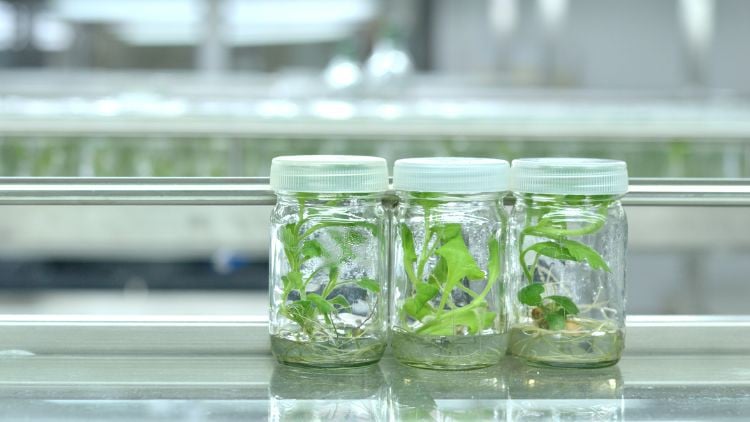
Cultivating Botanical Advancements
⏱️ Length: 1.2 total hours
⭐ 4.13/5 rating
👥 4,950 students
🔄 February 2024 update
Add-On Information:
Note➛ Make sure your 𝐔𝐝𝐞𝐦𝐲 cart has only this course you're going to enroll it now, Remove all other courses from the 𝐔𝐝𝐞𝐦𝐲 cart before Enrolling!
- Course Caption: Cultivating Botanical Advancements
- Length: 1.2 total hours
- Rating: 4.13/5
- Students: 4,950
- Update: February 2024
Course Overview
- This course provides a foundational yet comprehensive introduction to the intricate world of plant cell and tissue culture, delving into the scientific principles that enable the propagation and manipulation of plant material in controlled, sterile environments. Participants will explore the fundamental concepts underpinning in vitro techniques, setting the stage for advanced applications.
- We will trace the historical evolution of plant tissue culture, from its nascent beginnings to its current sophisticated methodologies, highlighting key milestones and breakthroughs that have shaped its trajectory as a vital tool in botanical science and agricultural innovation. Understanding this lineage offers perspective on contemporary practices.
- Gain insights into the essential components and rigorous protocols for establishing and maintaining a sterile plant tissue culture laboratory, covering everything from facility design considerations to sterilization techniques crucial for preventing contamination and ensuring experimental success in sensitive plant material.
- Explore the critical role of nutrient media formulation, including the precise balance of macro and micronutrients, vitamins, and carbon sources required to support optimal growth and differentiation of various plant explants. The course elucidates how subtle changes in media composition can dramatically impact culture outcomes.
- Understand the complex interplay of plant growth regulators (auxins, cytokinins, gibberellins, abscisic acid) and their specific concentrations in modulating plant cell division, differentiation, and morphogenesis in vitro. This module emphasizes how hormonal cues direct developmental pathways.
- Delve into the diverse spectrum of culture types, including callus cultures for biomass production, suspension cultures for cell studies, organ cultures for specific plant parts, and embryo, anther, or pollen cultures for genetic purity and accelerated breeding programs. Each type presents unique opportunities and challenges.
- Unravel the distinct pathways of plant regeneration: organogenesis, which involves the formation of new shoots and roots from undifferentiated cells, and somatic embryogenesis, the development of embryo-like structures from somatic cells, offering powerful tools for clonal propagation and genetic engineering.
Requirements / Prerequisites
- A foundational grasp of general biology, particularly basic plant biology concepts such as cell structure, photosynthesis, and plant life cycles, will significantly enhance the learning experience and allow for deeper engagement with the technical content.
- Familiarity with fundamental laboratory safety protocols and aseptic handling practices, while not strictly mandatory, is highly recommended to appreciate the critical importance of sterility in plant tissue culture and the practical implications of contamination.
- A genuine curiosity for plant science, biotechnology, and sustainable agricultural practices is the primary prerequisite. This intellectual engagement fosters a more enriching educational journey and aids in connecting theoretical knowledge to real-world applications.
- Access to a reliable internet connection and a device capable of streaming video content and accessing digital documents is essential to fully participate in the online modules and review course materials without interruption.
Skills Covered / Tools Used
- Mastery of aseptic techniques, a cornerstone of successful plant tissue culture, covering the proper use of laminar flow hoods, sterilization of tools and media, and precise handling of plant material to prevent microbial contamination.
- Proficiency in explant selection and meticulous preparation, learning how to choose appropriate plant tissues (e.g., shoot tips, nodes, leaf segments) and sterilize them effectively for initiation into in vitro culture, maximizing viability and growth potential.
- Expertise in formulating and accurately preparing various nutrient media, including calculating precise concentrations of essential elements and growth regulators, followed by proper sterilization methods to create an optimal environment for plant cell and tissue growth.
- Skill development in subculturing techniques, including the careful transfer of growing plantlets, calli, or cell suspensions to fresh media, ensuring their continued proliferation and health, alongside precise plant regeneration protocols for developing whole plants from cultured tissues.
- Application of micropropagation techniques for the rapid, clonal multiplication of disease-free plants, learning methodologies that are crucial for commercial horticulture, forestry, and the conservation of endangered species, ensuring genetic fidelity.
- Understanding and implementing in vitro germplasm storage methods, such as slow growth and cryopreservation, which are vital strategies for long-term conservation of valuable plant genetic resources, safeguarding biodiversity for future generations.
- Techniques for disease elimination through meristem culture, a powerful method for producing pathogen-free plants by culturing apical meristems, which are typically free of viruses and other pathogens, crucial for agriculture.
- Development of expertise in haploid production via anther and pollen culture, creating homozygous lines in a single generation, significantly accelerating plant breeding programs for crop improvement and genetic research.
- Execution of somatic embryogenesis protocols for the large-scale production of synthetic seeds and clonal propagation, offering an alternative pathway to plant regeneration with potential for automated production systems and direct seeding.
- Basic operation and interpretation of observations using dissecting and compound microscopes to monitor cell growth, differentiation patterns, and detect early signs of contamination or developmental abnormalities within cultures.
- Introduction to fundamental principles of experimental design and meticulous data recording specific to plant tissue culture experiments, ensuring reliable results, reproducibility, and effective analysis of growth and developmental parameters.
Benefits / Outcomes
- You will be empowered to confidently design, execute, and troubleshoot basic plant tissue culture experiments, translating theoretical knowledge into practical laboratory competencies applicable across various research and industrial settings.
- Develop enhanced analytical and problem-solving skills specifically tailored to botanical contexts, enabling you to critically assess experimental results, identify potential issues in culture, and devise effective solutions for successful plant propagation.
- Establish a robust foundational understanding that serves as an excellent springboard for pursuing advanced academic studies or specialized research careers in plant biotechnology, genetic engineering, horticulture, or conservation biology.
- Acquire the capability to contribute meaningfully to innovative and sustainable agricultural practices, addressing global food security challenges and developing improved crop varieties through advanced in vitro techniques.
- Cultivate a deeper and more nuanced understanding of fundamental plant development and physiological processes, observing firsthand how environmental cues and hormonal balances influence growth and differentiation at the cellular level.
- Gain valuable insights into the commercial viability and operational aspects of establishing and managing a plant tissue culture facility, understanding the economic benefits and practical challenges involved in large-scale production.
- This course will broaden your professional horizons, opening doors to diverse career paths in plant nurseries, research institutions, pharmaceutical companies, agricultural enterprises, and organizations dedicated to biodiversity conservation.
PROS
- Offers a highly structured curriculum that breaks down complex scientific concepts into manageable, digestible modules, making the intricate processes of plant tissue culture accessible to a broad audience regardless of prior specialized training.
- Provides a strong theoretical foundation that is immediately applicable to practical scenarios, bridging the gap between scientific understanding and the real-world execution of sophisticated biotechnological techniques in plant science.
- Empowers learners with skills that are critically relevant for addressing pressing global issues such as food scarcity, climate change adaptation through improved crops, and the urgent conservation of endangered plant species.
- Serves as an excellent entry point into the dynamic and rapidly evolving field of plant biotechnology, equipping individuals with the foundational knowledge needed to explore more advanced techniques like genetic transformation and gene editing.
- The comprehensive nature of the course covers a wide array of techniques and applications, ensuring that participants gain a holistic understanding of plant cell and tissue culture’s utility across agriculture, pharmaceuticals, and environmental science.
CONS
- While thorough in theory, an online format inherently limits direct, hands-on laboratory experience, which is often crucial for developing the tactile dexterity and intuitive problem-solving abilities vital for practical success in plant tissue culture.
Learning Tracks: English,Teaching & Academics,Science
Found It Free? Share It Fast!