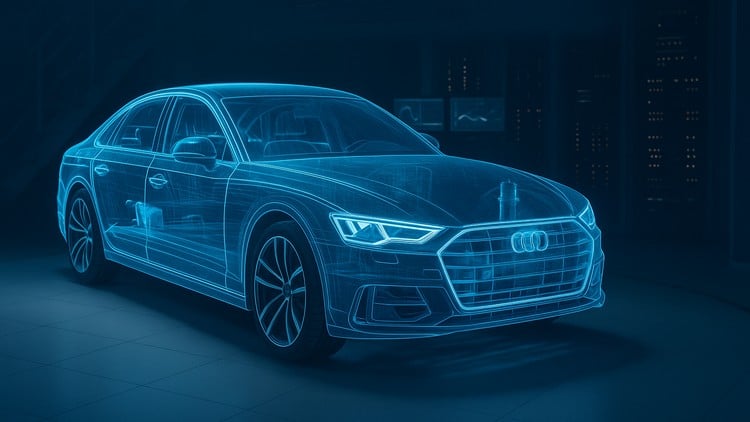
A Complete Guide to Digital Twins in Automotive: Learn Vehicle Simulation, Virtual Testing & Real-Time Diagnostics
⏱️ Length: 1.9 total hours
⭐ 5.00/5 rating
👥 95 students
🔄 October 2025 update
Add-On Information:
Note➛ Make sure your 𝐔𝐝𝐞𝐦𝐲 cart has only this course you're going to enroll it now, Remove all other courses from the 𝐔𝐝𝐞𝐦𝐲 cart before Enrolling!
- Course Overview
- This comprehensive yet concise course provides an accelerated exploration into the profound impact and strategic implementation of digital twins within the dynamic landscape of automotive engineering.
- Delve into the foundational conceptualization of digital twins, understanding their role as sophisticated, dynamic virtual representations mirroring physical automotive assets throughout their lifecycle.
- Uncover how the adoption of digital twin technology is fundamentally transforming traditional design, manufacturing, and operational paradigms in the global automotive industry.
- Gain critical insights into the necessity for automotive enterprises to integrate digital twin strategies to accelerate innovation, enhance product quality, and secure a competitive edge.
- Explore the inherent ability of digital twins to foster a continuous and iterative improvement cycle by linking real-world performance data with high-fidelity virtual models.
- Appreciate the significant financial and resource efficiencies realized through minimized physical prototyping, reduced testing cycles, and optimized operational workflows.
- Understand the convergence of advanced simulation, real-time data analytics, and artificial intelligence, forming the bedrock of intelligent digital twin ecosystems in automotive.
- Position yourself to understand the strategic shift towards predictive engineering and proactive asset management that digital twins facilitate across vehicle platforms.
- This curriculum is meticulously structured to deliver maximum knowledge transfer within a focused timeframe, ideal for busy professionals aiming for rapid upskilling.
- Discover the expansive potential of digital twins to not only replicate but also predict and optimize complex automotive systems, driving future mobility solutions.
- Requirements / Prerequisites
- A fundamental understanding of core engineering disciplines, encompassing mechanical, electrical, and materials science principles, is highly beneficial.
- Familiarity with general computing concepts, data handling, and basic analytical reasoning will provide a solid foundation for the course content.
- A genuine interest in cutting-edge automotive technologies, vehicle system design, and the future evolution of transportation is strongly encouraged.
- Prior exposure to or an interest in simulation software concepts (e.g., Finite Element Analysis, Computational Fluid Dynamics) will aid comprehension but is not strictly required.
- Access to a reliable internet connection and a modern web browser capable of smooth video playback is necessary to fully engage with the course material.
- While no advanced programming skills are mandatory, a logical problem-solving mindset and an eagerness to learn new technological frameworks are key.
- A professional drive to embrace digital transformation and contribute to the modernization of automotive engineering practices will maximize learning outcomes.
- Skills Covered / Tools Used (Conceptual)
- Acquisition of expertise in outlining the foundational architecture and interconnected components required for a robust automotive digital twin implementation.
- Development of critical thinking skills for evaluating and selecting appropriate data sources, sensors, and telemetry systems for accurate twin synchronization.
- Strategic competence in integrating disparate engineering simulation domains – such as thermal, acoustic, and vibrational analyses – into a cohesive virtual vehicle model.
- Analytical capability to interpret complex datasets generated by digital twins, correlating virtual performance with real-world operational parameters.
- Understanding of crucial data security, privacy, and governance principles essential for managing sensitive vehicle and driver information within a twin environment.
- Conceptual familiarity with immersive visualization techniques, including the integration of Augmented Reality (AR) and Virtual Reality (VR) for interactive twin exploration.
- Proficiency in discerning the capabilities of various commercial and open-source software solutions pertinent to digital twin creation, management, and analysis.
- A methodical approach to validating the accuracy and reliability of digital twin models against physical test data, ensuring trust in simulation results.
- Insights into the lifecycle management of digital twins, including version control, model evolution, and adaptation to physical asset modifications or upgrades.
- Cultivation of a holistic system-of-systems perspective, understanding how component-level twins aggregate to form a comprehensive vehicle digital twin and broader fleet management.
- Mastery of conceptual frameworks for applying machine learning and AI algorithms to enhance digital twin predictive capabilities and facilitate autonomous decision-making.
- Development of communication skills to articulate complex digital twin strategies and their tangible benefits to diverse engineering, business, and stakeholder audiences.
- Benefits / Outcomes
- Empowerment to act as a catalyst for innovation within automotive engineering departments by championing advanced virtual modeling and data-driven insights.
- A refined understanding of how to streamline product development cycles, reduce time-to-market, and optimize resource allocation through virtual prototyping.
- Enhanced capability to predict and proactively mitigate potential operational failures, leading to significant reductions in maintenance costs and vehicle downtime.
- Strategic positioning for career progression in high-demand roles focused on advanced simulation, R&D, connected vehicle ecosystems, and future mobility solutions.
- A deepened appreciation for the symbiotic relationship between physical vehicles and their digital counterparts, leading to more resilient and intelligent automotive systems.
- The capacity to contribute meaningfully to environmental sustainability efforts by optimizing vehicle designs and operational efficiencies through virtual testing.
- Confidence in advocating for and leading the integration of digital twin strategies that align with broader Industry 4.0 initiatives and organizational strategic objectives.
- Acquisition of a forward-looking skillset that is highly sought after by leading automotive OEMs, Tier 1 suppliers, technology disruptors, and research institutions.
- Mastery of conceptual tools to design, deploy, and manage sophisticated virtual representations that drive continuous product improvement from concept to end-of-life.
- A comprehensive perspective on how digital twins facilitate the creation of truly smart and connected vehicle experiences, enhancing safety, performance, and user engagement.
- PROS
- Offers a highly targeted and efficient learning pathway into a critical and rapidly expanding field within automotive engineering.
- Content is curated by industry professionals, ensuring relevance, accuracy, and adherence to current best practices and future trends.
- The exceptionally concise 1.9-hour duration allows for rapid knowledge acquisition without significant disruption to a busy professional schedule.
- Provides a significant competitive advantage for career progression, unlocking opportunities in cutting-edge automotive research, design, and operations.
- Features a forward-thinking curriculum that equips learners to address the evolving challenges and opportunities in intelligent vehicle design and operations.
- The perfect 5.00/5 rating from 95 students stands as a testament to the course’s outstanding quality, clarity, and practical applicability.
- Serves as an ideal initial entry point for individuals and teams looking to quickly grasp the strategic value and fundamental implementation aspects of digital twins in the automotive sector.
- CONS
- Given its highly condensed nature, while incredibly efficient, the course may require participants to engage in further independent study or hands-on practice to achieve complete mastery of the complex concepts introduced.
Learning Tracks: English,Design,Other Design
Found It Free? Share It Fast!