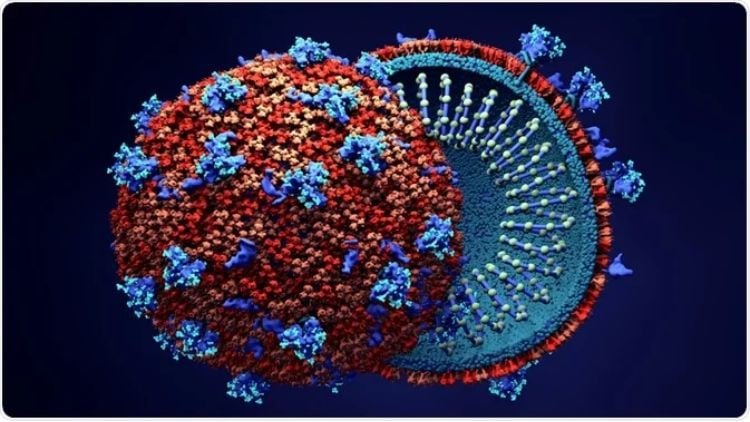
Unraveling the Secrets of Viruses and their Impact on Life
⏱️ Length: 4.3 total hours
⭐ 4.29/5 rating
👥 3,066 students
🔄 July 2023 update
Add-On Information:
Note➛ Make sure your 𝐔𝐝𝐞𝐦𝐲 cart has only this course you're going to enroll it now, Remove all other courses from the 𝐔𝐝𝐞𝐦𝐲 cart before Enrolling!
-
Course Overview
- This immersive course, ‘Unraveling the Secrets of Viruses and their Impact on Life,’ transcends a mere introduction, offering a deep dive into the enigmatic world of viral biology and its profound influence on global ecosystems and human health. You will meticulously investigate the fundamental properties that define these fascinating biological entities, from their astonishingly minimalist genetic structures to their sophisticated, often stealthy, mechanisms of replication and persistence within diverse host cells. Explore the compelling historical journey of virology, tracing pivotal discoveries from the identification of early pathogens to the development of life-saving interventions, thereby establishing a critical context for appreciating contemporary challenges and breakthroughs.
- Delve into the immense diversity of viral families, each presenting unique strategies for survival, transmission, and pathogenesis. You will learn to differentiate between various viral life cycles, understand their specific modes of host interaction, and comprehend the broad spectrum of diseases they cause across humans, animals, and even plants. Critical analysis will focus on how viruses skillfully exploit host cellular machinery, cunningly evade complex immune responses, and continuously adapt to new environments—a dynamic process that underpins the constant emergence of novel infectious threats globally. Beyond their role as pathogens, the course illuminates the ecological significance of viruses as essential drivers of microbial evolution, genetic exchange, and nutrient cycling within virtually all biological systems.
- Gain an advanced understanding of the molecular choreography involved in viral infection, from receptor binding and entry to genome replication, assembly, and egress. We will explore the intricate interplay between viral components and cellular pathways, highlighting both common strategies and unique adaptations. This includes an examination of the genetic plasticity of RNA and DNA viruses, and how these factors contribute to their remarkable capacity for mutation, recombination, and rapid evolution, making them formidable adversaries in public health.
-
Requirements / Prerequisites
- A foundational grasp of general biology is highly recommended, particularly key concepts in cell biology, molecular biology, and genetics, as these form the bedrock for understanding viral life cycles and host interactions.
- Familiarity with basic organic chemistry principles and an introductory understanding of protein structure and function will be advantageous for comprehending viral assembly, capsid formation, and the mechanisms of antiviral drugs.
- More critically, students should possess a keen intellectual curiosity, a strong willingness to engage with complex scientific literature and experimental data, and an analytical mindset prepared to deconstruct intricate biological processes.
- While no prior laboratory experience is strictly necessary for this online format, a basic comfort with scientific notation, terminology, and the ability to interpret scientific diagrams and graphs will significantly enhance the learning experience.
-
Skills Covered / Tools Used
- Critical Analysis of Viral Pathogenesis: Develop the sophisticated ability to dissect and understand the intricate mechanisms by which specific viruses cause disease, from initial cellular entry and replication to systemic manifestations and immune evasion strategies, identifying key virulence factors.
- Interpretation of Molecular Diagnostics: Acquire insight into the underlying principles and practical applications of cutting-edge diagnostic techniques such as quantitative PCR (qPCR), next-generation sequencing, ELISA, and antigen/antibody detection assays, learning to critically interpret their results in clinical, epidemiological, and research contexts.
- Understanding Antiviral and Vaccine Strategies: Gain a nuanced comprehension of the diverse mechanisms of action for various antiviral drugs, including those targeting viral replication or assembly, and the complex scientific principles behind modern vaccine development, covering live-attenuated, inactivated, subunit, viral vector, and mRNA vaccine platforms.
- Epidemiological Reasoning for Viral Outbreaks: Learn to effectively interpret and apply epidemiological data, understanding crucial concepts like basic reproduction number (R0), incidence, prevalence, and case fatality rates, to track, predict, and model viral spread within populations and evaluate intervention effectiveness.
- Introduction to Bioinformatics Fundamentals: Become familiar with basic bioinformatics tools and public databases commonly used for analyzing viral genomic sequences, identifying mutations, constructing phylogenetic trees, and tracing viral evolutionary lineages across geographical regions.
- Scientific Literature Appraisal: Significantly enhance your capacity to critically read, evaluate the methodology and findings of, and synthesize information from primary scientific literature, enabling you to differentiate robust scientific conclusions from preliminary data and identify knowledge gaps.
- Ethical Considerations in Virology: Engage in thoughtful discussions surrounding the profound ethical implications of contemporary virological research, including topics like gain-of-function studies, gene editing technologies as they apply to viruses, and the complex societal and ethical challenges of public health interventions during pandemics.
-
Benefits / Outcomes
- Cultivated Scientific Literacy: Emerge with a sophisticated and evidence-based understanding of virology that empowers informed engagement with complex public health issues, discerning analysis of media reports, and constructive participation in policy discussions surrounding infectious diseases.
- Enhanced Analytical Acumen: Sharpen your ability to think critically about intricate biological systems, effectively problem-solve scientific challenges, and construct logical, evidence-based arguments within the dynamic field of microbiology.
- Global Health Perspective: Develop a profound appreciation for the interconnectedness of human health, animal health, and environmental factors in the context of viral diseases, fostering an understanding of the ‘One Health’ paradigm and its importance in preventing future pandemics.
- Foundation for Advanced Study: Establish a robust knowledge base and a comprehensive conceptual framework that will serve as an excellent springboard for pursuing further academic research, graduate studies in immunology, microbiology, infectious diseases, public health, or related biomedical fields.
- Informed Health Advocacy: Be equipped to make knowledgeable and responsible contributions to discussions about vaccine efficacy, disease prevention strategies, and the broader societal impact of viral outbreaks, thereby promoting evidence-based public health practices and reducing misinformation.
- Appreciation of Biological Diversity: Gain a deeper respect for the immense diversity, evolutionary ingenuity, and often surprising biological roles of life at the molecular level, vividly exemplified by the adaptive strategies and pervasive presence of viruses in all domains of life.
-
PROS
- Highly Relevant and Timely Content: Addresses some of the most pressing global health challenges of our era, providing essential insights into current and future pandemic threats and disease management.
- Intellectual Stimulation: Offers a deep dive into some of the most complex, dynamic, and rapidly evolving aspects of biological science, fostering a genuine sense of scientific discovery.
- Empowers Critical Thinking: Encourages a nuanced understanding of scientific processes, experimental design, and public health responses, enabling learners to move beyond simplistic narratives.
- Interdisciplinary Connections: Masterfully bridges molecular biology, medicine, epidemiology, public policy, and environmental science, offering a holistic and integrated view of viral impact.
-
CONS
- Demanding Content Load: The comprehensive breadth and scientific depth of the material may be intensive for learners without a solid foundational biological background, potentially requiring significant self-study and sustained commitment to master the concepts fully.
Learning Tracks: English,Teaching & Academics,Science
Found It Free? Share It Fast!