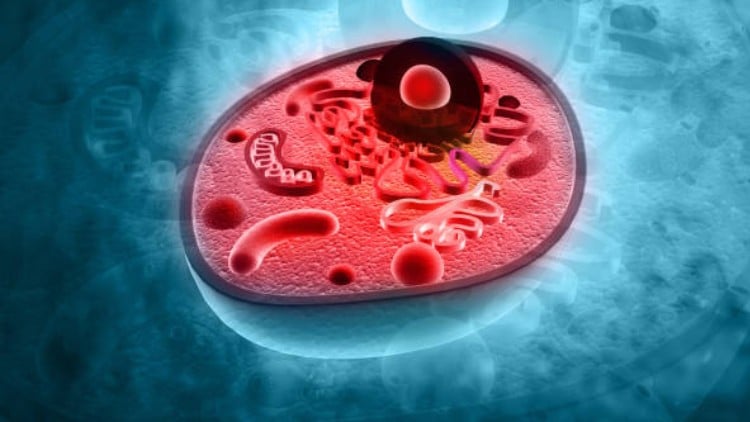
Exploring the Building Blocks of Life: A Beginner’s Guide to Cell Structure and Function
⏱️ Length: 4.5 total hours
⭐ 4.19/5 rating
👥 4,648 students
🔄 November 2024 update
Add-On Information:
Note➛ Make sure your 𝐔𝐝𝐞𝐦𝐲 cart has only this course you're going to enroll it now, Remove all other courses from the 𝐔𝐝𝐞𝐦𝐲 cart before Enrolling!
- Course Overview
- Delve into the intricate and marvelously organized world within every living organism, uncovering how life’s fundamental processes are meticulously orchestrated at the cellular level. This course demystifies the incredibly complex yet beautifully logical architecture that underpins all biological diversity.
- Explore the evolutionary journey of cellular life, understanding how simple prokaryotic structures evolved into the sophisticated eukaryotic cells that form plants, animals, and fungi, highlighting the conserved mechanisms that link all living things.
- Gain a profound appreciation for the dynamic equilibrium within cells, recognizing them not as static units but as constantly adapting, communicating, and self-regulating micro-factories essential for survival and reproduction.
- Unpack the foundational concepts that bridge cell biology with broader scientific disciplines, setting the stage for deeper dives into genetics, biotechnology, medicine, and ecology, demonstrating the ubiquitous relevance of cellular knowledge.
- Presented as an accessible entry point, this course meticulously breaks down potentially intimidating biological concepts into digestible segments, ensuring a solid conceptual grasp for learners with varied academic backgrounds.
- Requirements / Prerequisites
- A genuine curiosity about the natural world and how living systems function at their most basic level is the primary prerequisite, fostering an open and inquisitive mindset towards scientific discovery.
- No specialized prior academic knowledge in biology or chemistry is assumed, making this an ideal starting point for anyone interested in life sciences, irrespective of previous formal education.
- Basic computer literacy and access to a stable internet connection are required to engage with the online course materials, videos, and any interactive components.
- A willingness to engage with scientific terminology and conceptual models is beneficial, as the course introduces the precise language used in cell biology.
- An estimated commitment of approximately 4.5 hours is necessary to complete all course content, including lectures and any self-assessment activities.
- Skills Covered / Tools Used
- Develop a robust vocabulary in cell biology, enabling clear and precise communication about cellular structures, processes, and their implications in various biological contexts.
- Cultivate critical thinking skills by analyzing how different cellular components interact synergistically to maintain cellular homeostasis and respond to environmental cues.
- Enhance visual literacy by learning to interpret and analyze complex biological diagrams, microscopic images, and molecular models, crucial for understanding intricate cellular architectures.
- Build a foundational understanding of the scientific method as applied to cell biology, appreciating how experiments are designed to elucidate cellular mechanisms and validate hypotheses.
- Improve conceptual mapping abilities, connecting microscopic cellular events to their macroscopic effects on tissues, organs, and entire organisms, bridging different scales of biological organization.
- Familiarization with the conceptual “tools” biologists use to study cells, such as microscopy principles (without hands-on use), biochemical pathways, and genetic manipulation (conceptual overview).
- Benefits / Outcomes
- Establish a strong, comprehensive foundation in cellular biology, serving as an indispensable springboard for pursuing more advanced studies in fields like molecular biology, biochemistry, developmental biology, or medicine.
- Empower yourself to critically evaluate and understand current scientific news and research related to health, disease, biotechnology, and environmental science, recognizing the cellular basis of many contemporary issues.
- Foster a deeper appreciation for the intricate beauty and engineering elegance inherent in living systems, from the simplest bacterium to the most complex multicellular organism.
- Gain the confidence to engage in informed discussions about biological phenomena, utilizing accurate terminology and a robust understanding of fundamental life processes.
- Unlock pathways to understanding various disease mechanisms, realizing how malfunctions at the cellular level often manifest as physiological disorders and informing potential therapeutic strategies.
- Develop an expanded worldview that recognizes the universal cellular blueprint across all life forms, fostering a holistic perspective on biodiversity and evolution.
- PROS
- Highly Accessible Introduction: Positioned as a “Beginner’s Guide,” the course effectively distills complex cellular biology into an engaging and comprehensible format, ideal for newcomers to the subject.
- Concise and Efficient: With a total length of only 4.5 hours, it offers a high-impact, time-efficient learning experience, perfect for busy individuals seeking to grasp core biological concepts quickly.
- Proven Quality and Engagement: Boasting a strong 4.19/5 rating from a large cohort of 4,648 students, the course demonstrates its effectiveness and appeal among a broad learning community.
- Up-to-Date Content: The recent November 2024 update ensures that the information presented is current, reflecting the latest understandings and pedagogical approaches in cell biology.
- Strong Foundational Knowledge: Despite its brevity, the course is designed to provide a robust conceptual framework that is crucial for understanding all subsequent biological disciplines.
- CONS
- Limited Depth for Advanced Learners: As an introductory guide, the course’s concise nature means it may not delve into the highly detailed molecular mechanisms or cutting-edge research topics that more advanced students or researchers might seek.
Learning Tracks: English,Teaching & Academics,Online Education
Found It Free? Share It Fast!