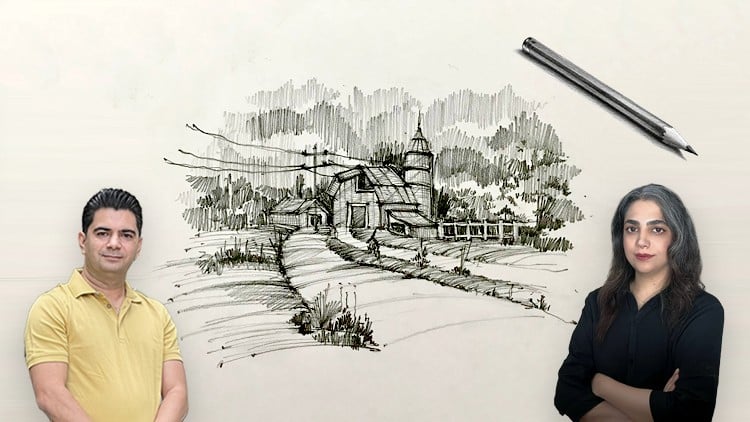
Get sketch lines, shading, hatching, and perspectives.Perfect for architecture, urban design and graphic design students
⏱️ Length: 1.1 total hours
⭐ 4.68/5 rating
👥 1,054 students
🔄 September 2025 update
Add-On Information:
Note➛ Make sure your 𝐔𝐝𝐞𝐦𝐲 cart has only this course you're going to enroll it now, Remove all other courses from the 𝐔𝐝𝐞𝐦𝐲 cart before Enrolling!
- Course Overview
- Unlock the visual language of architecture, urban planning, and graphic design through essential freehand sketching for beginners.
- Demystify the blank page, transforming abstract concepts into tangible designs, making sketching indispensable in the design process.
- Translate observation into detailed visual representations, laying critical groundwork for architectural visualization and advanced techniques.
- Cultivate a designer’s mindset, articulating complex spatial ideas with clarity and artistic flair, enhancing creative communication.
- Requirements / Prerequisites
- No prior drawing experience necessary; this course is crafted for beginners exploring architectural sketching from scratch.
- A curious mind and genuine interest in observing architectural forms are primary requirements, fostering an active learning environment.
- You’ll need basic drawing supplies: pencils (HB, 2B, 4B), a sketchpad or paper, and an eraser.
- Skills Covered / Tools Used
- Develop keen understanding of fundamental perspective principles, enabling convincing 3D representations of architectural spaces.
- Explore diverse line qualities and weights to express material differences, textures, and structural integrity in your drawings.
- Master the art of shading and hatching, manipulating light and shadow to define form, suggest depth, and evoke atmosphere.
- Gain proficiency drawing various architectural elements—from simple masses to complex facades—with accurate proportions.
- Utilize common graphite pencils to achieve tonal values and expressive line work, adapting to various sketching needs.
- Learn effective techniques for rapid concept visualization, quickly iterating and communicating design ideas during brainstorming.
- Develop ergonomic drawing habits and hand control exercises, ensuring comfortable and efficient sketching practices.
- Benefits / Outcomes
- Transform into a confident visual communicator, translating intricate design thoughts and observations into clear, compelling hand-drawn sketches.
- Cultivate an indispensable skill set for academic success in architecture, urban planning, and graphic design programs.
- Build a foundational portfolio of freehand architectural sketches, showcasing your emerging talent and creative potential.
- Enhance spatial awareness and observational abilities, skills extending beyond the drawing board into design thinking.
- Empower yourself with a quick, low-tech visualization method deployable anywhere, turning abstract ideas into immediate, shareable concepts.
- PROS
- Highly Accessible: Perfect for absolute beginners with no prior art experience, making architectural sketching approachable for a broad audience.
- Concise and Efficient: At just 1.1 total hours, this course delivers core concepts quickly, allowing for immediate application and self-practice.
- High Student Satisfaction: Boasting an impressive 4.68/5 rating from over 1,000 students, reflecting its proven effectiveness and engaging content.
- Industry Relevant: Specifically tailored for architecture, urban design, and graphic design students, providing directly applicable skills for their fields.
- Up-to-Date Content: The September 2025 update ensures course material remains current and relevant with contemporary sketching practices and tools.
- Foundational Skill Building: Lays robust groundwork for all future design visualization, whether transitioning to digital tools or pursuing advanced traditional rendering.
- CONS
- Limited Practice Time: While comprehensive for its duration, the 1.1-hour length necessitates significant independent practice beyond the course to truly master the techniques.
Learning Tracks: English,Design,Architectural Design
Found It Free? Share It Fast!