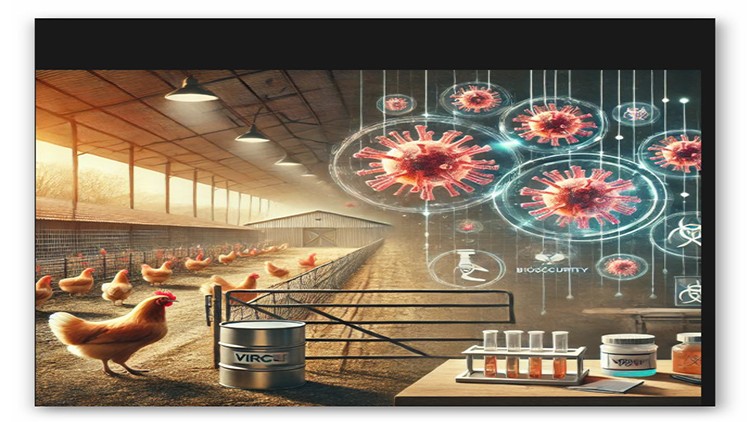
“Mastering Poultry Virology: Control, Prevention & Future Threats”
Why take this course?
🚫 Face Challenges Protect Your Flock: An In-Depth Guide to Poultry Farming Viral Diseases 🐥🦆
Course Introduction:
Hello, my colleagues and students! My name is Mohamed AL-Ashram, and I’m a veterinarian, author, and instructor with extensive experience in the poultry industry. In this comprehensive course, we delve into the critical subject of viral diseases that pose significant threats to the poultry industry. Let’s embark on a journey through time and science to safeguard your flock.
The History & Growth of Poultry Production:
Poultry production has its roots in Asia, dating back over 3000 years. The breeding of chickens in captivity is traced to at least 1400 BC in Egypt. The past century has witnessed an impressive growth in poultry production, particularly since the late 1960s, with remarkable advancements in vaccination, nutrition, genetics, and management. Today, about 75% of global poultry production is from intensive operations. Chicken production leads the way as the predominant source of poultry meat, followed by turkeys, ducks, and geese. Egg production has also seen significant growth, with a projected increase over the past decade.
The Future of Poultry Production:
As we look to the future, the control of diseases remains a top priority for the poultry industry. The main goals are to enhance our ability to manage health issues, maintain high production standards, and ensure reasonable costs while preventing disease outbreaks like Newcastle Disease (ND), Infectious Bursal Disease (IBD), and Avian Influenza (AI). These diseases can cause substantial losses in flock performance, productivity, and profits without necessarily presenting as clinical diseases.
Understanding Viral Diseases and Their Impact:
Viruses are silent but devastating pathogens that can cause primary tissue damage or open the door for secondary bacterial and mycoplasmal infections. They can suppress the immune system, leading to stunting, gut disease, malabsorption, respiratory diseases, and more. Effective vaccination programs rely on healthy immune systems, which makes managing viral diseases imperative.
Economic Consequences of Viral Diseases:
The economic impact of viral diseases often goes unseen, with losses manifesting as increased mortality rates, reduced average weight, and lower net income per flock. For instance, a clinical infection of the Avian Anemia Virus (CAV) can lead to a 17-19% reduction in net income and higher mortality rates.
Investigating Afield Problems:
When faced with a sick flock, observation during a visit is crucial, along with conducting necropsies to observe internal lesions and establish a differential diagnosis. Lab diagnostics are essential for a definitive diagnosis and identifying the causative agent. The tools and techniques used by avian diagnosticians are sophisticated, and the accuracy of results often hinges on the quality of samples submitted.
Understanding Key Viral Diseases:
In this course, we will explore various viral diseases affecting poultry, including:
- Avian Influenza (AI): Learn about the clinical signs, lesions, diagnosis, and control methods for this highly contagious disease.
- Newcastle Disease (ND): Discover how to identify ND virus and its impact on your flock.
- Gumboro Disease (IBD): Understand the causes, symptoms, and preventative measures for this common infectious disease.
- Infectious Bronchitis: Examine the effects of this viral respiratory disease on egg production and poultry health.
- Duck Virus Enteritis (DVE) & Duck Virus Hepatitis (DVH): Recognize these diseases and learn how to protect your ducks.
- Avian Adenohemorrhagic Enteritis of Turkeys: Identify the signs and implement control strategies for this turkey-specific disease.
Join Us on This Critical Journey:
As we navigate through the complexities of viral diseases in poultry farming, we will equip you with the knowledge and tools necessary to protect your flock from these silent threats. Enroll in this course to become a guardian against viral diseases and ensure the health and productivity of your poultry operations.
🌟 Enroll Now and Safeguard Your Flock Against Viral Diseases! 🌟
- Course Caption: Mastering Poultry Virology: Control, Prevention & Future Threats
- Course Overview
- Explore the intricate world of poultry virology and its profound impact on the global agricultural landscape, moving beyond simple profit/loss scenarios to encompass food security and animal welfare.
- Understand the complex epidemiological dynamics that govern viral disease spread within poultry populations, including transmission routes, host susceptibility, and environmental factors.
- Delve into the molecular mechanisms by which viruses infect hosts, evade immune responses, and cause pathology, providing a deeper insight into disease progression.
- Examine various diagnostic methodologies, from rapid on-farm tests to sophisticated laboratory assays like PCR, ELISA, and serology, crucial for early detection and disease surveillance.
- Investigate advanced biosecurity principles and their practical implementation to create impenetrable farm defenses and minimize pathogen entry and spread.
- Analyze the efficacy and application of diverse vaccine technologies, including live, inactivated, and recombinant vaccines, in building robust flock immunity and strategic disease control.
- Discuss the profound economic repercussions of viral outbreaks, affecting international trade, market access, and the overall stability of the poultry industry worldwide.
- Address the critical aspect of zoonotic potential, understanding how certain poultry viruses can pose threats to human health and the importance of a One Health approach.
- Gain insights into international regulatory frameworks and the pivotal role of organizations in global disease surveillance, reporting, and cooperative control efforts.
- Prepare for emerging and re-emerging viral threats, including the impact of climate change on viral evolution and the challenges posed by novel pathogens to existing control strategies.
- Requirements / Prerequisites
- A foundational understanding of animal biology, microbiology, or veterinary science is highly recommended.
- Familiarity with basic concepts of animal husbandry, farm management, and agricultural practices.
- A keen interest in disease prevention, animal welfare, and sustainable food production systems.
- Proficiency in English and access to a stable internet connection for engaging with online learning resources.
- Skills Covered / Tools Used
- Strategic Risk Assessment: Ability to identify, evaluate, and mitigate viral disease risks in diverse poultry operations.
- Advanced Biosecurity Planning: Designing and implementing comprehensive, cost-effective biosecurity protocols tailored to specific farm environments and production systems.
- Diagnostic Interpretation: Skill in analyzing and interpreting laboratory results from various diagnostic tests to accurately diagnose viral infections and guide intervention strategies.
- Vaccination Program Design: Developing effective, evidence-based vaccination schedules and understanding vaccine selection based on regional epidemiology and flock health status.
- Outbreak Management: Competency in emergency response planning, execution, and communication during viral disease outbreaks to minimize spread and impact.
- Epidemiological Surveillance: Utilizing data analysis techniques to monitor disease trends, predict potential outbreaks, and evaluate the effectiveness of control programs.
- Critical Scientific Appraisal: Developing the ability to critically evaluate scientific literature, research findings, and new technological advancements in poultry virology.
- Stakeholder Communication: Effectively conveying complex information about disease threats, control measures, and biosecurity protocols to farm managers, veterinarians, and regulatory bodies.
- Benefits / Outcomes
- Become a highly competent professional capable of safeguarding poultry health, enhancing industry profitability, and ensuring sustainable production practices.
- Contribute significantly to global food security by minimizing devastating losses due to viral diseases and optimizing poultry productivity.
- Enhance career prospects in diverse fields such as veterinary medicine, farm management, public health, agricultural research, and agribusiness consulting.
- Develop robust, proactive disease prevention and control programs that reduce economic losses, improve animal welfare, and ensure product safety.
- Gain expertise in navigating the complexities of international trade regulations and certifications, which are heavily influenced by a country’s disease status.
- Establish a valuable professional network with leading experts, researchers, and peers in the field of poultry health and virology.
- Be equipped with the knowledge and adaptive skills necessary to address future challenges posed by evolving viruses and changing environmental conditions globally.
- PROS
- Holistic Curriculum: Offers a comprehensive understanding of poultry viral diseases, from their molecular biology to their profound global economic and public health impacts.
- Practical Relevance: Provides actionable knowledge and practical skills directly applicable to real-world poultry farming, veterinary practice, and industry management scenarios.
- Industry Demand: Addresses a critical and growing need for skilled professionals capable of tackling significant challenges in a vital global food production sector.
- Future-Oriented: Prepares learners for emerging threats, advancements in diagnostic technologies, and innovative control strategies in poultry health.
- Impactful Role: Empowers individuals to play a vital role in animal health, food security, economic stability, and the global One Health initiative.
- CONS
- May require a significant commitment of time and self-directed study to fully internalize the advanced scientific and practical concepts presented throughout the course.