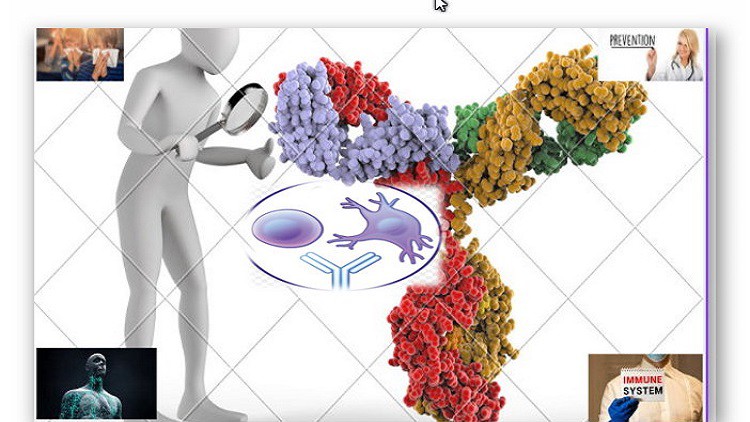
immunology principales
What you will learn
introduction history of immunology
OVERVIEW OF THE IMMUNE SYSTEM histocompatibility what is immune response ?
immunological mechanisms THE INNATE IMMUNE SYSTEM THE ADAPTIVE IMMUNE SYSTEM
organ of immune system cells of immune system cytokines complement system Regulation of immune response
hypersensitivity autoimmune diseases
transplantation immunology
tumor immunology
immunization
immunodiagnostics
Description
Anyone who has had the good fortune to hear an orchestra brilliantly perform a symphony composed by one of the great masters knows that each of the carefully tuned musical instruments contributes to the collective, harmonious sound
produced by the musicians. In many ways, the normally tuned immune system continuously plays an orchestrated
symphony to maintain homeostasis.
The immune system is a “team effort,” involving many different players. These players can be divided roughly into two groups: those that are members of the innate immune system team and those that are part of the adaptive immune system. Importantly, these two groups work together to provide a powerful defense against invaders.
Immunology is a difficult subject for several reasons. First, there are lots of details, and sometimes these details get in
the way of understanding the concepts. To get around this problem, we’re going to concentrate on the big picture. It
will be easy for you to find the details somewhere else. Another difficulty in learning immunology is that there
is an exception to every rule. Immunologists love these exceptions, because they give clues as to how the immune
system functions. But for now, we’re just going to learn the rules. Oh sure, we’ll come upon exceptions from time
to time, but we won’t dwell on them. Our goal is to exam-ine the immune system, stripped to its essence.
A third difficulty in studying immunology is that our knowledge of the immune system is still evolving. As
you’ll see, there are many unanswered questions, and some of the things that seem true today will be proven
false tomorrow.
The term “immunology” is derived from Latin word “immunis” means exempt, i.e., protection from infectious diseases. Extensive work on bacteriology and pathology made their respective workers to find methods to develop resistance against infectious diseases in the latter half of 19th and beginning of 20th century. Although the history of immunology is about 100 years old, cellular immunology dates back to the 1950s
why is immunology so important? The immune system has involvement in almost all fields related to health and disease. Infections continue to confront human health and well-being on a global scale. Inflammation contributes to the
lung, heart and joint diseases, and diabetes mellitus; cancers have to evade immune surveillance, and immune dysregulation leads to allergies that are increasingly prevalent across the world. Only improved understanding of the
mechanisms by which microbes, allergens, and tumor cells cause disease will result in the development of diagnostic, therapeutic, and preventative strategies to combat this threat.However, we are only beginning the voyage of immunology, and there is much we still need to research and understand. The study of basic immunology may provide students with an opportunity to relate the findings of fundamental sciscientific investigations to clinical problems
history
Babylonian Epic of Gilgamesh (2000 B. C.) records the presence of pestilence and diseases. The study of Immunology stemmed out from the Thucydides’ description of individuals who recovered from the plague in Athens. Those individuals, who had already contracted the disease, recovered and became “immune.” Variolation was practiced for many years in China. The process involved exposing healthy people to the material derived from the lesions caused by the disease by either putting it under the skin or, more often, inserting powdered scabs from smallpox pustules into the nose. However, that occasionally resulted in death because there was no standardization of the inoculum. Variolation, later, became popular
in England, mainly due to the efforts of Lady Mary Wortley Montague and the American colonies. In 1796, Jenner inoculated James Phipps with the material obtained from a cowpox lesion, which appeared on the hand of a
dairymaid, and he inoculated the experimental subject with smallpox about six weeks later, without producing disease [1]. In 1875, Robert Koch was able to show the presence of anthrax causing bacteria in the lymph nodes of a dead rabbit that was earlier inoculated with the blood of a diseased animal [2]. In a serendipitous discovery, Pasteur was able to attenuate the virulent chicken cholera bacillus and coined the term vaccination. Later, he developed first viable vaccine for anthrax and rabies while Robert Koch studied hypersensitivity in tuberculosis. Although many consider Louis Pasteur the “father of
immunology,” it is due to his and Koch’s efforts that firmly established the historical germ theory of disease. Then, various scientists contributed to the development of the concept of cellular and humoral immunity. While working on the development of digestive organ in starfish larvae, Metchnikoff became a leading proponent of the “Cellularists.” He believed that phagocytes, not antibodies, played the leading role in immunity. Emil von Behring and Kitasato demonstrated the transfer of immunity against Diphtheria by a soluble “anti-toxin” in the blood whereby, Paul Ehrlich predicted the existence of immune bodies (antibodies) and side-chains from which they arise (receptors). Ehrlich suggested that antigens interact with receptors borne by cells, resulting in the secretion of excess receptors (antibodies).the supporters of alternative theory, i.e., “Humoralists,” believed that a soluble substance in the body was responsible for mediating immunity
OVERVIEW OF THE IMMUNE SYSTEM
PHYSICAL BARRIERS
immunological mechanisms
THE INNATE IMMUNE SYSTEM
THE ADAPTIVE IMMUNE SYSTEM
organ of immune system
cells of immune system
Antigen
Macrophage
what is immune response ?
immunoglobulin
immunotolerance
histocompatibility
immunotherapy
cytokines
complement system
Regulation of immune response
immunity to infection
transplantation immunology
autoimmune diseases
hypersensitivity
immunization
tumor immunology
immunodiagnostics
Content
- Course Overview
- Embark on an illuminating journey through the intricate world of immunology with ‘Immunology Step by Step.’ This course offers a rigorous yet accessible exploration, designed to progressively build your understanding from the foundational biological principles to their critical clinical applications. We unpack the evolutionary marvels of immune responses, decipher how our bodies expertly differentiate self from non-self, and investigate the dynamic interplay of cellular components, molecular signals, and organ systems that collectively orchestrate both robust health and the onset of disease. Gain a comprehensive, holistic perspective on immune system function and its multifaceted dysregulation, emphasizing key immunological principles.
- Requirements / Prerequisites
- A foundational understanding of basic biology, including cellular structures and fundamental biochemical processes, is highly recommended to maximize your learning experience.
- No advanced or prior in-depth immunology background is required, as this course is meticulously structured for progressive, step-by-step learning suitable for enthusiastic beginners.
- An inquisitive mind and a readiness to engage with complex biological systems and their intricate regulatory networks are key attributes for success.
- Skills Covered / Tools Used
- Develop robust analytical skills to critically decipher complex immunological pathways, their intricate regulatory mechanisms, and the consequences of their perturbation.
- Cultivate advanced problem-solving abilities, enabling you to conceptually approach a wide spectrum of immune-related health challenges, from infectious diseases to chronic inflammatory conditions.
- Learn to conceptually interpret disease mechanisms, understanding the underlying immunology behind phenomena like exaggerated immune responses (e.g., allergies), autoimmune conditions, and immune evasion by tumors.
- Grasp the rationale behind various therapeutic interventions, including vaccination strategies and immunomodulatory drugs, enhancing your understanding of medical immunology.
- Focus will be on conceptual frameworks and critical scientific reasoning; no specific software or laboratory tools are required for this theoretical course.
- Benefits / Outcomes
- Establish a powerful and enduring foundational understanding of immunology, serving as an excellent springboard for further advanced academic pursuits in medicine, biomedical research, biotechnology, or public health.
- Gain a profoundly deeper appreciation for human health, the sophisticated ways the body maintains homeostasis, and the precise pathogenesis of immune-mediated diseases.
- Empower yourself with the knowledge to critically evaluate immunological claims, understand the science behind current medical headlines, and contribute meaningfully to discussions on global health challenges and novel therapeutic developments.
- Enhance your overall critical thinking and scientific literacy, enabling you to approach complex biological questions with a structured and informed perspective.
- Understand the implications of immune system variations, contributing to an appreciation for aspects of personalized medicine and tailored interventions.
- PROS
- Structured curriculum meticulously guides learners from fundamental immunological principles to advanced clinical relevance with clarity.
- Covers an exceptionally broad spectrum of immunology, encompassing core mechanisms, major pathologies, and crucial diagnostic/therapeutic interventions.
- Emphasizes the practical application of knowledge, ensuring a direct connection between theory and real-world medical and diagnostic scenarios.
- Provides a robust conceptual framework beneficial for a diverse audience, including students, aspiring researchers, and healthcare professionals seeking deeper insights.
- Designed for comprehensive understanding, making complex and often intimidating immunological topics approachable and digestible.
- CONS
- The extensive scope and depth of content might necessitate a significant time commitment and a high level of self-discipline to fully grasp all nuances, particularly for absolute beginners.