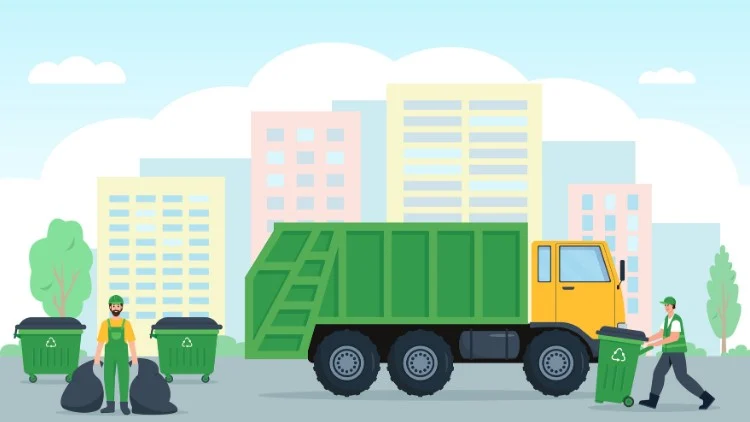
Waste Management Training | Sustainability Practices | Waste Reduction Strategies | Promote Environmental Responsibility
⏱️ Length: 1.3 total hours
👥 37 students
Add-On Information:
Note➛ Make sure your 𝐔𝐝𝐞𝐦𝐲 cart has only this course you're going to enroll it now, Remove all other courses from the 𝐔𝐝𝐞𝐦𝐲 cart before Enrolling!
- Course Overview
- Understanding the fundamental principles of waste management within the broader context of global sustainability goals and environmental stewardship.
- Examining the lifecycle of various waste streams, ranging from municipal solid waste to complex industrial by-products, and their long-term impact on ecosystems.
- Analyzing the paradigm shift from a linear “take-make-dispose” economic model to a circular economy where resources are kept in use for as long as possible.
- Exploring the ethical and social implications of waste disposal, including environmental justice issues and the impact of pollution on vulnerable communities.
- Reviewing the global regulatory landscape, including international treaties and local governance frameworks that dictate how businesses must handle their environmental footprints.
- Investigating the role of technological innovation in waste processing, such as advanced sorting systems, waste-to-energy conversion, and bio-degradable material science.
- Developing a holistic view of environmental management systems (EMS) and how they integrate into modern corporate structures to drive long-term viability.
- Discussing the urgency of the global waste crisis and the critical need for proactive strategies to mitigate climate change and biodiversity loss through better resource management.
- Requirements / Prerequisites
- A foundational interest in environmental conservation, climate action, or corporate sustainability is recommended for all prospective students.
- No prior technical background in environmental science or engineering is required, as the course builds concepts from the ground up for general accessibility.
- Participants should possess a basic understanding of modern business operations to better contextualize how waste management strategies are applied in professional settings.
- An open-minded approach to rethinking traditional consumption patterns and a willingness to adopt sustainable lifestyle or operational changes.
- Access to a computer or mobile device with a stable internet connection to engage with the digital modules and supplemental reading materials.
- A desire to contribute to organizational green initiatives or to transition into a career focused on environmental responsibility and ESG (Environmental, Social, and Governance) reporting.
- Skills Covered / Tools Used
- Waste Characterization Techniques: Learning how to categorize and quantify different types of waste to determine the most effective treatment or recycling paths.
- The 5R Framework Implementation: Mastering the strategic application of Refuse, Reduce, Reuse, Repurpose, and Recycle to minimize the volume of materials sent to landfills.
- Sustainable Procurement Strategies: Developing the ability to evaluate supply chains and choose vendors that prioritize eco-friendly packaging and low-waste production.
- Carbon Footprint Analysis: Gaining introductory skills in measuring how waste generation contributes to an organization’s overall greenhouse gas emissions.
- Audit and Compliance Monitoring: Learning the basics of conducting environmental audits to ensure adherence to local waste disposal laws and internal sustainability targets.
- Stakeholder Engagement: Building communication skills to foster a culture of sustainability among employees, management, and the wider community.
- Resource Mapping: Utilizing simple mapping tools to identify where resources enter a system and where they exit as waste, facilitating better optimization.
- Risk Assessment Tools: Identifying potential environmental hazards associated with improper waste handling and developing mitigation protocols.
- Benefits / Outcomes
- Gain the ability to design and implement comprehensive waste reduction programs that can be scaled from a household level to a corporate environment.
- Improve organizational efficiency by identifying hidden costs associated with excessive resource consumption and inefficient disposal methods.
- Enhance professional marketability in an increasingly “green” job market where sustainability knowledge is a highly sought-after secondary skill set.
- Develop a deep understanding of how to boost brand reputation by successfully communicating environmental achievements to consumers and investors.
- Acquire the knowledge necessary to help organizations avoid legal liabilities and hefty fines by staying compliant with evolving environmental regulations.
- Empower yourself to become a sustainability champion within your community, providing the expertise needed to lead local environmental initiatives.
- Understand the direct link between effective waste management and the preservation of natural resources, contributing to a healthier planet for future generations.
- Receive a structured roadmap for transitioning toward zero-waste goals, regardless of the current baseline of your organization or personal life.
- PROS
- Condensed Learning: Provides a high-impact overview of critical environmental concepts in a very short timeframe, perfect for busy professionals.
- Broad Applicability: The strategies taught are universal and can be applied across various industries, including manufacturing, retail, and hospitality.
- Action-Oriented Content: Focuses on practical strategies rather than just theoretical concepts, allowing for immediate implementation of waste reduction ideas.
- Low Entry Barrier: Simplifies complex environmental science into digestible points that are easy for non-experts to understand and act upon.
- CONS
- Generalist Approach: Due to its concise nature, the course provides a broad introductory overview rather than deep-dive technical engineering specifications for specialized waste treatment facilities.
Learning Tracks: English,Business,Management
Found It Free? Share It Fast!