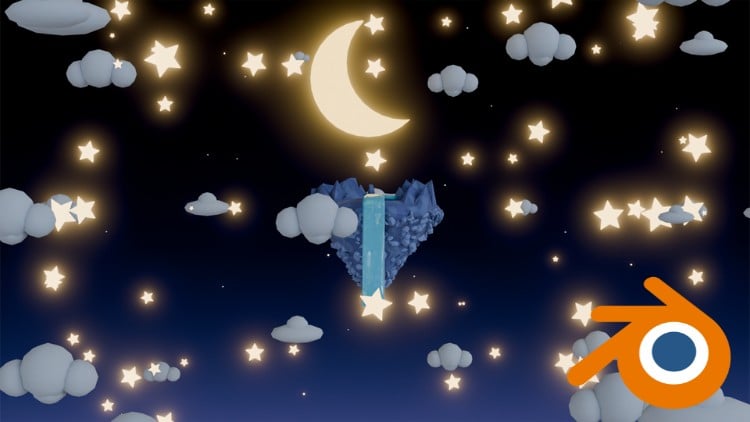
Learn to create a dreamy low poly scene in Blender with simple modeling, lighting, animation, and rendering steps.
⏱️ Length: 2.5 total hours
👥 9 students
🔄 November 2025 update
Add-On Information:
Note➛ Make sure your 𝐔𝐝𝐞𝐦𝐲 cart has only this course you're going to enroll it now, Remove all other courses from the 𝐔𝐝𝐞𝐦𝐲 cart before Enrolling!
- Course Overview
- Embark on a creative journey to construct a serene and ethereal 3D landscape, a testament to the captivating beauty of simplified aesthetics.
- This course is meticulously designed to guide you through the fundamental principles of 3D scene creation, focusing on efficiency and artistic impact through low poly techniques.
- Discover the magic of translating abstract concepts into tangible, visually stunning digital environments.
- Uncover the power of Blender as a versatile tool for both artistic expression and technical execution, making 3D art accessible and enjoyable.
- Master the art of visual storytelling within a compact 3D space, where every element contributes to the overall narrative and mood.
- Experience a streamlined learning process that prioritizes understanding over complexity, allowing for rapid skill development.
- This course is an invitation to explore your imagination and bring a unique, dreamlike vision to life within the digital realm.
- The intimate class size of 9 students ensures personalized attention and a collaborative learning atmosphere.
- Scheduled for November 2025, this updated offering incorporates the latest insights and techniques for optimal learning.
- The Creative Vision: Unpacking the Scene’s Essence
- Dive into the conceptualization phase, exploring the atmospheric qualities that define a “dreamy” moonlit setting.
- Understand how low poly geometry, often perceived as basic, can be leveraged to evoke a sense of tranquility and wonder.
- Analyze the interplay of light and shadow in creating depth and mood, even with simplified forms.
- Explore the narrative potential of static environments and how subtle animation can imbue them with life.
- Consider the psychological impact of color palettes and atmospheric effects on viewer perception.
- Deconstruct the visual language of fantasy and celestial themes to inform your scene’s design.
- Learn to think compositionally, arranging elements to guide the viewer’s eye and enhance the emotional resonance of the scene.
- Appreciate how minimalism in 3D can be a powerful stylistic choice, emphasizing form and atmosphere.
- This course encourages a mindful approach to 3D creation, focusing on intentionality and artistic purpose.
- Technical Foundations: Building Blocks in Blender
- Grasp the core principles of polygon modeling for efficient scene construction.
- Learn to strategically employ modifiers to add complexity and refinement to basic shapes without overwhelming the system.
- Understand the importance of vertex, edge, and face manipulation in shaping your environment.
- Discover techniques for creating organic forms and structures using limited geometry.
- Explore the foundational concepts of UV unwrapping and texture application in the context of low poly art.
- Gain proficiency in managing scene complexity and optimizing your assets for performance.
- Develop an intuitive understanding of Blender’s interface and workflow for rapid prototyping.
- Learn to troubleshoot common modeling challenges and find creative solutions within the low poly paradigm.
- This section emphasizes building a strong, fundamental understanding of Blender’s modeling tools.
- Illuminating Your World: Light, Material, and Atmosphere
- Explore the nuanced art of lighting within a low poly context, focusing on creating mood and dimensionality.
- Understand the principles of volumetric lighting and how it can enhance the “dreamy” quality of your scene.
- Experiment with emissive materials to simulate celestial bodies and magical glows.
- Learn to use color theory to establish a cohesive and evocative palette for your moonlit environment.
- Discover how subtle variations in material properties can significantly impact the visual richness of simplified objects.
- Master the art of creating atmospheric effects like fog and haze to add depth and mystery.
- Understand the role of render engines like Cycles in achieving photorealistic yet stylized results.
- Learn to balance artistic intent with technical execution to achieve a polished final look.
- This aspect of the course focuses on transforming a geometrically sound scene into an immersive sensory experience.
- Bringing Movement to Stillness: Animation and Narrative
- Acquire the skills to imbue your static scene with dynamic elements through object and camera animation.
- Learn the fundamentals of keyframing for smooth and controlled motion.
- Understand how to create subtle, organic movements that enhance the sense of a living environment.
- Explore techniques for crafting compelling camera paths that tell a story or guide the viewer’s attention.
- Discover how timing and easing can dramatically affect the perceived mood and realism of animation.
- Learn to synchronize object and camera movements for a cohesive cinematic experience.
- Understand the principles of motion graphics within a 3D context.
- This module is dedicated to breathing life into your created world, making it engaging and memorable.
- Develop an understanding of how animation serves the narrative and enhances the emotional impact of your scene.
- Polishing the Gem: Rendering and Compositing
- Master the art of extracting your 3D scene into a high-quality animation sequence.
- Learn to fine-tune render settings for optimal visual fidelity and efficiency.
- Understand the power of post-processing techniques like bloom and glare to enhance visual effects.
- Explore color correction and grading as essential tools for mood and style refinement.
- Discover how to combine multiple render passes for greater control over the final image.
- Learn to create a professional, cinematic look through strategic compositing.
- Understand the iterative process of rendering and feedback to achieve the desired aesthetic.
- This final stage is crucial for elevating your animation from a technical output to a polished artistic creation.
- Gain confidence in presenting your finished work with professional flair.
- Requirements / Prerequisites
- A functioning computer capable of running Blender 3.0 or later versions.
- Access to the latest stable release of Blender, available as a free download.
- A stable internet connection for accessing course materials and potential supplementary resources.
- No prior 3D modeling or animation experience is strictly necessary, but a basic familiarity with computer operations is assumed.
- A willingness to learn, experiment, and embrace the creative process.
- Basic understanding of file management on your operating system.
- Comfort in following digital tutorials and visual instructions.
- An inquisitive mind eager to explore the possibilities of 3D art.
- The ability to dedicate approximately 2.5 hours of focused learning time.
- Skills Covered / Tools Used
- Blender 3.0+: The primary software suite for all modeling, texturing, lighting, animation, and rendering tasks.
- Low Poly Modeling Techniques: Efficient methods for creating geometric forms with minimal polygons.
- Modifier Stack Usage: Strategic application of modifiers for procedural detailing and manipulation.
- Basic Geometry Manipulation: Understanding vertex, edge, and face editing.
- Material and Shader Creation: Crafting visually appealing surfaces for low poly assets.
- Lighting Principles: Setting up and manipulating light sources for mood and depth.
- Atmospheric Effects: Implementing fog, volumetric lighting, and other environmental enhancements.
- Cycles Render Engine: Leveraging Blender’s powerful ray-tracing renderer.
- Keyframe Animation: Creating dynamic movement through timed transformations.
- Camera Animation: Designing compelling camera paths and movements.
- Compositing in Blender: Post-processing effects like bloom, glare, and color correction.
- Visual Storytelling in 3D: Communicating narrative through scene design and animation.
- Benefits / Outcomes
- Acquire the foundational skills to create your own unique low poly 3D scenes from concept to completion.
- Develop a strong understanding of Blender’s core functionalities, applicable to a wide range of 3D projects.
- Gain the confidence to tackle future 3D art challenges with a simplified and effective workflow.
- Build a portfolio piece that showcases your creativity and technical aptitude in 3D visualization.
- Enhance your ability to communicate ideas visually through the medium of 3D animation.
- Unlock the potential for creating stylized and aesthetically pleasing digital art.
- Experience the satisfaction of bringing a imaginative concept to life in a three-dimensional space.
- Learn to optimize your 3D assets and scenes for efficient rendering and performance.
- Cultivate an appreciation for the power of minimalism and abstraction in digital art.
- This course provides a solid stepping stone into the broader world of 3D art and animation.
- PROS
- Accessible Entry Point: Ideal for beginners with minimal or no prior 3D experience due to its focus on simplicity.
- Project-Based Learning: Completing a tangible, engaging scene provides immediate gratification and a strong sense of accomplishment.
- Focus on Core Skills: Concentrates on essential Blender functionalities that are transferable to more complex projects.
- Visually Appealing Style: Low poly art is currently popular and offers a distinct aesthetic appeal.
- Time-Efficient Format: The 2.5-hour duration allows for focused learning without an overwhelming time commitment.
- Dreamlike Aesthetic Focus: Explores creative and artistic aspects beyond just technical execution.
- CONS
- Limited Scope: May not delve deeply into advanced modeling, rigging, or complex animation techniques, which are outside the core focus of this specific course.
Learning Tracks: English,Design,3D & Animation
Found It Free? Share It Fast!