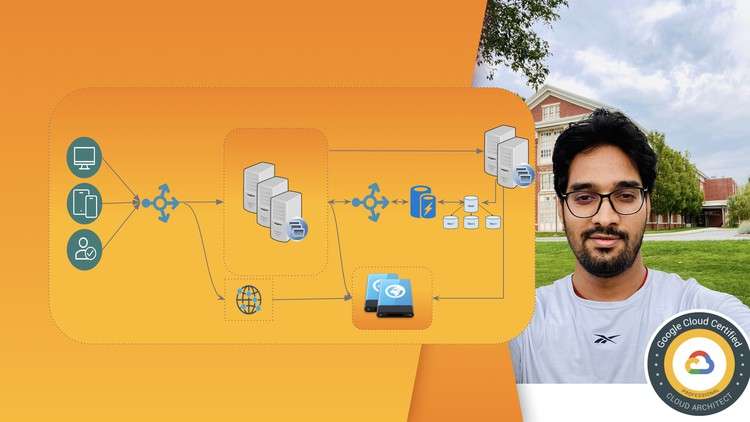
Design Fundamentals and Interview Process
What you will learn
Students would learn about System Design fundamentals and strategy of designing a large system.
Why take this course?
Designing an application without knowing design fundamentals is like you are playing a game without knowing the rules. So You can consider design fundamentals as foundational knowledge for system design. It is as important as data structures for Coding interviews.
One thing is very important that there is nothing like wrong design, It always may be good or bad design. When interviewers ask you about system limitations or design problems then fundamental knowledge can be the key player to answer such questions because all the fundamentals are solutions for some specific problems.
The goal of such a question is to check your problem-solving ability on a complex problem. It is quite understandable that you might not have the experience to design such big applications but proposing the best possible solutions would show your understanding of design fundamentals.
The interviewer wants to see if you consider common distributed system challenges in your design like distributing the data to multiple machines and aggregating them together later and equally distributing the load on multiple servers. It is also quite interesting to see your design approach when user throughput increases.
System design questions are quite open-ended and there is no standard answer for such questions. They want to see that you think about operational scenarios, edge cases, limitations, and assumptions.
Interviewers can decide whatever direction the discussion will go in. With that in mind, even for the same question, you may have a completely different discussion with a different interviewer.
.
- Course Overview
- Unlock the secrets to successfully navigating the System Design interview, a critical step for many software engineering roles.
- Demystify the process of designing scalable, reliable, and maintainable systems from the ground up.
- Gain a structured approach to breaking down complex system design problems into manageable components.
- Develop the confidence and vocabulary to articulate your design choices and trade-offs effectively.
- Understand the common patterns and anti-patterns that frequent system design challenges.
- Requirements / Prerequisites
- A foundational understanding of core computer science concepts, including data structures and algorithms.
- Basic familiarity with software development principles and common programming paradigms.
- Previous experience with building or understanding software applications is beneficial but not strictly required.
- A willingness to think critically and solve abstract problems.
- Skills Covered / Tools Used
- Problem Decomposition: Learn to dissect large-scale system requirements into smaller, solvable sub-problems.
- Requirement Analysis: Master the art of eliciting and interpreting functional and non-functional requirements.
- Scalability Strategies: Explore techniques like load balancing, replication, sharding, and caching.
- Reliability & Fault Tolerance: Understand concepts like redundancy, failover, and graceful degradation.
- API Design Principles: Grasp RESTful APIs, gRPC, and other common communication protocols.
- Database Selection & Design: Differentiate between SQL and NoSQL databases, and when to use each.
- Caching Strategies: Implement effective caching mechanisms for performance optimization.
- Message Queues: Understand asynchronous communication and decoupling of services.
- System Abstraction: Learn to build high-level architectural diagrams and communicate them clearly.
- Trade-off Analysis: Develop the ability to evaluate different design choices based on constraints and goals.
- Common Interview Patterns: Familiarize yourself with design questions for services like social media feeds, URL shorteners, and distributed caches.
- Diagramming Tools (conceptual): While not providing specific software, the course will foster understanding of how to visually represent system architectures using common notations (e.g., boxes, arrows).
- Benefits / Outcomes
- Significantly boost your performance in system design interviews for top tech companies.
- Develop a systematic and confident approach to tackling ambiguous design problems.
- Gain a practical understanding of building robust and scalable software systems.
- Enhance your ability to communicate technical designs and justify decisions.
- Expand your professional toolkit with industry-standard design patterns and best practices.
- Improve your overall problem-solving and critical thinking skills applicable beyond interviews.
- Increase your marketability and career advancement opportunities in software engineering.
- PROS
- Provides a focused curriculum specifically for interview preparation.
- Helps to build a strong conceptual foundation without getting bogged down in specific technologies.
- Empowers learners with a structured thought process applicable to diverse design challenges.
- Fosters confidence and reduces interview anxiety through targeted skill development.
- CONS
- Requires active participation and self-study to fully internalize concepts.