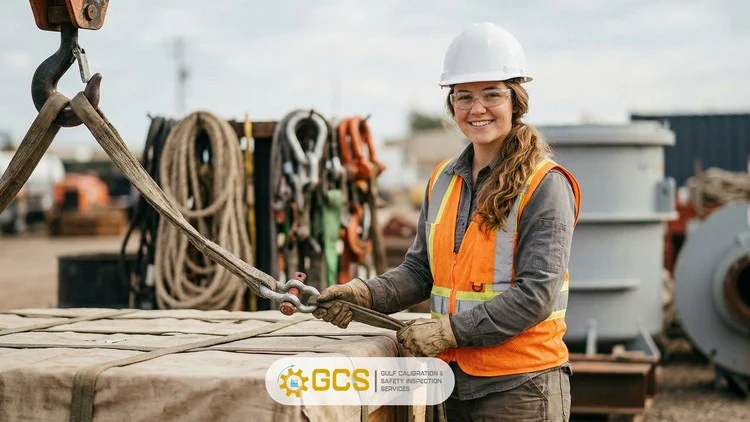
Master safe rope systems, slinging techniques, and essential load-handling skills for industrial
⏱️ Length: 3.2 total hours
👥 30 students
🔄 February 2026 update
Add-On Information:
Note➛ Make sure your 𝐔𝐝𝐞𝐦𝐲 cart has only this course you're going to enroll it now, Remove all other courses from the 𝐔𝐝𝐞𝐦𝐲 cart before Enrolling!
- Course Overview
- Foundational Physics of Load Dynamics: This course provides an in-depth exploration of the mechanical principles that govern load handling, specifically focusing on how force, tension, and gravity interact during a lift. Participants will move beyond simple knot-tying to understand the mathematical vectors involved in complex rigging configurations.
- Material Science in Rigging: We examine the structural properties of various rope types, from traditional wire ropes to modern high-performance synthetic fibers. Understanding the tensile strength, elasticity, and degradation factors of these materials is crucial for making informed decisions on the worksite.
- Regulatory Compliance and Standards: This module aligns with the most recent February 2026 industrial safety updates, ensuring that all participants are fully aware of international standards such as OSHA and ISO requirements. We focus on the legal responsibilities of riggers and the importance of maintaining rigorous safety documentation.
- Risk Assessment Frameworks: Students will learn to conduct comprehensive pre-lift hazard analyses. This involves identifying potential failure points in the rigging gear, evaluating the stability of the environment, and anticipating the behavior of the load under different weather conditions or mechanical stressors.
- Communication and Team Coordination: A significant portion of the overview is dedicated to the human element of rigging. We establish standardized protocols for hand signals, radio communication, and the “stop-work authority” that every team member must be empowered to use if an unsafe condition is detected.
- Requirements / Prerequisites
- Basic PPE Availability: All students must have access to standard personal protective equipment, including steel-toed boots, high-visibility clothing, a hard hat, and industrial-grade work gloves for the practical simulation components.
- Fundamental Mathematical Literacy: A working knowledge of basic arithmetic and geometry is required. Participants must be able to calculate load weights, estimate angles, and understand basic ratios to ensure safe rigging applications.
- Physical Capabilities: Due to the hands-on nature of rope handling and hardware manipulation, participants should possess adequate manual dexterity and the physical stamina required to work in an industrial or outdoor training environment.
- English Language Proficiency: As the safety standards and technical terminology are presented in English, a professional level of reading and verbal comprehension is necessary to ensure all safety warnings and technical manuals are understood correctly.
- Skills Covered / Tools Used
- Precision Knot and Hitch Mastery: Hands-on training in tying and applying critical industrial knots such as the Running Bowline, Double Carrick Bend, and various Prusik hitches for load securing and tensioning.
- Sling Configuration Technicality: Instruction on the proper use of Vertical, Choker, and Basket hitches. We emphasize the “Sling Angle Factor” and how the geometry of the lift drastically changes the actual load felt by the rigging hardware.
- Mechanical Advantage Systems: Learning how to construct Block and Tackle systems and Z-drags to multiply manual pulling force, which is essential for load positioning and tensioning in remote or power-restricted areas.
- Hardware Inspection Protocols: Detailed training on the use and inspection of D-Shackles, Turnbuckles, Eye-Bolts, and Master Links. Students will learn to identify “reject criteria” such as hairline fractures, heat damage, and excessive wear.
- Tagline Management and Load Control: Mastering the technique of using taglines to stabilize long or bulky loads, preventing dangerous rotation and ensuring the load remains within the designated lifting path.
- Center of Gravity Identification: Developing the skill to locate the balance point of irregular or non-symmetrical loads to prevent “load tilt” or catastrophic slippage during the initial lift-off phase.
- Benefits / Outcomes
- Enhanced Workplace Safety: The primary outcome is a drastic reduction in the likelihood of rigging-related accidents. By understanding the fundamentals of load handling, participants can proactively prevent gear failure and load drops.
- Operational Efficiency: Trained riggers work faster and more confidently. Understanding the correct tool for the job reduces downtime and ensures that equipment is used within its designed capacity, preventing premature wear and tear.
- Professional Career Advancement: Completing this awareness course serves as a significant credential for those looking to move into supervisory roles or specialized rigging positions in the construction, maritime, or energy sectors.
- Liability and Risk Mitigation: For employers, having a certified and aware workforce ensures compliance with insurance requirements and local safety laws, protecting the organization from legal repercussions following industrial incidents.
- Longevity of Equipment: Students learn proper storage and maintenance techniques for expensive synthetic slings and steel hardware, ensuring the company’s assets remain in peak condition for longer periods.
- PROS
- Up-to-Date Curriculum: Features the February 2026 update, incorporating the latest advancements in synthetic rope technology and digital load-monitoring tools.
- Intimate Learning Environment: With a maximum of 30 students, the course allows for personalized feedback from instructors and meaningful peer-to-peer technical discussions.
- Blended Learning Approach: Combines rigorous theoretical physics with practical, real-world application, making the content accessible to both engineers and field technicians.
- CONS
- Fundamental Level Limitation: As an awareness-level course, this provides the essential foundation but does not grant the “Master Rigger” certification required for heavy-lift crane operations without further specialized field hours.
Learning Tracks: English,Health & Fitness,Safety & First Aid
Found It Free? Share It Fast!