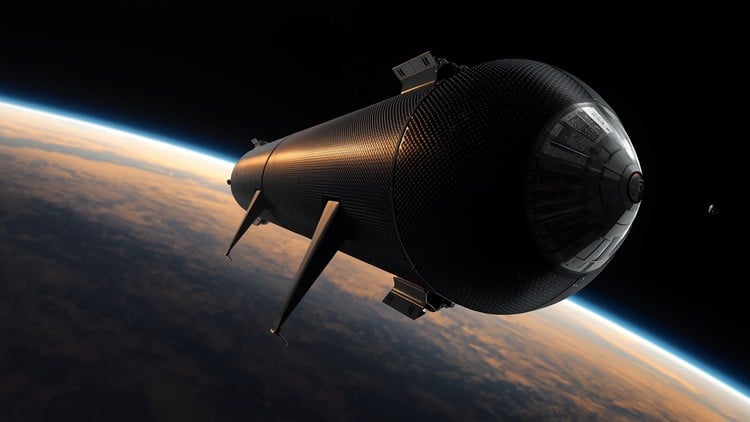
2026 Reusable Launch Vehicle Engineering: 550+ Expert Questions on Aerothermodynamics, Archimedes Propulsion, GNC…
👥 19 students
🔄 December 2025 update
Add-On Information:
Note➛ Make sure your 𝐔𝐝𝐞𝐦𝐲 cart has only this course you're going to enroll it now, Remove all other courses from the 𝐔𝐝𝐞𝐦𝐲 cart before Enrolling!
-
Course Overview
- Introduction to the specialized field of reusable launch vehicle recovery engineering, with a deep dive into the unique challenges for Rocket Lab Neutron’s carbon-composite stage.
- Explores the complete lifecycle of stage recovery, from atmospheric re-entry and hypersonic aerothermodynamics to controlled descent, precision landing, and post-flight assessment.
- Emphasizes multidisciplinary integration, combining aspects of aerothermodynamics, structural mechanics, materials science, guidance, navigation, and control (GNC), as well as marine operations for successful stage retrieval.
- Prepares engineers to contribute to the next generation of spaceflight reusability, minimizing operational costs and maximizing launch cadence through robust recovery system design.
-
Requirements / Prerequisites
- Academic Background: A bachelor’s or master’s degree in aerospace engineering, mechanical engineering, materials science, or a closely related STEM field is essential.
- Fundamental Knowledge: Strong foundational understanding of fluid dynamics, heat transfer, structural analysis, basic control theory, and calculus.
- Software Familiarity: Prior exposure to engineering simulation software, such as CAD, Finite Element Analysis (FEA) tools, and computational fluid dynamics (CFD) packages, is beneficial.
- Problem-Solving Aptitude: A keen interest in complex engineering challenges, systems-level thinking, and an eagerness to engage with cutting-edge aerospace technology.
-
Skills Covered / Tools Used
- Aerothermodynamic Re-entry & TPS Design: Learn to model hypersonic flow regimes and predict aerothermal loads on carbon-composite structures. Design advanced thermal protection systems (TPS) and analyze material degradation using CFD simulations (e.g., STAR-CCM+, OpenFOAM) and specialized heat transfer codes.
- Carbon-Composite Structural Integrity: Master the principles of composite mechanics, including lamina and laminate theory, progressive failure analysis, and fatigue assessment specific to reusable structures. Utilize FEA software (e.g., ABAQUS, Nastran) for detailed stress, strain, and buckling analysis under extreme flight and recovery loads, including water impact.
- Precision GNC for Stage Recovery: Develop algorithms for optimal re-entry trajectories, atmospheric deceleration, and pinpoint landing. Design robust control systems for aerodynamic surfaces and retro-propulsive maneuvers, leveraging tools like MATLAB/Simulink for modeling and simulation.
- Hydrodynamics & Marine Recovery Systems: Explore the design and integration of buoyancy-assisted recovery systems and understand the complex fluid-structure interaction during ocean splashdown. Analyze hydrodynamic loading, slosh dynamics, and methods for mitigating water ingress, critical for marine-based retrieval.
- Advanced Composite Materials & NDE: Gain expertise in the selection, characterization, and non-destructive evaluation (NDE) of high-performance carbon composites for multi-mission capability. Understand post-flight inspection techniques, damage detection, and repair methodologies for composite structures.
- Systems Engineering & Risk Management: Learn to design, integrate, and verify complex recovery subsystems. Conduct reliability analyses, FMEA (Failure Mode and Effects Analysis), and risk assessments to ensure the overall safety and mission success of the Neutron recovery system.
-
Benefits / Outcomes
- Specialized Expertise & Industry Readiness: Acquire highly sought-after expertise in reusable launch vehicle recovery engineering for carbon composite structures (Neutron-specific), preparing you for high-impact roles in leading aerospace companies and research institutions.
- Advanced Problem-Solving Acumen: Develop cutting-edge analytical and practical problem-solving skills to tackle complex, multidisciplinary challenges in aerothermodynamics, structural integrity, and precision GNC for reusable systems.
- Pioneer Space Sustainability: Gain the knowledge and tools necessary to directly contribute to the development of more sustainable and cost-effective space transportation solutions, actively shaping the future of space exploration.
-
PROS
- Highly Specialized & Industry-Relevant: Directly addresses critical, evolving challenges of reusable launch vehicle recovery with a specific focus on Rocket Lab Neutron’s carbon-composite stage.
- Multidisciplinary & In-Depth Curriculum: Integrates advanced topics across aerothermodynamics, composite structures, GNC, and hydrodynamics, providing a holistic and comprehensive understanding.
- Practical & Problem-Centric Learning: Fosters deep analytical and practical skills by focusing on complex engineering problems, essential for real-world application.
- Cutting-Edge Skillset: Equips engineers with the knowledge and tools vital for driving innovation in sustainable space access and the future of RLV technology.
-
CONS
- Niche Focus: The highly specialized nature of the course, while a strength, may limit broader career applicability if interests significantly diverge from RLV recovery engineering.
Learning Tracks: English,Teaching & Academics,Engineering
Found It Free? Share It Fast!