Discovering The Deepwater World Made Possible, With a Focus on the Petroleum Engineering (Oil and Gas Industry)
What you will learn
What are ROVs used for, what are their capabilities, tasks and applications
What are the ROV systems, subsystems, components and tooling
ROV Developments and Trends
Challenges, Opportunities, and Threats facing underwater vehicles at large
Description
Unlock the mysteries of Remotely Operated Vehicles (ROVs) with this comprehensive course based on my book “Remotely Operated Vehicles (ROVs): Current Systems, Future Trends, and Operational Challenges” available on Amazon.
Discount Offer:
*Reach out to me on LinkedIn for a Special Discounted Rate for University Students!*
This course coupled with the Summary Q & A and practice questions shall take you on a step-by-step journey to learn more and more about ROVs, covering the following main concepts:
Module 1: Understanding ROVs
-Historical Background and Maturity
-ROV Classifications
-Applications and Capabilities
-ROV Systems, Components, and Tooling
Module 2: ROV Trends
-Resident ROV (RROV) and Empowered ROV (EROV)
-Benefits, Working Principles, and System Challenges
-AUV System Components and Levels of Autonomy
-Virtual Reality (VR) and Augmented Reality (AR)
-Hybrid Solutions
Module 3: Challenges and Opportunities
-Reliability and Maintainability
-Addressing Poor Visibility and Weather Dependency
-Tackling Lost and Malfunctioned Vehicles
-Safeguarding Against Security Threats
Module 4: ROV Professionals Survey
-Methodology and Approach
-Survey Questions and Results Discussion
-Operational and Safety Challenges
-Incidents and Near Misses
What You Will Learn:
-An in-depth knowledge of ROV systems, subsystems, and components.
-Explore ROV tooling and understand its applications.
-Stay updated on the latest ROV trends and recent developments.
-Address challenges faced by Resident ROV (RROV) and Empowered ROV (EROV) systems.
-Understand AUV system components and their main operations.
-Identify and overcome challenges, opportunities, and threats in underwater vehicles.
-Gain insights from a survey of ROV professionals, including pilots, engineers, and industry representatives.
Why Enroll:
This course provides a step-by-step journey through the fascinating world of ROVs. Whether you are a student, engineer, or industry professional, this course equips you with the knowledge and skills needed to navigate the complexities of underwater vehicles.
Don’t miss the chance to explore the depths of ROV technology! Enroll now and understand this field.
Content
- Course Overview
- Explore the historical evolution of subsea robotics, transitioning from experimental prototypes to the indispensable workhorses of modern offshore energy infrastructure.
- Gain a strategic understanding of how ultra-deepwater exploration has redefined the boundaries of petroleum engineering and marine science.
- Analyze the operational synergy between topside support vessels and submerged assets, focusing on the critical umbilical link that sustains life and data flow.
- Examine the role of ROVs in environmental stewardship, specifically their use in monitoring marine ecosystems and preventing subsea leakage during extraction.
- Investigate the transition from traditional hydraulic systems to the emerging era of all-electric ROVs, which offer higher precision and lower environmental footprints.
- Requirements / Prerequisites
- A foundational interest in mechanical or electrical engineering principles is recommended to grasp the complexity of underwater propulsion.
- Basic familiarity with offshore terminology and the general lifecycle of an oil and gas field (exploration to decommissioning).
- An introductory understanding of fluid mechanics and how pressure variables change at significant oceanic depths.
- No prior experience in robotics is necessary, though a background in technical troubleshooting or systems thinking will be highly advantageous.
- Skills Covered / Tools Used
- Telemetry and Signal Processing: Mastering how high-definition video and sensor data are transmitted through kilometers of fiber-optic cabling.
- Spatial Orientation and Navigation: Learning the logic behind Long Baseline (LBL) and Ultra-Short Baseline (USBL) acoustic positioning systems.
- Manipulator Arm Dynamics: Understanding the degrees of freedom required for complex subsea interventions, such as valve turning and debris clearance.
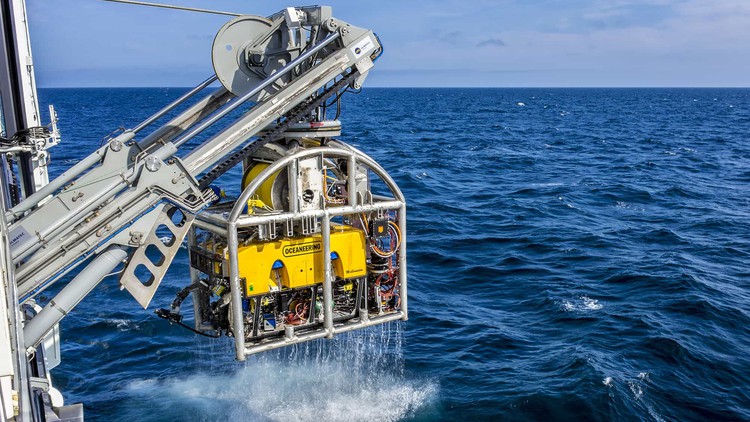
- Launch and Recovery Systems (LARS): Familiarization with the heavy machinery used to deploy vehicles safely in high-sea states.
- Diagnostic Software: Introduction to the interfaces used for real-time monitoring of vehicle health, battery life, and thruster efficiency.
- Benefits / Outcomes
- Develop the capacity to oversee Inspection, Maintenance, and Repair (IMR) programs, significantly reducing the operational risks associated with human divers.
- Enhance your professional profile for roles in subsea project management, offshore logistics, and robotic system design.
- Understand the economic impact of ROV downtime and learn strategies to optimize operational windows in harsh maritime environments.
- Bridge the gap between theoretical engineering and real-world application, specifically regarding the deployment of assets in the “last frontier” of Earth.
- Prepare for the shift toward Resident ROVs and autonomous subsea docking stations that are set to dominate the next decade of offshore work.
- PROS
- Provides a high-level industry perspective that links technical hardware with global energy demands.
- Focuses on future-proofing your career by addressing the automation and electrification trends currently reshaping the maritime sector.
- Offers a specialized niche knowledge base that is in high demand across blue economy sectors, including offshore wind and deep-sea mining.
- CONS
- The technical complexity of hydrostatic pressure variables may require additional independent study for those without a rigorous physics background.