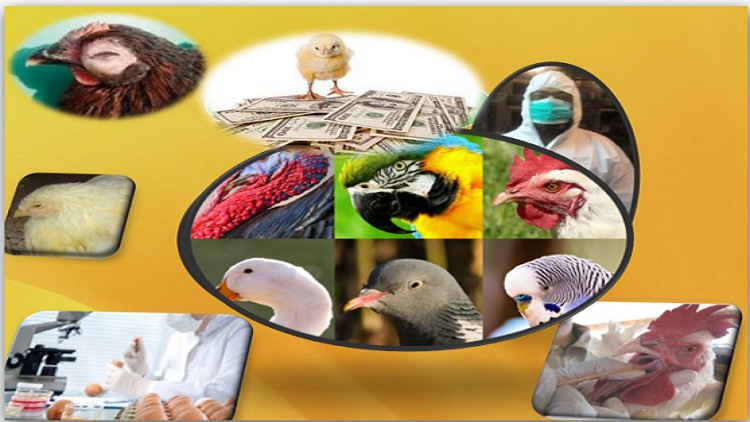
bacterial diseases of poultry
What you will learn
introduction
how to investigate a sick flock problem
surveillance of diseases
bacterial diseases hindering satisfying performance
Description
aclear example of poultry disease hinder satisfying poultry production is collibacillosis
This is the localized or systemic infection caused by avian pathogenic Escherichia Coli (APEC). It manifests in diverse ways such as acute fata septicemia, subacute pericarditis, airsaculitis, salpingitis/ peritonitis, cellulitis and lymphocytic depletion of bursa and thymus.
This infection is seen worldwide in chickens, turkeys, etc. Morbidity varies, mortality is 5-20%. The infectious agent is moderately resistant in the environment, but is susceptible to disinfectants and to temperature of 80*c.
ECONOMIC IMPORTANCE OF COLIBACCILOSIS
Colibacillosis causes elevated morbidity and mortality leading to economic losses in the poultry farms especially around the peak of egg production, reduced FCR and carcass condemnation at processing in broilers.
In Layers
There is sudden mortality with the absence of typical clinical signs due to the stress factors associated with egg production and systemically accompany by decrease in egg production and increase of poor-quality eggs.
In Breeders
When contamination of eggs with E. Coli lead to decrease hatchability and when there is in ovo contamination during incubation of eggs, this will also lead to production of poor-quality chicks with poor livability.
In Broilers
When there is systemic infection, this will lead to poor FCR (feed conversion ratio) and increased mortality, skin infection will cause inflammation of subcutaneous tissue which will lead increase condemnation of carcass at processing level.
in 9 section I discuss the most important bacterial diseases affect poultry
section 1 introduction
section 2 how to investigate afield problem
section3 disease survailance necropsy – lab dignosis
section4 chalamidiosis the most important zoonotic disease
section5 infectious coryza
section6 salmonolosis
section 7 fowl cholera
section8 mycoplasmosis
section9 colibacillsis
Content
- Course Overview
- This comprehensive course delves into the critical challenges posed by bacterial diseases in modern poultry farming, which significantly hinder optimal production and profitability.
- It provides a foundational understanding of the most prevalent bacterial pathogens affecting poultry flocks globally, from broiler chickens to laying hens and breeders.
- Participants will explore the epidemiology, transmission routes, clinical manifestations, and pathological lesions associated with key bacterial infections like Fowl Cholera, Mycoplasmosis, Colibacillosis, Necrotic Enteritis, and Salmonellosis.
- Emphasis is placed on understanding the intricate relationship between bacterial presence, environmental factors, stress, and the overall health and productivity of the flock.
- The course aims to equip learners with the knowledge to identify, prevent, and effectively manage bacterial disease outbreaks, thereby ensuring a more satisfying and sustainable production cycle.
- Requirements / Prerequisites
- A basic understanding of general biology or animal science principles is recommended to fully grasp the biological concepts discussed.
- No advanced veterinary medical background is required, making this course accessible to farmers, farm managers, technicians, and students.
- A keen interest in poultry health, welfare, and efficient farm management is essential.
- Access to a reliable internet connection and a computer or tablet for accessing course materials.
- Skills Covered / Tools Used
- Disease Recognition & Diagnosis: Develop proficiency in recognizing early clinical signs and gross pathological lesions indicative of common bacterial infections in poultry.
- Biosecurity Protocol Development: Learn to design, implement, and audit robust biosecurity measures to minimize the introduction and spread of bacterial pathogens within a farm.
- Antimicrobial Stewardship: Gain knowledge in the principles of responsible antibiotic use, including judicious selection, dosage, and administration, to combat resistance and ensure food safety.
- Vaccination Strategies: Understand the role and effectiveness of various bacterial vaccines, and how to integrate them into a comprehensive disease prevention program.
- Environmental Management: Acquire skills in optimizing ventilation, litter management, and water quality to reduce bacterial load and improve flock resilience.
- Sampling Techniques: Learn best practices for collecting appropriate samples (e.g., tissues, swabs, feed) for laboratory diagnosis and sensitivity testing.
- Data Analysis & Record Keeping: Utilize farm records and diagnostic reports to monitor flock health trends, evaluate intervention effectiveness, and make informed management decisions.
- Benefits / Outcomes
- Reduced Economic Losses: Minimize financial setbacks due to high mortality, decreased growth rates, poor feed conversion, and condemnation of products.
- Improved Flock Health & Productivity: Achieve healthier, more resilient birds, leading to enhanced egg production, better meat yield, and improved overall farm efficiency.
- Enhanced Animal Welfare: Contribute to better living conditions and reduced suffering for poultry by preventing and promptly treating bacterial infections.
- Sustainable Production Practices: Adopt proactive disease management strategies that reduce reliance on broad-spectrum antibiotics and foster environmentally responsible farming.
- Increased Confidence: Develop the expertise to confidently manage and mitigate bacterial disease challenges, leading to more satisfying and predictable production outcomes.
- Contribution to Food Security: Play a vital role in ensuring a stable and safe supply of poultry products for consumers.
- PROS
- Directly addresses one of the most significant impediments to profitable and ethical poultry farming.
- Provides immediately actionable strategies that can be implemented on farms to see tangible improvements.
- Empowers farmers and professionals to make data-driven decisions regarding flock health and biosecurity.
- Promotes a holistic approach to disease management, integrating prevention, diagnosis, and responsible treatment.
- Offers a competitive edge by enabling more efficient and sustainable poultry production.
- CONS
- Effective implementation requires continuous vigilance and adaptation to evolving bacterial strains and environmental conditions.