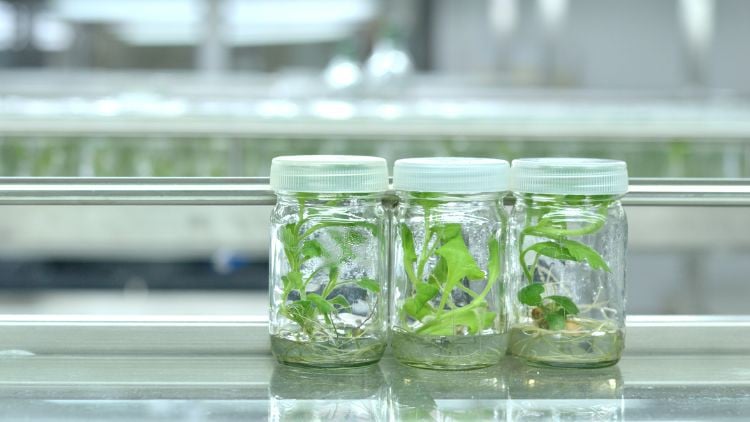
Cultivating Botanical Advancements
⏱️ Length: 1.2 total hours
⭐ 4.13/5 rating
👥 4,678 students
🔄 February 2024 update
Add-On Information:
Note➛ Make sure your 𝐔𝐝𝐞𝐦𝐲 cart has only this course you're going to enroll it now, Remove all other courses from the 𝐔𝐝𝐞𝐦𝐲 cart before Enrolling!
-
- Course Caption: Cultivating Botanical Advancements
- Length: 1.2 total hours
- Rating: 4.13/5 rating (4,678 students)
- Update: February 2024 update
-
- Course Overview
- Delve into the foundational principles that govern the growth, differentiation, and manipulation of plant cells and tissues under controlled sterile conditions. This course provides a comprehensive introduction to the theoretical underpinnings and historical evolution of plant tissue culture, highlighting its pivotal role in modern botanical science and applied plant biology. You will grasp the critical concepts that enable the regeneration of whole plants from minute cellular components.
- Gain insights into the diverse methodologies employed for culturing various plant explants, from meristematic tissues to protoplasts, and understand how specific hormonal balances and nutrient compositions in culture media dictate developmental pathways. This foundational knowledge is essential for anyone aspiring to work with plant material in a laboratory setting, offering a roadmap to successful in vitro propagation and experimental design.
- Explore the intricate processes of cellular totipotency and plasticity, the biological marvels that make plant tissue culture possible, and how these inherent plant capabilities are harnessed for specific outcomes. This section emphasizes the scientific rationale behind each technique, fostering a deeper appreciation for the complex interplay between plant physiology and biotechnological intervention, paving the way for advanced studies.
- Understand the critical importance of aseptic techniques, contamination control, and environmental parameters in maintaining viable and productive plant cell and tissue cultures. Mastery of these practical considerations is paramount for preventing experimental failure and ensuring the integrity of your botanical experiments, laying the groundwork for reliable and reproducible results in any research or industrial application.
- Discover the transformative potential of plant cell and tissue culture beyond simple propagation, encompassing areas such as secondary metabolite production, disease elimination, and germplasm conservation. This segment broadens your perspective on how these techniques contribute to addressing global challenges, from enhancing crop resilience to preserving endangered plant species, showcasing their multidisciplinary impact.
- Course Overview
-
- Requirements / Prerequisites
- A foundational understanding of basic biology, particularly cell structure and function, plant anatomy, and fundamental genetic concepts, is highly recommended to fully appreciate the course material. While not strictly mandatory, prior exposure to these areas will significantly enhance your learning experience and allow for a more nuanced comprehension of advanced topics.
- An enthusiastic interest in botany, plant science, or related biological fields is the most crucial prerequisite. Curiosity about how plants grow, reproduce, and can be manipulated for human benefit will drive engagement and make the learning journey more rewarding, fostering a passion for plant-based innovation and discovery.
- Access to a reliable internet connection and a device capable of streaming video content is necessary, as the course is delivered entirely online. No specialized software beyond standard web browsers is required, making the course accessible to a broad audience eager to explore the fascinating world of plant biotechnology from anywhere.
- Requirements / Prerequisites
-
- Skills Covered / Tools Used
- Develop proficiency in conceptualizing and designing various plant tissue culture experiments, including media formulation, explant selection, and environmental control strategies. This skill set is vital for translating theoretical knowledge into practical laboratory protocols, enabling you to set up and execute your own plant propagation or research projects effectively.
- Master the principles of sterile technique and contamination avoidance, which are absolutely fundamental to successful in vitro plant culture. Learn about different sterilization methods for media, tools, and explants, and understand how to maintain an aseptic work environment to prevent microbial interference, ensuring the purity and viability of your cultures.
- Gain familiarity with the essential laboratory equipment and consumables used in plant tissue culture, such as laminar flow hoods (sterile benches), autoclaves, pH meters, growth chambers, and various glassware. Understanding the function and proper use of these tools is critical for practical implementation and safe laboratory practices in any plant science setting.
- Acquire knowledge in micropropagation techniques, which involve rapidly multiplying plants from a small piece of tissue under sterile conditions. This includes stages like initiation, multiplication, rooting, and acclimatization, providing a pathway for commercial plant production and the rapid scaling of desirable plant genotypes.
- Understand the basics of callus induction and regeneration, a powerful technique for generating unorganized cell masses that can then be differentiated into whole plants or used for genetic manipulation. This skill opens doors to advanced research in plant genetics, metabolic engineering, and the development of novel plant varieties with enhanced traits.
- Skills Covered / Tools Used
-
- Benefits / Outcomes
- Equip yourself with specialized knowledge that can open doors to diverse career paths in plant biotechnology, horticultural science, academic research, and the agricultural industry. This course provides a competitive edge by furnishing you with highly sought-after skills in a rapidly evolving scientific domain, enhancing your employability and professional versatility.
- Cultivate a critical thinking mindset applicable to experimental design, problem-solving in a laboratory context, and the interpretation of complex biological data related to plant growth and development. This analytical prowess is invaluable for pursuing further studies or engaging in independent research initiatives, fostering intellectual independence.
- Become part of a forward-thinking community by understanding cutting-edge botanical advancements and their implications for sustainable development, global food security, and environmental conservation. This course empowers you to contribute meaningfully to real-world solutions that address pressing ecological and economic challenges.
- Develop a foundational understanding that can serve as a strong springboard for advanced studies or practical application in areas such as plant genetic engineering, synthetic biology, and the bioproduction of valuable compounds from plant cell cultures. This foundational knowledge is essential for innovators looking to push the boundaries of plant science.
- Benefits / Outcomes
-
- PROS
- Offers exceptional flexibility, allowing students to integrate learning seamlessly into their existing commitments and personal schedules, as all course materials are accessible on-demand, anytime and anywhere.
- Provides a concise yet comprehensive introduction to a complex scientific discipline, making it an ideal starting point for beginners or a quick refresher for those with some prior exposure to plant sciences.
- Access to up-to-date content, regularly revised to reflect the latest breakthroughs and methodologies in plant cell and tissue culture, ensuring relevance and currency in your learning journey.
- The structured, bullet-point format facilitates quick digestion of key concepts and supports efficient review, optimizing the learning process for maximum retention and understanding.
- PROS
- CONS
- Being an online course, it inherently lacks hands-on laboratory experience, which is crucial for fully mastering aseptic techniques and practical skills in plant tissue culture, requiring supplementary practical exposure for complete competency.
Learning Tracks: English,Teaching & Academics,Science
Found It Free? Share It Fast!