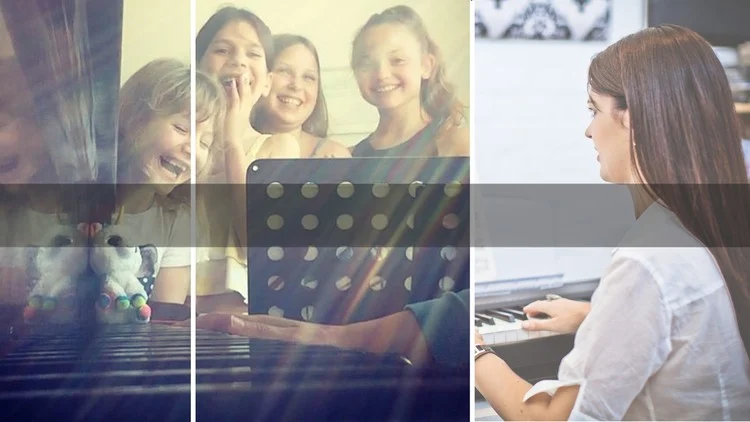
Finding out if your child is ready to learn how to play the piano. A course for parents.
⏱️ Length: 1.2 total hours
⭐ 5.00/5 rating
👥 44 students
🔄 May 2025 update
Add-On Information:
Note➛ Make sure your 𝐔𝐝𝐞𝐦𝐲 cart has only this course you're going to enroll it now, Remove all other courses from the 𝐔𝐝𝐞𝐦𝐲 cart before Enrolling!
- Comprehensive Course Overview: This program serves as a critical diagnostic tool for parents navigating the complex decision of when to begin formal musical training. Aimed specifically at the developmental window of ages four to eight, the course delves into the physical, cognitive, and emotional milestones that dictate a child’s success at the keyboard. Rather than a one-size-fits-all approach, it provides a framework for understanding the “Triangle of Success,” which involves the synergy between the teacher’s pedagogy, the student’s natural aptitude, and the parent’s supportive role at home. Participants will explore the psychological landscape of early childhood education, learning how to distinguish between a passing fascination with a musical toy and a sustained readiness for the disciplined environment of a weekly lesson. The course also addresses the common “earlier is better” myth, explaining the biological markers—such as the ossification of hand bones and the myelination of the nervous system—that must be present for a child to play without physical strain or mental burnout.
- Requirements / Prerequisites:
- Objective Observation Skills: Parents must be willing to step back and observe their child’s natural behaviors, coordination, and attention span without the bias of their own musical aspirations.
- Zero Musical Experience Necessary: There is no requirement for the parent to have any prior knowledge of music theory, piano performance, or notation; the course is designed to be accessible to everyone regardless of their artistic background.
- Dedicated Evaluation Time: A commitment to engage with the 1.2 hours of video content and the accompanying assessment exercises is essential for making an informed, data-driven decision about the child’s education.
- Access to the Subject: The primary “tool” required is the child themselves, as parents will be asked to run minor at-home “readiness tests” to gauge physical and mental maturity.
- Skills Covered / Tools Used:
- Fine Motor Skill Assessment: Learning how to evaluate a child’s finger independence and the strength of the “bridge” of the hand to ensure they can depress piano keys with the correct technique and avoid potential injury.
- Cognitive Literacy Screening: Identifying whether a child possesses the foundational literacy skills needed for music reading, such as recognizing the letters A through G and counting rhythms in sets of four.
- The Attention Span Benchmark: Techniques to measure a child’s ability to follow multi-step instructions and remain focused on a singular task for a duration that mimics a standard thirty-minute private lesson.
- Auditory Discrimination Testing: Using simple household games to determine if a child can distinguish between high and low pitches, as well as recognize basic rhythmic patterns clapped by the parent.
- Social and Emotional Maturity Evaluation: Assessing the child’s ability to interact with a non-parent authority figure and their resilience when faced with constructive feedback or repetitive practice tasks.
- Benefits / Outcomes:
- Prevention of Financial Waste: By accurately determining readiness, parents can avoid spending hundreds of dollars on lessons, books, and instrument rentals before the child is developmentally prepared to benefit from them.
- Nurturing a Lifelong Love for Music: Starting at the “perfect” time ensures that the child’s first experience with the piano is one of achievement and joy rather than frustration and failure.
- Strategic Teacher Selection: Parents will emerge with the vocabulary and knowledge needed to interview potential piano teachers and select a methodology—be it Suzuki, Montessori-based, or traditional—that aligns with their child’s specific learning style.
- Reduction of Household Friction: Understanding a child’s readiness level helps eliminate the “practice wars” that often occur when a child is forced into a discipline they are not yet cognitively equipped to handle.
- Informed Investment Decisions: Gain clarity on whether to purchase a full acoustic piano, a weighted digital piano, or a simple keyboard based on the child’s current level of commitment and physical need.
- PROS:
- Age-Specific Specialization: The course focuses exclusively on the most volatile and misunderstood age group in piano education (4-8), providing hyper-relevant insights.
- Expert Efficiency: In just over an hour, parents receive a concentrated dose of pedagogical expertise that would otherwise take years of trial and error to discover.
- Empowerment Through Education: It transforms the parent from a passive bystander into an informed advocate for their child’s musical journey.
- High Community Trust: Boasting a perfect 5.0/5 rating, the content has been vetted and praised by dozens of parents who have successfully applied these readiness metrics.
- CONS:
- Subjective Nature of Self-Reporting: Because the course relies on the parent’s personal assessment of their own child, there is a risk of subjective bias influencing the final determination of readiness.
Learning Tracks: English,Music,Instruments
Found It Free? Share It Fast!