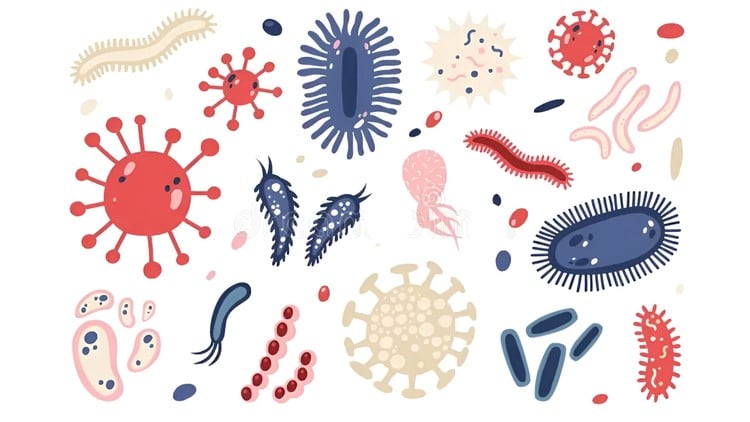
Understand microorganisms and their impact on life, medicine, and the environment.
⏱️ Length: 30.4 total hours
👥 12 students
🔄 November 2025 update
Add-On Information:
Note➛ Make sure your 𝐔𝐝𝐞𝐦𝐲 cart has only this course you're going to enroll it now, Remove all other courses from the 𝐔𝐝𝐞𝐦𝐲 cart before Enrolling!
-
Course Overview
- This course offers a comprehensive yet accessible journey into the invisible universe of microorganisms, building foundational knowledge on their fundamental characteristics, ecological roles, and profound impact on human health and planetary systems. It explores their dynamic interactions with environments and hosts, highlighting their global significance.
- Delve into microbial diversity, encompassing bacteria, archaea, fungi, protozoa, and viruses – examining their unique life cycles, genomic structures, and sophisticated propagation strategies within living cells.
- Explore the intricate dance between microbes and the human immune system, uncovering mechanisms by which our bodies recognize and defend against pathogens, and how immune responses are modulated, leading to protection, chronic conditions, or disease susceptibility.
- Investigate the epidemiology and pathogenesis of significant infectious diseases from a global perspective, understanding how pathogens cause illness, their diverse transmission modes, and complex challenges posed by emerging infectious agents, antimicrobial resistance, and neglected tropical diseases.
- Gain compelling insights into microbiology’s beneficial applications across fields including biotechnology, bioremediation, sustainable food production, and the critical balance of the human microbiome, underscoring their invaluable contributions to sustainable solutions and well-being.
- Understand ethical considerations surrounding microbial research, advanced genetic manipulation, and public health interventions, fostering a responsible, critical, and informed perspective on advancements and societal implications.
-
Requirements / Prerequisites
- Curiosity and an Open Mind: The most crucial prerequisite is a genuine interest in understanding the microscopic world around us and its far-reaching implications.
- Basic Scientific Literacy: A foundational grasp of general biology and chemistry concepts, such as cell structure and basic biological processes, will be beneficial but not strictly required.
- No Prior Microbiology Experience: This course is designed to be accessible to learners from diverse backgrounds.
- Access to Digital Learning Tools: Requires a reliable internet connection and a device capable of accessing course materials and participating in online components.
-
Skills Covered / Tools Used
- Conceptual Microbial Identification: Learn theoretical basis behind lab techniques to cultivate, isolate, characterize, and identify microorganisms, including principles of differential staining, selective media, and key biochemical tests.
- Disease Transmission Analysis: Develop the ability to conceptually analyze epidemiological patterns and data, understanding how to trace outbreaks, identify transmission modes, and propose effective control strategies for community health.
- Immune System Dynamics Interpretation: Acquire nuanced understanding of complex immunological pathways, recognizing immune system components, and comprehending their roles in health and combating disease.
- Critical Scientific Information Evaluation: Enhance your capacity to critically assess and synthesize information from scientific articles, public health reports, and diverse media sources related to microbiology, vaccine efficacy, and emerging disease threats.
- Biotechnological Application Awareness: Gain practical understanding of how microbiological principles are innovatively applied in various industries, from pharmaceutical development and vaccine production to environmental management and genetic engineering.
- Ethical Reasoning in Science: Actively practice considering the profound ethical dimensions of microbiological research, public health policy, and the broad societal impact of significant scientific discoveries.
- Theoretical Lab Processes and Data Interpretation: Engage with conceptual tools and scenarios mimicking essential lab procedures, fostering an understanding of crucial concepts like aseptic technique, microbial culturing methods, and systematic interpretation of experimental data, including principles behind molecular techniques like PCR and sequencing.
-
Benefits / Outcomes
- Enhanced Scientific Literacy: Become a more informed global citizen, capable of making educated decisions about personal health, public policy, and environmental issues influenced by microbiology.
- Foundational Knowledge for Further Study: Establish a strong conceptual base for pursuing advanced studies or careers in fields such as medicine, public health, immunology, biotechnology, environmental science, or food science.
- Informed Health Advocacy: Develop the ability to critically evaluate health claims, understand vaccine science, and advocate for evidence-based practices in your community and personal life.
- Appreciation for Microbial Contributions: Cultivate a profound appreciation for the indispensable roles microbes play in maintaining life on Earth, from nutrient cycling to human digestion.
- Problem-Solving Perspective: Gain a unique perspective on global challenges like pandemics, antibiotic resistance, and climate change, understanding the microbial contributions and potential solutions.
- Interdisciplinary Understanding: Connect microbiological principles to broader scientific and societal contexts, fostering an interdisciplinary approach to complex problems.
-
PROS
- Holistic View: Provides a comprehensive yet digestible overview of microbiology, covering fundamental concepts, clinical relevance, and environmental impact.
- Accessibility for All: Structured to accommodate learners with varying levels of prior scientific knowledge, making a complex subject understandable.
- Current and Relevant: Addresses contemporary issues such as emerging diseases, antimicrobial resistance, and the human microbiome, ensuring up-to-date knowledge.
- Practical Applications: Highlights the real-world applications of microbiology in medicine, biotechnology, and environmental sustainability.
- Expert-Led Insight: Offers structured learning guided by clear, concise explanations of intricate microbial processes and their implications.
-
CONS
- Lack of Direct Hands-On Lab Experience: As an ‘All’ course, it may not include direct practical laboratory work, potentially limiting the development of hands-on technical skills.
Learning Tracks: English,Teaching & Academics,Science
Found It Free? Share It Fast!