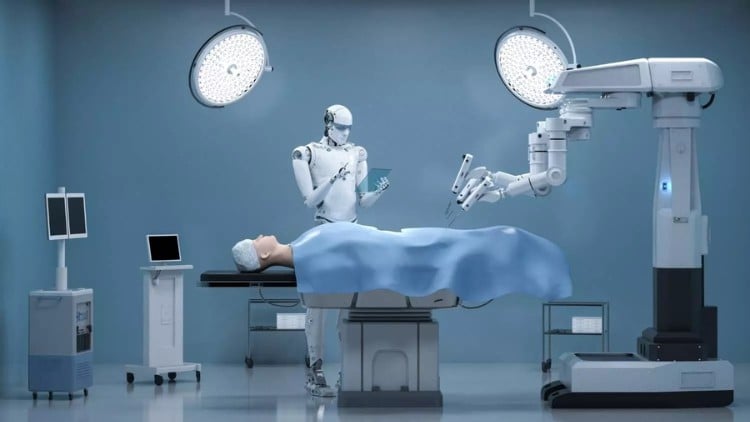
Unlock the Future of Healthcare with Advanced Skills and Expertise
⏱️ Length: 4.8 total hours
⭐ 4.31/5 rating
👥 11,102 students
🔄 September 2023 update
Add-On Information:
Note➛ Make sure your 𝐔𝐝𝐞𝐦𝐲 cart has only this course you're going to enroll it now, Remove all other courses from the 𝐔𝐝𝐞𝐦𝐲 cart before Enrolling!
- Course Caption: Unlock the Future of Healthcare with Advanced Skills and Expertise
- Course Overview
- Welcome to the “Medical Robotics Course,” an accessible introduction to the revolutionary world where engineering meets medicine. This program equips you with foundational knowledge and a forward-thinking perspective on how robotic technologies are transforming patient care, diagnostics, and surgical precision globally.
- Explore the burgeoning field of medical robotics, understanding its fundamental principles, diverse system types, and profound impact on modern healthcare. Discover how intelligent machines enhance surgical accuracy, provide assistive care, improve rehabilitation, and revolutionize diagnostic imaging.
- Ideal for healthcare professionals, aspiring engineers, biomedical students, and anyone interested in cutting-edge medical technology. It offers a comprehensive, high-level view without deep prior expertise, serving as an excellent gateway into this dynamic specialization.
- Despite its concise 4.8 total hours, this course earned a commendable 4.31/5 rating from 11,102 students. Updated September 2023, the content remains highly relevant, reflecting the latest advancements and industry trends.
- Discover ethical considerations, the regulatory landscape, and deployment challenges in sensitive medical environments, fostering a well-rounded understanding. This foundational insight is crucial for responsible innovation in healthcare.
- Requirements / Prerequisites
- A basic understanding of biological concepts and human anatomy provides beneficial context for appreciating medical robot applications, though no advanced degrees are necessary.
- An elementary grasp of general science or engineering principles (e.g., basic mechanics or electronics) is helpful, though the course is accessible even without a strong technical background.
- No prior experience in robotics or advanced programming is required; this course is designed as an entry point, building foundational knowledge from the ground up.
- Proficiency in basic computer literacy, including navigating online platforms, is expected for a smooth learning experience.
- Above all, genuine curiosity and enthusiasm for innovation in healthcare, and an interest in technology improving human well-being, are the most important prerequisites.
- Skills Covered / Tools Used
- Understanding Medical Robotic Systems: Develop a conceptual understanding of various types of medical robots, including surgical robots, assistive robots, rehabilitation robots, and diagnostic imaging robots, along with their unique operational principles and applications.
- Robotic Control Fundamentals: Gain insight into the basic concepts governing robotic control, including kinematics, dynamics, and trajectory planning, providing a framework for how these complex machines execute precise movements.
- Sensor Technologies in Medicine: Familiarize yourself with critical sensor technologies used in medical robotics, such as force sensors, vision systems, and haptic feedback devices, and how they enable robots to interact safely and effectively with patients and the environment.
- Introduction to AI/ML in Healthcare: Explore how artificial intelligence and machine learning algorithms are integrated into medical robotics for tasks like image analysis, predictive diagnostics, and adaptive control, enhancing their capabilities and autonomy.
- Ethical and Safety Protocols: Learn about the paramount importance of ethical considerations, patient safety standards, and regulatory compliance in the design, development, and deployment of medical robotic systems.
- System Integration Concepts: Understand the high-level principles of integrating robotic components with existing medical infrastructure, imaging modalities, and human operators to create cohesive and functional healthcare solutions.
- Problem-Solving in Medical Contexts: Cultivate an analytical mindset to identify potential challenges and conceptual solutions related to the implementation and maintenance of robotic systems in diverse clinical settings.
- Conceptual Software/Platforms: Gain familiarity with the types of software and platforms relevant to medical robotics, such as surgical planning software (e.g., for Da Vinci, Mako systems), imaging software (CT, MRI), and potential simulation environments (e.g., ROS, Gazebo – discussed conceptually as tools for development, not hands-on use).
- Design & Prototyping Awareness: Develop an awareness of Computer-Aided Design (CAD) principles and rapid prototyping methods as they apply to the iterative development and customization of medical robotic devices.
- Benefits / Outcomes
- Gateway to a High-Demand Field: Position yourself at the forefront of healthcare innovation, gaining fundamental knowledge that is highly valued in the rapidly expanding medical robotics industry, opening doors to diverse career paths.
- Enhanced Industry Acumen: Develop a sophisticated understanding of current trends, challenges, and future directions in medical technology, enabling informed discussions and strategic decision-making in healthcare settings.
- Foundation for Advanced Study: Establish a strong conceptual bedrock for pursuing further specialization, advanced degrees, or hands-on training in specific areas of medical robotics and biomedical engineering.
- Contribution to Patient Care: Understand how medical robotics directly translates into improved surgical precision, reduced recovery times, enhanced diagnostic accuracy, and better quality of life for patients.
- Career Versatility: Equip yourself with interdisciplinary knowledge applicable to roles in R&D, clinical support, sales, project management, and regulatory affairs within medical device companies, hospitals, and research institutions.
- Networking Potential: Join a global community of over 11,000 students and professionals with a shared interest, fostering opportunities for collaboration, mentorship, and professional growth.
- Confidence in Emerging Tech: Gain the confidence to critically evaluate, discuss, and advocate for the thoughtful integration of cutting-edge robotic solutions into healthcare practices.
- PROS
- High Demand for Expertise: The medical robotics sector is experiencing exponential growth, creating numerous opportunities for professionals with relevant knowledge and skills.
- Direct Impact on Health: Learn how to contribute to advancements that significantly improve patient outcomes, enhance surgical safety, and revolutionize rehabilitation.
- Exposure to Cutting-Edge Technology: Get an insider’s view into the latest innovations and research driving the future of medicine and engineering.
- Interdisciplinary Learning: Benefit from a unique blend of engineering, computer science, and medical principles, broadening your intellectual horizons.
- Flexible and Efficient Learning: The concise 4.8-hour format makes it easy to integrate into a busy schedule, offering high-value content in a time-efficient manner.
- CONS
- Introductory Scope: Due to its concise nature, this course provides a broad overview and foundational understanding, requiring further dedicated study or practical experience for deep specialization and hands-on proficiency.
Learning Tracks: English,Teaching & Academics,Other Teaching & Academics
Found It Free? Share It Fast!