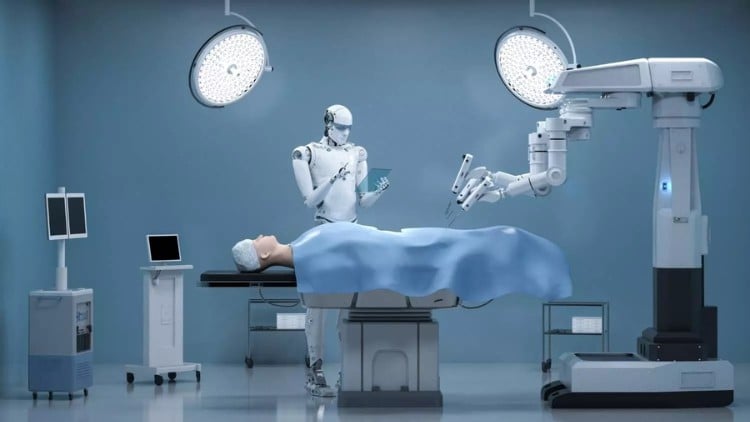
Unlock the Future of Healthcare with Advanced Skills and Expertise
⏱️ Length: 4.8 total hours
⭐ 4.23/5 rating
👥 10,652 students
🔄 September 2023 update
Add-On Information:
Note➛ Make sure your 𝐔𝐝𝐞𝐦𝐲 cart has only this course you're going to enroll it now, Remove all other courses from the 𝐔𝐝𝐞𝐦𝐲 cart before Enrolling!
- Course Overview
- Immerse yourself in the rapidly evolving domain of medical robotics, a critical confluence of engineering, computer science, and healthcare innovation.
- Explore the foundational principles underpinning robotic design, control, and sensory perception specifically tailored for clinical environments.
- Gain insights into the diverse applications of robotics across surgery, rehabilitation, diagnostics, and pharmaceutical handling, moving beyond just surgical applications.
- Understand the systematic approach to integrating intelligent robotic systems into existing healthcare infrastructures for improved efficiency and patient outcomes.
- Delve into the ethical considerations and regulatory frameworks governing the development and deployment of autonomous and semi-autonomous medical robots.
- Unpack real-world case studies and emerging trends, providing a holistic perspective on the industry’s current state and future trajectory in medical technology.
- Requirements / Prerequisites
- Fundamental Understanding of Biology/Anatomy: A basic grasp of human physiology and anatomical structures is highly beneficial to contextualize medical applications and robotic interactions.
- Introductory Programming Knowledge: Familiarity with programming concepts, preferably in Python or C++, will aid in understanding and implementing robotic control algorithms and data processing.
- Basic Engineering/Physics Concepts: An elementary background in mechanics, kinematics, and basic electronics will be advantageous for grasping core robotic principles and design considerations.
- Problem-Solving Mindset: Eagerness to tackle complex interdisciplinary challenges at the critical intersection of technology and medicine.
- No Advanced Prior Robotics Experience Required: This course is structured to guide learners from foundational concepts to practical applications, making it accessible to motivated individuals from various technical backgrounds.
- Access to a Computer with Internet Connection: Required for accessing course materials, engaging with simulations, and utilizing virtual lab environments.
- Skills Covered / Tools Used
- Robotic System Design Principles: Learn to conceptualize and design robotic architectures optimized for sterile environments, patient safety protocols, and operational precision.
- Kinematics and Dynamics of Medical Robots: Master the mathematical models describing robot motion, manipulation, and intricate interaction with human tissues or medical instruments.
- Surgical Navigation and Guidance Systems: Understand the integration of advanced imaging modalities (e.g., MRI, CT, ultrasound) with robotic platforms for enhanced surgical accuracy and real-time feedback.
- Control Systems and Actuation Technologies: Explore various control strategies (e.g., PID, adaptive control, impedance control) and diverse actuator types (e.g., servo motors, pneumatic systems, haptic devices) pertinent to medical devices.
- Sensor Integration and Data Interpretation: Develop skills in selecting, integrating, and interpreting data from force sensors, vision systems, haptic feedback devices, and other critical medical sensors.
- Software Development for Medical Robotics: Gain practical experience with relevant programming languages (e.g., Python for high-level control, C++ for real-time systems) and specialized development environments.
- Simulation Platforms (e.g., ROS, Gazebo): Utilize industry-standard robotics operating system (ROS) and robust simulation tools like Gazebo to model, test, and validate robotic algorithms in a safe, virtual environment.
- Image Processing for Medical Applications: Learn techniques for analyzing medical images to guide robotic interventions, enhance diagnostic capabilities, and assist in treatment planning.
- Human-Robot Interaction (HRI): Explore principles for intuitive, safe, and effective collaboration between medical personnel and robotic systems, including ergonomic user interface design.
- CAD Software (e.g., SolidWorks, Fusion 360): Understand their crucial role in conceptualizing, detailing, and prototyping mechanical components of sophisticated medical robots.
- Benefits / Outcomes
- Interdisciplinary Expertise: Emerge with a unique and highly sought-after blend of engineering proficiency and clinical understanding, greatly valued in the competitive medical technology sector.
- Enhanced Problem-Solving Capabilities: Develop a structured, analytical approach to solving complex challenges in medical device innovation, from initial concept to safe deployment.
- Career Advancement Opportunities: Position yourself for diverse and high-impact roles such as Robotics Engineer, Medical Device Developer, Clinical Applications Specialist, or Research Scientist in hospitals, innovative startups, and established MedTech companies globally.
- Contribution to Patient Care: Be equipped to contribute directly to transformative advancements that improve surgical precision, accelerate recovery times, and enhance the overall quality of patient life.
- Innovation Catalyst: Gain the comprehensive knowledge and practical skills to drive innovation, design novel robotic solutions, and adapt existing technologies to address unmet clinical needs effectively.
- Global Employability: The specialized skills acquired are universally transferable, opening doors to diverse and exciting opportunities in an international industry experiencing rapid growth.
- Networking Advantage: Connect with a global community of like-minded learners and potentially industry experts, fostering valuable collaboration and future career prospects.
- Certification of Proficiency: Receive a verifiable certificate upon successful completion, validating your specialized expertise in medical robotics to potential employers.
- Foundational Knowledge for Further Study: Build a strong academic and practical foundation for pursuing advanced degrees or specialized certifications in robotics, biomechanics, or biomedical engineering.
- Critical Understanding of Regulatory Landscape: Navigate the complexities of medical device regulations (e.g., FDA, CE mark), which are crucial for bringing innovations to market safely and effectively.
- PROS
- Concise and Focused Learning: At 4.8 total hours, this course offers a high-impact introduction to medical robotics without a lengthy time commitment, making it ideal for busy professionals and students.
- Practical Application Focus: Emphasizes real-world relevance and hands-on understanding, preparing learners for immediate application of concepts in their careers.
- High Student Satisfaction: A strong 4.23/5 rating from over 10,000 students indicates exceptional course quality and effective instructional design.
- Up-to-Date Content: Updated in September 2023, ensuring you learn the latest trends, technologies, and best practices currently prevalent in the field.
- CONS
- Limited Depth for Advanced Topics: Due to its concise duration, highly specialized or advanced sub-fields of medical robotics may not be covered in extensive detail.
Learning Tracks: English,Teaching & Academics,Other Teaching & Academics
Found It Free? Share It Fast!