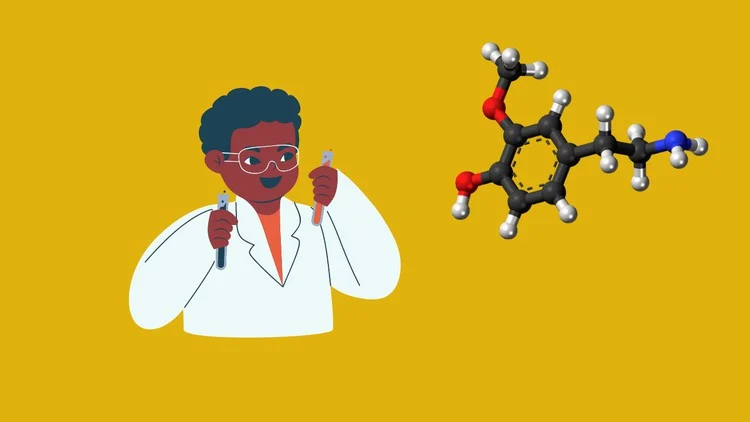
Amines the world of Organic Chemistry
⏱️ Length: 2.0 total hours
⭐ 4.34/5 rating
👥 5,353 students
🔄 March 2022 update
Add-On Information:
“`html
Note➛ Make sure your 𝐔𝐝𝐞𝐦𝐲 cart has only this course you're going to enroll it now, Remove all other courses from the 𝐔𝐝𝐞𝐦𝐲 cart before Enrolling!
- Course Title: Introduction to Amines (Organic Chemistry)
- Course Caption: Amines: The Heart of Organic Chemistry
- Course Length: 2.0 total hours
- Overall Rating: 4.34/5
- Number of Students: 5,353
- Last Updated: March 2022
- Course Overview
- Embark on a foundational exploration into the fascinating and ubiquitous class of organic compounds known as amines.
- This course demystifies the structure, nomenclature, and fundamental properties of amines, the nitrogen-containing cousins of alcohols and ethers.
- Discover the role of the nitrogen atom’s lone pair in dictating amine reactivity and their significant impact on biological and industrial processes.
- Gain an appreciation for how amines, despite their seemingly simple structure, are integral to the fabric of organic chemistry and beyond.
- This introduction serves as a crucial stepping stone for understanding more complex organic molecules and reaction mechanisms.
- Requirements / Prerequisites
- A solid grasp of basic organic chemistry principles, including atomic structure, bonding (covalent, polar covalent), functional groups, and isomerism.
- Familiarity with the concept of electron pairs (lone pairs and bonding pairs) and their influence on molecular geometry and reactivity.
- Understanding of IUPAC nomenclature for hydrocarbons and simple functional groups (alcohols, ethers, carbonyls).
- Basic knowledge of acid-base chemistry, particularly concerning the behavior of Lewis bases.
- Access to standard organic chemistry textbooks or online resources for supplemental reference.
- Skills Covered / Tools Used
- Nomenclature Mastery: Develop the ability to systematically name primary, secondary, and tertiary amines according to IUPAC conventions.
- Structure Elucidation: Learn to draw and interpret the structural formulas of various amine compounds.
- Property Prediction: Understand how molecular structure influences physical properties like boiling point and solubility.
- Reactivity Identification: Recognize the key reactive sites of amine molecules, particularly the nucleophilic nitrogen atom.
- Fundamental Reaction Pathways: Introduce the basic types of reactions that amines participate in, setting the stage for future learning.
- Conceptual Framework Building: Develop a strong conceptual foundation for understanding amine chemistry within the broader context of organic reactions.
- Problem-Solving Application: Practice applying learned principles to solve introductory problems related to amine identification and properties.
- Benefits / Outcomes
- Unlock a Core Functional Group: Gain confidence in identifying and understanding one of the most important and versatile functional groups in organic chemistry.
- Foundation for Further Study: Lay a robust groundwork for advanced organic chemistry courses, biochemistry, medicinal chemistry, and materials science.
- Enhanced Molecular Insight: Develop a deeper appreciation for how the presence of a nitrogen atom profoundly alters the behavior of organic molecules.
- Bridge to Biological Relevance: Understand the foundational principles that underpin the chemistry of amino acids, proteins, and numerous pharmaceutical agents.
- Improved Problem-Solving Skills: Enhance analytical and deductive reasoning skills applicable to a wide range of organic chemistry challenges.
- Increased Confidence in Organic Chemistry: Build self-assurance in tackling organic chemistry problems by mastering foundational concepts.
- Appreciation for Everyday Chemistry: Recognize the pervasive presence and essential roles of amines in everyday products, from dyes to pharmaceuticals.
- PROS
- Concise and Focused: Delivers essential information efficiently, making it ideal for busy learners.
- High Student Satisfaction: Indicates a well-received and effective learning experience based on user feedback.
- Up-to-Date Content: March 2022 update suggests current and relevant material.
- Accessible Entry Point: Provides a gentle introduction to a complex topic.
- Broad Applicability: Foundational knowledge useful for many branches of chemistry.
- CONS
- Limited Depth: As an introductory course, it likely covers only the most fundamental aspects of amine chemistry, potentially lacking advanced reaction mechanisms or detailed synthetic applications.
“`
Learning Tracks: English,Teaching & Academics,Science
Found It Free? Share It Fast!