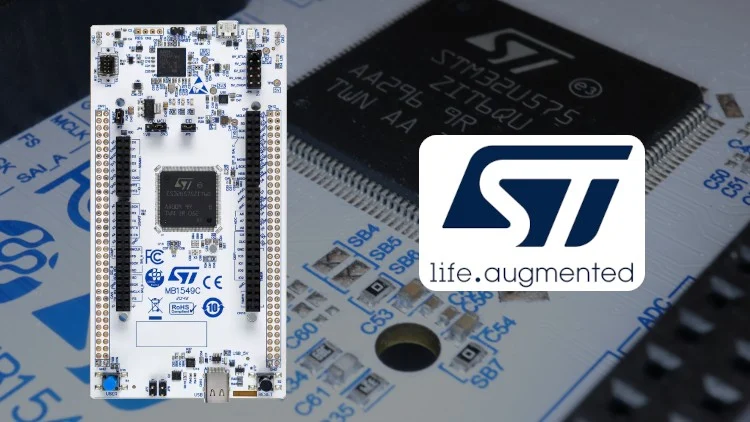
using STM32CubeIDE v2, STM32CubeMX and the ST HAL library
⏱️ Length: 5.5 total hours
👥 32 students
🔄 January 2026 update
Add-On Information:
Note➛ Make sure your 𝐔𝐝𝐞𝐦𝐲 cart has only this course you're going to enroll it now, Remove all other courses from the 𝐔𝐝𝐞𝐦𝐲 cart before Enrolling!
-
Course Overview
- “Getting Started With STM32 MCUs Programming” offers a direct entry into embedded systems using STMicroelectronics’ popular STM32 microcontrollers. These versatile MCUs are vital in IoT, industrial control, and consumer electronics, making their programming a crucial skill for aspiring engineers and hobbyists. This course transforms beginners into confident programmers.
- Over 5.5 focused hours, gain hands-on experience with the complete STM32 development ecosystem. The curriculum prioritizes practical application, ensuring proficiency with industry-standard tools: STM32CubeIDE v2 for coding and debugging, STM32CubeMX for graphical configuration, and the ST HAL (Hardware Abstraction Layer) library for simplified peripheral control.
- Tailored for hobbyists, engineering students, and aspiring embedded programmers with little prior STM32 experience but a strong desire to build intelligent, hardware-interfacing applications. This January 2026 updated module ensures you receive current information and best practices, facilitating immediate application and foundational learning.
-
Requirements / Prerequisites
- Basic C Programming Knowledge: Fundamental understanding of C syntax, data types, control structures, and functions is essential. The course assumes comfort with basic C logic.
- Computer System: A PC (Windows, macOS, or Linux) capable of smoothly running STM32CubeIDE v2 and its toolchains.
- STM32 Development Board: Access to an STM32 board (e.g., ST Nucleo or Discovery series) is highly recommended for practical, hands-on learning and knowledge consolidation.
- USB Cable: A standard USB cable (Type-A to Micro-B or USB-C, depending on your board) to connect your STM32 development board for programming and debugging.
- Enthusiasm: A strong eagerness to learn, experiment, and troubleshoot within embedded systems programming is key.
-
Skills Covered / Tools Used
- Integrated Development Environment (IDE) Mastery:
- Proficiently navigate STM32CubeIDE v2 for project management, code editing, compilation, flashing, and in-depth debugging.
- Understand STM32 project structures and efficient source file/library management.
- Graphical Configuration with STM32CubeMX:
- Effectively use STM32CubeMX to graphically configure STM32 microcontrollers, setting up clock systems, pin assignments, and peripheral modes.
- Generate optimized initialization code, significantly accelerating development.
- ST HAL Library Application:
- Understand the ST HAL (Hardware Abstraction Layer) library for simplified STM32 peripheral interaction.
- Utilize HAL functions for controlling on-chip hardware features without deep register-level programming.
- Basic Peripheral Control:
- GPIO: Configure and control digital I/O pins (LEDs, buttons).
- UART: Implement serial communication for data exchange and debugging.
- Timers: Grasp timer fundamentals for precise delays and periodic events.
- Debugging Techniques:
- Master essential debugging tools within STM32CubeIDE: breakpoints, stepping, variable inspection, and memory analysis for efficient fault detection.
- Project Workflow Management:
- Develop a systematic approach to starting new STM32 projects, from STM32CubeMX setup to code deployment.
- Integrated Development Environment (IDE) Mastery:
-
Benefits / Outcomes
- Empowered Project Initiation: Gain confidence to independently start your own STM32 microcontroller projects, transforming ideas into working embedded systems.
- Foundational Skillset: Establish a strong, transferable base in embedded systems programming, preparing you for advanced topics like RTOS and complex communication protocols.
- Real-World Tool Proficiency: Become adept at industry-standard tools (STM32CubeIDE, STM32CubeMX, ST HAL), enhancing professional profile and employability.
- Practical Problem-Solving: Develop specific troubleshooting skills for embedded hardware/software, enabling efficient project debugging.
- Accelerated Learning: Structured course significantly reduces initial complexity, providing a clear path to understanding and application.
- Innovative Prototyping: Acquire skills to rapidly prototype electronic devices, IoT gadgets, and custom control systems.
- Entry Point to Careers: Excellent entry point and solid foundation for careers in embedded systems, IoT, or robotics.
-
PROS
- Beginner-Friendly: Designed for newcomers, offering clear, progressive learning without prior STM32 experience.
- Hands-On Learning: Emphasizes practical exercises and real-world coding for immediate application to hardware.
- Industry-Standard Tools: Teaches proficiency with current tools (STM32CubeIDE v2, STM32CubeMX, ST HAL), aligning with industry practices.
- Concise & Efficient: 5.5 hours delivers core foundational knowledge effectively, ideal for busy learners seeking impactful learning.
- Practical Debugging: Covers essential debugging techniques for identifying and resolving issues in embedded software.
- Up-to-Date Content: January 2026 update ensures relevance with current tools and methodologies.
- Solid Foundation: Lays robust groundwork for future exploration into advanced STM32 peripherals, protocols, and RTOS.
-
CONS
- Limited Advanced Depth: As an introductory course, it focuses on fundamentals and does not delve into highly advanced topics or custom driver development in extensive detail.
Learning Tracks: English,IT & Software,Hardware
Found It Free? Share It Fast!