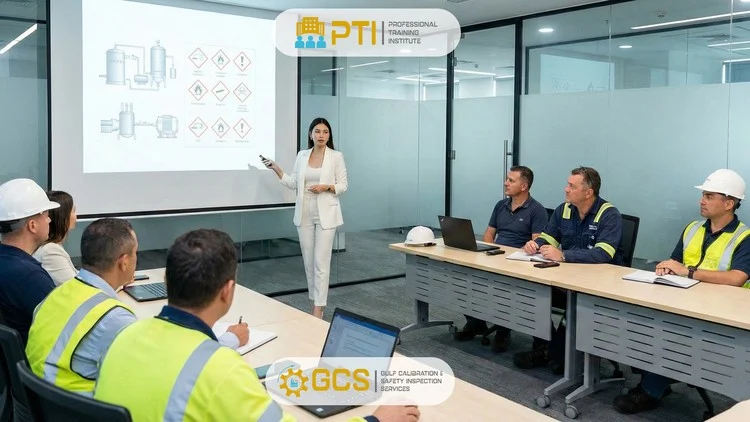
ATEX Awareness Training and workplace safety covering explosive atmospheres, hazardous area classification, DSEAR
⏱️ Length: 3.2 total hours
👥 13 students
🔄 February 2026 update
Add-On Information:
Note➛ Make sure your 𝐔𝐝𝐞𝐦𝐲 cart has only this course you're going to enroll it now, Remove all other courses from the 𝐔𝐝𝐞𝐦𝐲 cart before Enrolling!
- Course Overview
- Comprehensive exploration of the 2026 Regulatory Framework regarding explosive atmospheres, focusing specifically on the latest amendments to the ATEX 137 (Workplace Directive) and ATEX 95 (Equipment Directive) to ensure full site compliance.
- In-depth analysis of the Physical Chemistry of Explosions, where participants examine the specific conditions required for a combustion event, including the relationship between Oxygen Concentration, Fuel Dispersion, and Confinement.
- Detailed study of Combustible Dust Hazards, moving beyond simple gas safety to address the unique risks posed by powders in industries such as Food Manufacturing, Woodworking, and Pharmaceuticals.
- Examination of Ignition Source Identification, covering thirteen distinct sources including Electrostatic Discharge, Stray Electric Currents, Ultrasonic Waves, and Adiabatic Compression within industrial machinery.
- Strategic breakdown of Hazardous Area Classification (HAC) methodologies, teaching students how to differentiate between Zones 0, 1, and 2 for gases and Zones 20, 21, and 22 for dust-based environments.
- Focus on DSEAR (Dangerous Substances and Explosive Atmospheres Regulations) assessment techniques, providing a step-by-step guide to documenting risk and implementing the Hierarchy of Control.
- Review of Mechanical Equipment Safety, specifically how non-electrical components like Bearings and Belts can become heat sources capable of triggering an atmospheric blast.
- Requirements / Prerequisites
- A foundational understanding of General Occupational Health and Safety principles is recommended to fully grasp the high-level risk management strategies presented in the module.
- Basic literacy in Technical Documentation is beneficial, as the course requires interpreting Site Safety Maps and Equipment Certificates provided during practical demonstrations.
- No prior Engineering Degree is required; however, participants should have a working familiarity with their specific Industrial Environment to better relate the theoretical zoning to their daily tasks.
- Access to a digital device capable of viewing High-Definition Safety Simulations, as the 2026 update includes interactive 3D renderings of explosion pathways and pressure venting.
- A proactive Safety-First Mindset and a commitment to maintaining Zero-Harm Standards within high-risk operational theaters.
- Skills Covered / Tools Used
- Proficiency in reading and interpreting Ex-Marking Strings, enabling students to decode complex alphanumeric labels on equipment to verify its Protection Level (EPL) and Temperature Class.
- Mastery of Explosion Protection Documents (EPD), learning the essential components required to maintain a legally defensible record of safety measures and zoning decisions.
- Utilization of Lower Explosive Limit (LEL) and Upper Explosive Limit (UEL) calculation tools to determine the precise volatility of various chemical vapors and gas mixtures.
- Instruction on the application of Intrinsically Safe (IS) design principles, teaching students how to identify energy-limited circuits that prevent sparks in hazardous zones.
- Development of Ventilation Assessment Skills, specifically how to calculate the Dilution Rates necessary to downgrade a hazardous zone from primary to secondary grade release.
- Guidance on using Static Grounding Systems and Bonding Equipment to safely dissipate electrical charges in areas where flammable liquids are transferred.
- Training in the Selection of Personal Protective Equipment (PPE) that meets Anti-Static and Flame-Retardant specifications for explosive zone entry.
- Benefits / Outcomes
- Significant Reduction in Operational Risk by empowering employees to identify and report pre-explosive conditions before they escalate into catastrophic industrial accidents.
- Enhanced Legal Indemnity for organizations, as staff will be trained to meet the stringent documentation requirements of Global Safety Auditors and insurance providers.
- Career Advancement Opportunities for safety officers and technicians, who will gain a specialized niche certification that is highly valued in the Oil and Gas, Chemical Processing, and Renewable Energy sectors.
- Improved Asset Lifecycle Management, as participants learn to maintain “Ex” rated equipment correctly, preventing damage caused by improper repairs or incompatible replacement parts.
- Establishment of a Robust Safety Culture where the understanding of invisible threats leads to more disciplined work permits and Lock-Out Tag-Out (LOTO) procedures.
- The ability to conduct Internal Gap Analyses, identifying where current workplace practices fall short of the 2026 ATEX safety updates without the immediate need for expensive outside consultants.
- PROS
- Highly Targeted Learning: The small class size of 13 Students ensures personalized interaction and the opportunity to discuss site-specific explosive hazards with the instructor.
- Time-Efficient Format: The 3.2-Hour Duration is optimized for busy professionals, delivering high-density technical knowledge without the fluff of multi-day seminars.
- Future-Proofed Content: With the February 2026 Update, the course material reflects the most current international standards and emerging safety technologies.
- Cross-Industry Relevance: The curriculum is designed to be applicable to any workplace handling Flammable Substances, from large refineries to small craft distilleries.
- CONS
- Generalist Limitation: As an Awareness-Level course, this program provides the vital theoretical foundation but does not grant the high-level Technical Competency Certification required for the physical installation or deep repair of complex explosion-proof electrical systems.
Learning Tracks: English,Business,Industry
Found It Free? Share It Fast!