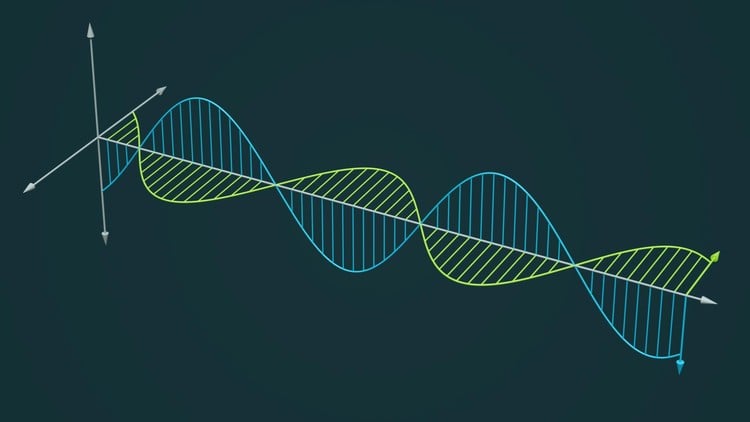
Master the Foundations and Advanced Concepts of Integrated Electrical & Optical Systems
⏱️ Length: 67.5 total hours
👥 222 students
🔄 October 2025 update
Add-On Information:
Note➛ Make sure your 𝐔𝐝𝐞𝐦𝐲 cart has only this course you're going to enroll it now, Remove all other courses from the 𝐔𝐝𝐞𝐦𝐲 cart before Enrolling!
-
Course Overview
- Integrated Systems Perspective: This unique course unites electromagnetics, optics, logic circuits, and electric circuits, offering a holistic understanding of how these foundational areas converge to underpin modern technological systems. It emphasizes interdisciplinary synergy, critical for future innovation in high-speed data networks and advanced computing.
- Foundational to Frontier Technologies: Bridging classical physics with cutting-edge engineering, the curriculum progresses from theoretical underpinnings to practical applications. Learners will trace the evolution from basic principles to complex integrated systems, preparing them for innovation in photonics, microelectronics, and advanced communication fields.
- Bridging Analog and Digital Domains: Addressing the critical interface between continuous physical phenomena and discrete digital processing, this course illuminates how electromagnetic wave interactions and optical signal manipulation translate into logical operations driving digital electronics, fostering complete system-level comprehension.
-
Requirements / Prerequisites
- Solid Mathematical Acuity: Prospective students require a robust background in multivariate and vector calculus, plus differential equations, as these advanced tools are indispensable for mastering wave phenomena and complex circuit analysis.
- Intermediate Physics Foundation: A college-level understanding of fundamental physics, particularly introductory electricity and magnetism, is crucial for efficiently grasping advanced concepts in electromagnetics and optics.
- Analytical and Problem-Solving Aptitude: An eagerness to engage with abstract concepts and a strong aptitude for analytical reasoning are vital for navigating diverse, complex challenges across electrical, optical, and logical domains.
- Conceptual Curiosity: A genuine interest in understanding the underlying principles of modern electronic and optical systems, and a desire to build knowledge from first principles, will significantly enhance the learning experience and overall engagement.
-
Skills Covered / Tools Used
- Multi-Domain System Conceptualization: Develop the advanced capability to design, model, and analyze integrated systems that seamlessly blend electrical, optical, and logical components. This includes understanding interdependencies and optimizing overall performance for complex, real-world applications.
- Electromagnetic Compatibility (EMC) & Signal Integrity: Acquire critical skills in identifying and mitigating electromagnetic interference (EMI) and ensuring signal integrity in high-speed digital and analog circuits. This is paramount for robust design and reliable system operation in dense electronic environments.
- Photonic Component & System Integration: Gain practical insights into designing optical components like waveguides and fiber optics, and learn to integrate them into functional optical communication links, advanced sensing platforms, and emerging photonic computing paradigms.
- Advanced Digital Architecture Synthesis: Progress beyond basic logic gates to synthesize complex digital architectures, understanding register-transfer level design, memory hierarchies, and implementing state machines using industry-standard hardware description languages (e.g., VHDL/Verilog).
- Computational & Simulation Proficiency: Develop hands-on expertise with industry-standard simulation tools (e.g., SPICE for circuits, MATLAB/COMSOL for electromagnetics/optics, specialized EDA for logic) to model, verify, and predict the behavior of complex systems before physical prototyping.
-
Benefits / Outcomes
- Uniquely Integrated Expertise: Graduates will possess a highly sought-after, holistic understanding of electrical and optical systems, positioning them as invaluable assets in industries requiring professionals capable of bridging traditionally siloed engineering disciplines and driving innovation.
- Versatile Career Readiness: This comprehensive knowledge base opens doors to a broad spectrum of advanced roles in telecommunications, semiconductor manufacturing, photonics, aerospace, biomedical engineering, and quantum technologies, providing unparalleled career flexibility and resilience.
- Foundation for Frontier Innovation: The course provides a robust theoretical and practical foundation essential for contributing to cutting-edge research and development, empowering learners to conceptualize and implement novel solutions at the forefront of electrical and optical engineering advancements.
- Strategic Thinking for Complex Systems: Develops a powerful analytical mindset and capacity for strategic thinking, enabling learners to dissect and solve intricate engineering challenges involving the interplay of electromagnetic fields, light, and digital logic within integrated systems.
-
PROS
- Holistic Interdisciplinary Learning: Offers an exceptionally rare and valuable opportunity to learn fundamental and advanced concepts across four critical, interconnected engineering domains in a single, cohesive course.
- High Industry Relevance: Directly aligns with the evolving demands of modern technology, preparing students with versatile skills needed to innovate and lead in an era of integrated electrical and optical systems.
- Comprehensive Skill Set Development: Cultivates a broad range of analytical, design, simulation, and problem-solving skills applicable to a vast array of high-tech engineering challenges.
-
CONS
- Intensive Academic Commitment: The ambitious scope and significant depth of material covered across multiple complex disciplines necessitate a very high level of dedication, substantial study time, and a strong foundational background to fully master and benefit from the course content.
Learning Tracks: English,Teaching & Academics,Engineering
Found It Free? Share It Fast!