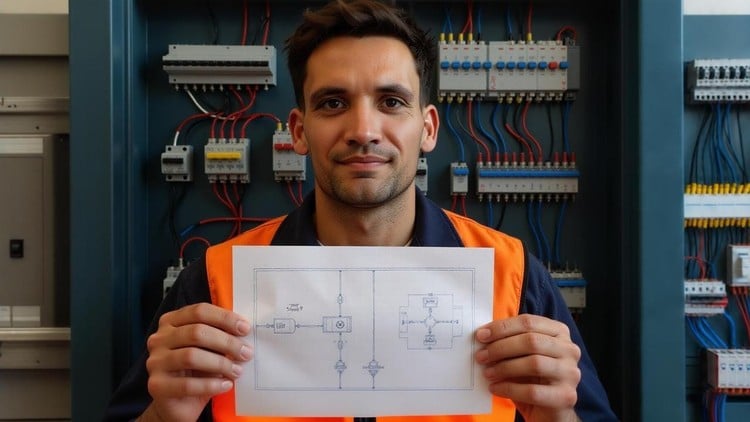
Master the most challenging part of any construction project!
⏱️ Length: 2.2 total hours
👥 5 students
Add-On Information:
Note➛ Make sure your 𝐔𝐝𝐞𝐦𝐲 cart has only this course you're going to enroll it now, Remove all other courses from the 𝐔𝐝𝐞𝐦𝐲 cart before Enrolling!
- Course Caption: Master the most challenging part of any construction project! Length: 2.2 total hours 5 students
-
Course Overview
- This intensive, condensed course is specifically engineered for construction managers aiming to demystify the often-complex world of electrical systems within building and infrastructure projects. Recognizing that electrical work frequently represents one of the most critical paths and significant risk areas, this program equips you with the strategic understanding needed to navigate these challenges effectively. Instead of delving into deep engineering calculations, it focuses on the practical application of electrical principles from a management perspective, enabling you to make informed decisions, mitigate risks, and ensure seamless execution of all electrical components. You will gain clarity on how electrical systems integrate into the overall project lifecycle, from initial design review to final commissioning, empowering you to better oversee a crucial, high-value aspect of modern construction. The curriculum is tailored to bridge the communication gap between project managers and specialist electrical teams, fostering a more collaborative and efficient work environment across all phases of development.
-
Requirements / Prerequisites
- Participants should possess a foundational understanding of general construction project management principles and common building processes. While no prior formal electrical engineering background is necessary, a keen interest in expanding technical oversight capabilities and improving coordination with specialized trades is highly recommended. Basic familiarity with reading construction drawings and specifications will be beneficial, although specific electrical diagram interpretation techniques will be introduced. An open mind to embrace technical terminology and a commitment to enhancing on-site safety protocols are essential for maximizing the learning experience. The course is ideal for existing construction managers, project engineers, or superintendents looking to elevate their expertise in a critical and often underserved area of their professional development.
-
Skills Covered / Tools Used
- You will develop robust skills in the executive oversight of electrical installations, enabling you to proactively identify potential issues before they escalate into costly delays or safety hazards. This includes enhancing your ability to critically review and comprehend electrical schematics and single-line diagrams, ensuring they align with project specifications and regulatory standards. You will learn to effectively communicate technical requirements and constraints to electrical subcontractors, fostering clearer expectations and reducing misinterpretations. The course will sharpen your capacity for risk assessment concerning temporary power setups, equipment grounding, and the general handling of high-voltage components on site. You’ll gain proficiency in understanding the logical flow of power from grid connection points through a building’s distribution panels to various end-use loads, without needing to design the systems yourself. Furthermore, you’ll be introduced to best practices for verifying site electrical safety protocols and ensuring compliance with national and local electrical codes, thereby safeguarding personnel and property. While no physical tools are used, you will conceptually engage with and understand the application of various project documents, including electrical permit applications, inspection checklists, and commissioning reports, to ensure project integrity.
- Key analytical proficiencies include: mastering the interpretation of electrical scope within project contracts; evaluating subcontractor proposals for technical soundness and compliance; overseeing the integration of low-voltage systems such as data networks, fire alarms, and security systems from a management perspective; and implementing effective quality control measures for all electrical work. You will learn to anticipate common electrical challenges during construction and formulate proactive mitigation strategies, thereby minimizing downtime and budget overruns. The course also emphasizes the importance of understanding the hierarchy of electrical components, from generation and transmission principles to final distribution within a structure, allowing for a more holistic management approach.
-
Benefits / Outcomes
- Upon completion, you will possess a significantly enhanced capacity to manage and supervise the electrical aspects of construction projects with greater confidence and competence. This will translate into more efficient project timelines, as you’ll be better equipped to foresee and prevent electrical-related delays and bottlenecks. Your ability to negotiate with and direct electrical trade partners will be substantially improved, leading to clearer communication, fewer disputes, and more streamlined execution. You will contribute to a markedly safer construction environment by understanding and enforcing critical electrical safety measures and code adherence, thereby reducing the risk of accidents and liabilities.
- Furthermore, the course will empower you to ensure superior quality assurance for all electrical installations, resulting in projects that not only meet but often exceed regulatory standards and client expectations. You will gain a strategic advantage in project budgeting and cost control by understanding the drivers behind electrical material and labor costs, enabling more accurate bidding and change order management. Ultimately, you will become a more valuable and well-rounded construction manager, capable of successfully delivering projects with complex electrical requirements, strengthening your leadership position within your organization and the industry. This foundational electrical understanding will equip you to make more informed decisions when integrating cutting-edge technologies and smart building systems into future projects.
-
PROS
- Highly Specialized Focus: Directly addresses a critical knowledge gap often faced by construction managers regarding electrical systems.
- Immediate Practical Application: Concepts are tailored for real-world project management and oversight, not theoretical engineering.
- Risk Mitigation Expertise: Equips managers to proactively identify and manage electrical hazards and compliance issues, boosting site safety.
- Enhanced Communication: Bridges the gap between project managers and specialized electrical trades, improving coordination and reducing errors.
- Strategic Decision-Making: Empowers better-informed choices regarding electrical scope, budget, and schedule.
- Increased Project Efficiency: Leads to fewer delays, reduced rework, and more predictable project outcomes related to electrical work.
- Small Class Size: With only 5 students, participants benefit from highly personalized instruction and direct engagement.
-
CONS
- Limited Depth for Broad Scope: The extremely short duration (2.2 hours) means the course can only provide a high-level, foundational understanding and cannot delve into extensive technical detail or advanced engineering principles.
Learning Tracks: English,Business,Project Management
Found It Free? Share It Fast!